

Our Verdict
Open shelving shines in rooms with good light, curated collections, and owners who enjoy regular tidying. Closed storage wins when life is hectic, clutter accumulates fast, or the room already feels small. For most living spaces, a thoughtful hybrid - open shelves for display, closed units for everyday chaos - delivers both the style and the sanity.
Readers who want a stylish, functional living room and are ready to make an honest assessment of their tidying habits and available space.
What You're Really Choosing Between
The open-versus-closed storage debate is really a question about two things: visibility and maintenance. Open shelving puts everything on display - your books, baskets, ceramics, and yes, your dust. Closed storage tucks it all away behind doors or drawers, keeping the room visually quieter but potentially hiding disorder rather than solving it.
Neither system is universally superior. The right choice depends on the specific room, how you actually live in it, and what you're willing to commit to upkeep-wise. Before you commit to a wall of floating shelves or a run of closed cabinets, it's worth examining both sides honestly - which is exactly what this breakdown does.
For a broader look at how storage decisions play out room by room, the Room-by-Room Storage hub is a useful starting point.
The Case for Open Shelving
Open shelves have earned their place in living rooms for good reasons. They're airy, accessible, and genuinely versatile when styled with intention.
Creates a sense of openness and visual depth
Shelves without doors keep sightlines open, making rooms feel larger and less boxed-in - particularly valuable in smaller living spaces.
Everything is immediately accessible
No doors to open means you can grab a book, a remote, or a decorative object at a glance - a genuine convenience in high-use living areas.
Lower cost and easier to install or DIY
Wall-mounted open shelves require fewer materials and less labor than framed cabinet units, making them a friendlier option for budget-conscious updates.
Encourages intentional, curated display
When everything is visible, you naturally edit your belongings more deliberately - which can result in a more considered, personality-driven room.
Adapts easily to changing styles
Swapping out objects on open shelves costs nothing and takes minutes, making seasonal refreshes or style pivots far simpler than rearranging closed furniture.
One often-overlooked advantage: open shelving tends to be cheaper and simpler to install. A few wall-mounted brackets and boards can transform a bare wall into a display zone for a fraction of what closed cabinetry costs. If you're drawn to the DIY route, our article on building open shelves vs. closed units in a weekend breaks down exactly what each approach involves.
Open shelving also creates a natural opportunity to showcase personality - rotating a few seasonal objects or swapping in new plants keeps the room feeling fresh without a renovation.
The Case for Closed Storage
Closed storage has a quieter kind of power. It doesn't demand curation - it simply absorbs the mess and presents a calm face to the room.
Dust accumulates quickly and visibly
Open surfaces collect airborne dust continuously. In rooms with soft furnishings, pets, or heavy foot traffic, shelves may need wiping down weekly to look their best.
Requires ongoing curation to avoid visual clutter
Without doors to hide disarray, a poorly styled shelf can make an entire room feel chaotic. Maintaining the look takes real, consistent effort.
Not ideal for storing everyday practical items
Cables, paperwork, chargers, and similar items look messy on open shelves - meaning you'll still need closed storage elsewhere in the room for functional clutter.
Items are exposed to light and air
Books, fabrics, and some collectibles can fade or degrade faster when exposed to sunlight and dust without the protection of cabinet doors.
In living rooms that pull double-duty as home offices, playrooms, or multi-purpose spaces, closed storage is often the more practical backbone. It handles the things you need but don't want to look at: cables, board games, extra throws, paperwork. For inspiration on furniture that hides function in plain sight, see Living Room Storage That Doesn't Look Like Storage.
A Note on Room Size and Natural Light
Closed storage units - especially taller pieces - can feel imposing in rooms with low ceilings or limited natural light. If your living room is on the smaller or darker side, prioritizing lower closed units (below eye level) and reserving upper wall space for open shelving or nothing at all tends to keep the room from feeling cramped. Light-colored cabinet finishes also help reduce visual heaviness.
Making the Hybrid Approach Work
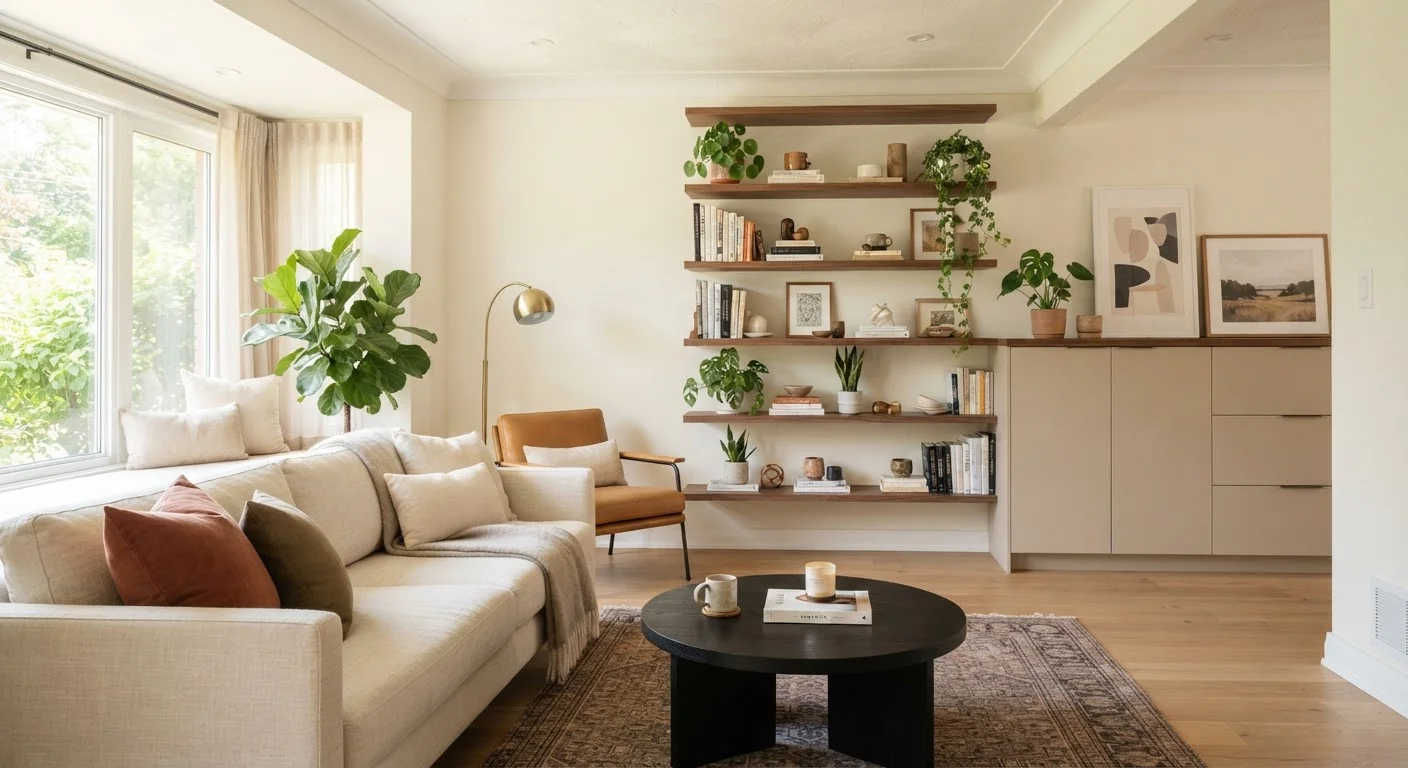
Most well-functioning living rooms use both: open shelving for intentional display at eye level, and closed storage for the practical, unglamorous stuff below or beside it. The key is assigning each zone a clear job.
~70%
Homeowners preferring combined storage approaches
Interior design surveys consistently find that most homeowners prefer a mix of open and closed storage rather than committing fully to one approach.
2-3×
More frequent cleaning for open vs. closed shelves
Home organization experts generally note that open shelving surfaces require dusting two to three times more often than closed cabinet interiors.
A media unit with closed lower drawers and open upper shelves is a classic example - it gives your books and art a home while keeping remotes, gaming accessories, and cables out of sight. For help choosing between furniture types, The Real Difference Between a Media Unit and a Sideboard walks through the practical distinctions.
If you're thinking about building your own hybrid unit, it's worth considering a modular approach. What 'Modular' Really Means in DIY Storage explains why modularity gives you long-term flexibility as your storage needs change. Alternatively, the pros and cons of building your own storage can help you decide whether DIY or ready-made makes more sense for your budget and skill level.
The content on this site is for informational purposes only and is not a substitute for professional advice. Always consult a qualified professional for guidance specific to your situation.