

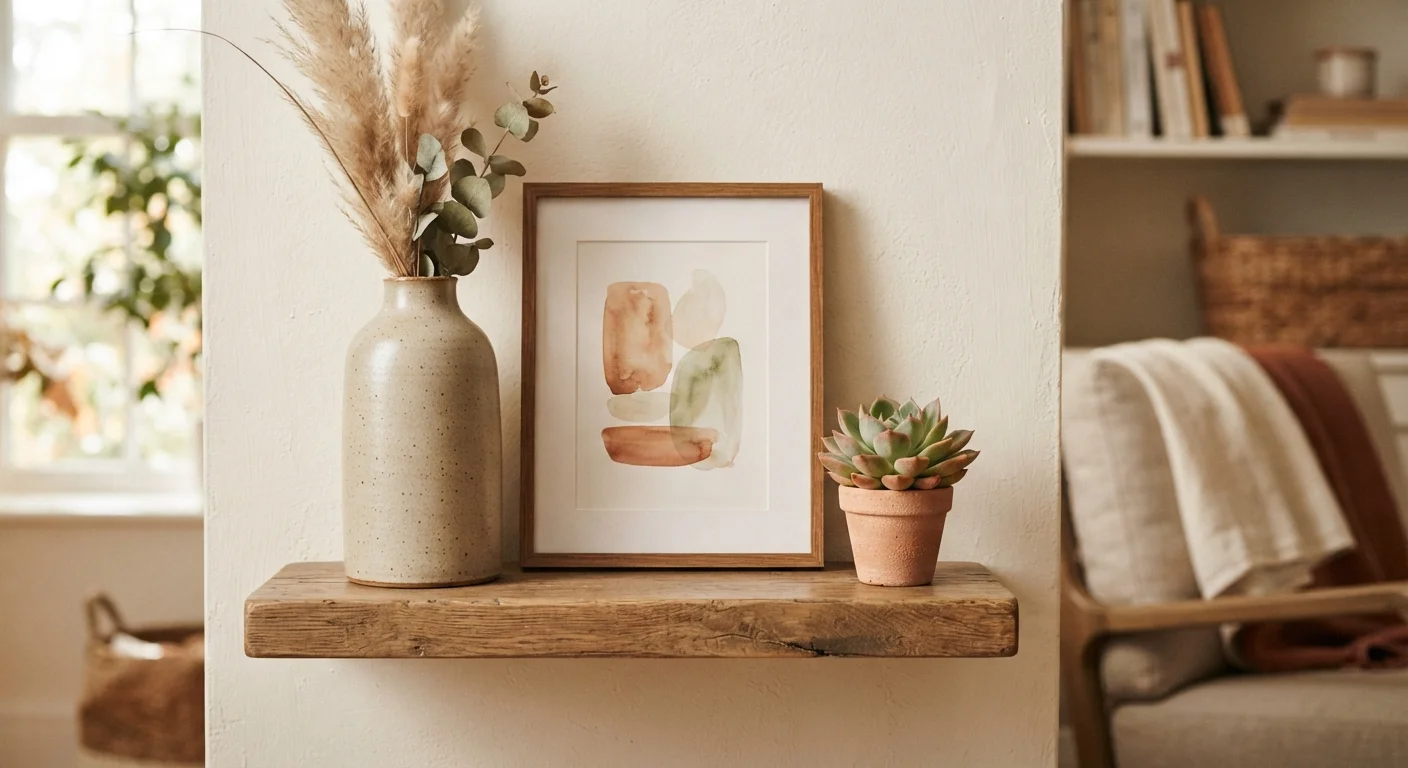
Why Odd Numbers Feel Right to the Eye
Walk into a beautifully styled room and something just clicks - even if you can't immediately explain why. Often, the secret lies not in expensive furniture or rare art, but in how objects are grouped. The Rule of Three taps into a visual instinct: when the eye encounters an odd number of objects, it can't split them evenly, so it keeps moving. That movement creates energy, interest, and a sense of life in a display.
Even-numbered groupings - two candlesticks, four picture frames in a neat row - tend to read as symmetrical and settled. That's not always bad, but it can feel flat. Three objects, by contrast, naturally form a triangle of visual attention. Your eye bounces between them, taking in the relationships of height, shape, and texture. The result feels dynamic rather than rigid.
This isn't magic - it's rooted in how humans perceive patterns. Gestalt psychology describes how our brains seek groupings and hierarchies in what we see. An odd number resists an obvious hierarchy, keeping the viewer engaged. Understanding this connects directly to how visual weight affects room balance, making the Rule of Three a natural companion principle for any decorator.
Start With What You Already Own
Before buying anything new, do a walk-through of your home and collect candidate objects for a trio: a candle from the bathroom, a plant from the windowsill, a book from the nightstand. Test them together on a shelf or tabletop. Rearranging existing items costs nothing and often yields surprisingly strong results. The Rule of Three works with humble, everyday objects just as well as designer pieces.
The Three Variables That Make a Trio Work
Not all groupings of three succeed automatically. The difference between a thoughtful vignette and a cluttered shelf usually comes down to three key variables: height, scale, and texture.
- Height: Vary your pieces so they form a visual staircase or triangle - a tall vase, a medium object like a lantern or framed print, and a small low item like a candle or figurine. Avoid placing all three at the same height, which flattens the arrangement.
- Scale: A mix of sizes gives the eye something to anchor to. One dominant piece draws attention first; the other two support it. Think of it as a lead, a secondary, and a supporting role.
- Texture: Pair smooth with rough, matte with glossy, organic with geometric. Contrast in texture makes a trio feel curated rather than random, even when the pieces are inexpensive or already owned.
One practical tip: pull items from different rooms and test them together before committing. You may already own the perfect trio - it just hasn't been introduced yet. This kind of zero-cost rearranging is especially valuable in small rooms where every styling decision carries weight.
Where to Apply the Rule of Three in Your Home
The beauty of this principle is its versatility. Here's how it plays out across common surfaces and spaces:
- Bookshelves
- Break up rows of books with clusters of three decorative objects. Vary height and rotate pieces by season without buying anything new.
- Mantels
- A classic trio works beautifully on a fireplace mantel. Anchor one side with a taller piece, balance with a medium object, and ground it with a small accent on the opposite side - asymmetry is your friend.
- Coffee tables
- A tray, a stack of books, and a small plant is one of the most reliable coffee-table trios in styling. It reads as intentional without feeling staged.
- Walls
- Gallery walls can feel chaotic without structure. Arranging frames in triangular groupings of three gives the eye anchor points across a large wall.
- Entryways
- A console table styled with three objects at graduated heights sets an immediate welcoming tone without crowding the space.
Just as the 60-30-10 rule guides color distribution across a room, the Rule of Three guides how individual objects relate to each other within that room - both principles work together toward the same goal: visual harmony.
Knowing When to Break the Rule
Like most design principles, the Rule of Three is a guideline, not a law. Once you understand why it works, you're equipped to know when to set it aside. A large architectural shelf might benefit from a group of five or seven items arranged with the same height-variation logic. A minimalist room might call for a single statement object instead of a trio.
The real lesson isn't "always use three" - it's to avoid even-numbered, same-height, same-texture groupings that create visual monotony. When you do want to use four items, display them as an asymmetric 3+1 cluster rather than a symmetrical square. When you use five, think of them as two overlapping trios sharing a middle piece.
Layering the Rule of Three with other principles - like the color balance concepts explored in color theory for home decorators - gives you a versatile toolkit. Rules in design exist to give you a confident starting point, and understanding them fully means knowing exactly when creative intuition should take over.
This article is for informational and decorating inspiration purposes only. Results may vary depending on individual spaces, existing furnishings, and personal style preferences.
Frequently Asked Questions
Odd-numbered groupings prevent the eye from splitting objects into equal halves, which can feel static. Instead, they create a visual anchor point with supporting elements that guide the eye naturally around the arrangement. This tension and movement makes a display feel more dynamic and intentional.
Absolutely. The Rule of Three is actually ideal for small spaces because it keeps displays focused and avoids clutter. Choose three objects with a clear height variation - tall, medium, and short - and keep them close enough to read as a cohesive group.
Not at all. In fact, contrast adds interest. Aim for pieces that share at least one connecting element - a color, a material, or a theme - while differing in height, shape, or texture. This creates cohesion without making the display look too matchy.
With two items, try adding a simple natural element like a small plant, a candle, or a stack of books to form a trio. With four items, consider displaying them as a 3+1 arrangement, where three objects form the main group and the fourth sits slightly apart as a visual accent.
Yes, and it scales up well. You can arrange frames in triangular clusters of three, or group multiple trios across a larger wall. The key is that each cluster reads as its own visual unit while contributing to the overall composition.
They're related in spirit but different in application. The Rule of Three governs object grouping and arrangement, while the 60-30-10 rule governs color distribution in a room. Both use proportional thinking to create harmony - they actually work well together.
The content on this site is for informational purposes only and is not a substitute for professional advice. Always consult a qualified professional for guidance specific to your situation.