

Summary
22 items · 45-90 minutes
Why Small Home Offices Demand a Different Storage Strategy
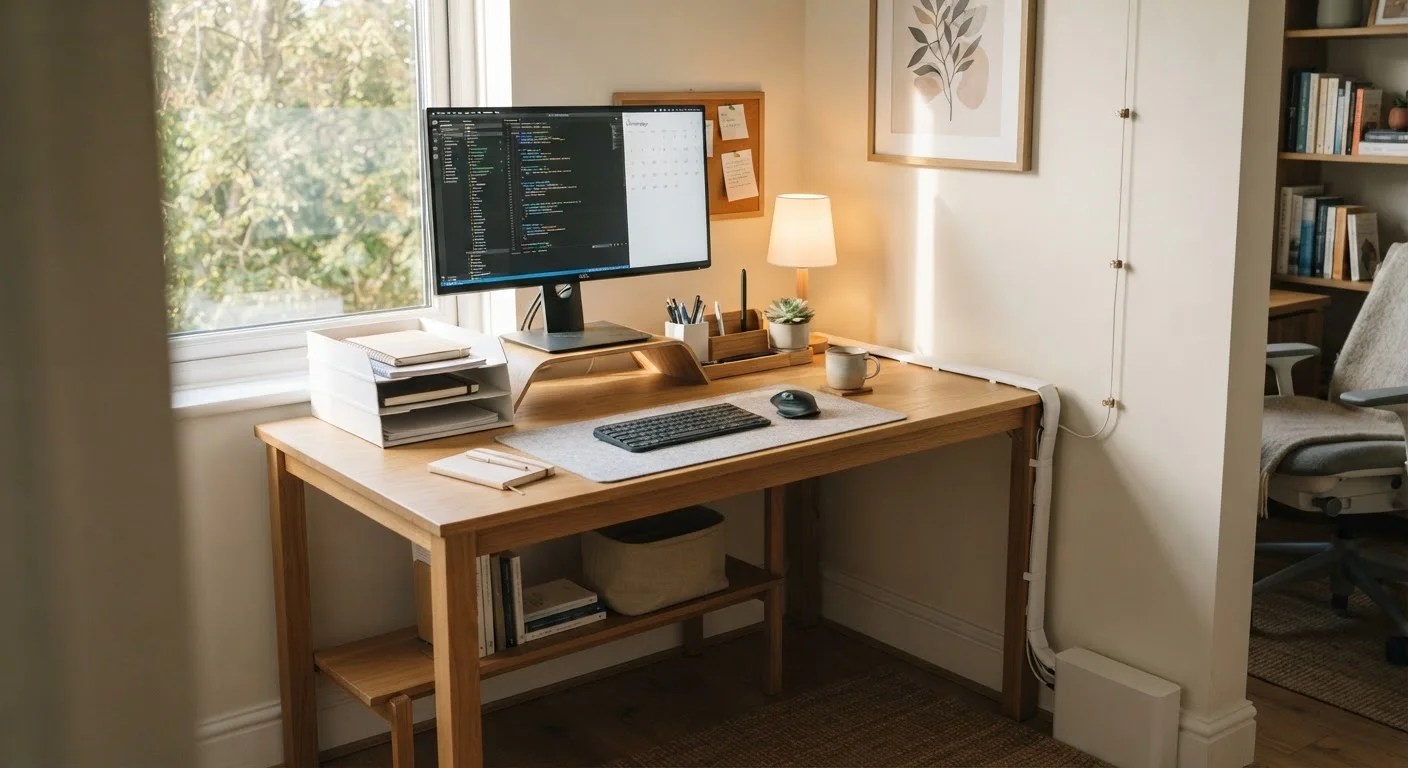
Most home office storage advice assumes unlimited wall space, deep closets, and dedicated rooms. In a compact setup - whether a desk tucked into a bedroom alcove or a converted corner of the living room - the challenge is fundamentally different. You are managing three distinct storage demands in an area that can't afford to absorb clutter from any one of them.
Those three demands are paper (documents, mail, reference materials), tech (cables, chargers, devices, peripherals), and supplies (pens, notebooks, sticky notes, printer consumables). When any one category bleeds into another's space, the entire desk system breaks down. The checklist below helps you audit and address each category deliberately, so storage decisions are targeted rather than reactive.
Before starting, it helps to understand the behavioural side of office clutter. Our guide on desk habits that create clutter explains why physical storage additions work only when paired with consistent daily routines. And if you want to zoom out further, the room-by-room storage framework places this checklist within a whole-home context.
Paper Audit and Control
Tech and Cable Management
Supplies: Right Amount, Right Place
Tools and Materials You Will Need
Most items below are things you likely already have. Resist the urge to purchase new storage products before completing the audit phase - many compact office spaces are under-utilizing what's already in the room.
Inbox tray
Provides a single landing zone for all incoming paper, preventing it from spreading across the desk.
File folders or accordion file
Organizes reference and archival documents into clearly separated categories.
Small drawer organizer insert
Divides a desk drawer into discrete zones for pens, clips, tape, and other small supplies.
Cable clips or velcro cable ties
Routes and bundles desk cables so they don't tangle or take over the work surface.
Adhesive or peel-and-stick labels
Marks containers, cable ends, and zones so the storage system is self-explanatory to maintain.
Wall-mounted shelf or pegboard
Moves storage off the desk surface and onto unused vertical wall space in a compact office.
Document scanner app or flatbed scanner
Allows physical reference documents to be digitized, reducing the volume of paper that needs physical filing.
If you're open to making your own organizers rather than buying them, the unexpected household items that work as organizer components article covers practical substitutes like magazine files, wooden crates, and shower curtain rings that translate directly into office storage. For more involved builds, the DIY organizers from start to finish guide walks through material selection, wall anchoring, and room-specific ideas.
Don't Mount Shelves Without Checking the Wall
Wall-mounted shelves and pegboards require secure anchoring into studs or with appropriate wall anchors rated for the intended load. Improperly anchored shelving can pull away from the wall and damage both the surface and anything stored on it. If you are unsure about your wall type - drywall, plaster, or concrete - consult a hardware professional before drilling. Rental properties may also have restrictions on wall modifications, so review your lease before proceeding.
After the Checklist: Keeping the System Intact
A storage audit only holds if you close the loop. Once each category has a defined home, spend five minutes at the end of each workday returning items to their zones. Paper is the most common backslider - a single inbox tray with a weekly processing ritual prevents accumulation far more reliably than more filing furniture.
If this checklist surfaced clutter beyond the office itself, the household declutter audit checklist applies the same zone-by-zone approach to every room. The goal in a compact home office is never perfection - it's a system simple enough that restoring order takes under five minutes, not an afternoon.
This article is for informational purposes only. Storage recommendations are general in nature; results will vary based on individual workspace conditions and habits.
The content on this site is for informational purposes only and is not a substitute for professional advice. Always consult a qualified professional for guidance specific to your situation.