

Why These Myths Matter to Your Project
Pressure-treated timber is one of the most widely used building materials in residential construction - decks, fence posts, raised garden beds, structural framing near grade. Yet persistent myths about its safety, behavior, and limitations cause DIYers to either avoid it unnecessarily or, more dangerously, misapply it. Getting the facts straight before you build protects your health, your investment, and your project's longevity.
For a broader look at how material misconceptions can derail projects before they start, see our piece on drywall myths that lead to costly rework. The same principle applies here: a well-informed material choice saves far more time and money than any shortcut.
Myth
Treated lumber is toxic and unsafe - especially around children, pets, or food gardens.
Fact
The arsenic-based preservative (CCA) used in older treated wood was phased out for residential use in the United States by the early 2000s. Most treated lumber today uses copper-based compounds such as ACQ or CA-C.
The shift away from chromated copper arsenate (CCA) was a meaningful safety improvement. Current copper-based preservatives used in residential lumber are subject to EPA review and are considered acceptable for the applications labeled on the product - including raised garden beds when you use liners or the specific products rated for that use. That said, basic precautions still apply: wear gloves when handling treated wood, avoid burning offcuts, and wash hands before eating. Treating all modern pressure-treated lumber as equivalent to the older CCA product leads to unnecessary avoidance of a genuinely useful material.
Myth
Pressure-treated wood doesn't need any maintenance - it lasts forever once it's in the ground.
Fact
Treated timber resists rot and insects, but it still weathers, checks (develops surface cracks), and can degrade over time without periodic sealing or staining.
The preservative treatment protects wood from biological attack, not from the physical effects of UV exposure, freeze-thaw cycles, or sustained surface moisture. Above-ground applications like decking and fencing benefit significantly from a water-repellent sealer applied after the lumber has dried - typically six weeks to several months after installation, depending on conditions. Skipping this step allows surface checking to worsen and can shorten the effective life of the structure. Treated wood in ground contact is more protected by its higher preservative retention, but even those posts and boards will eventually fail without appropriate specification for the application depth and soil conditions.
Myth
You can't paint or stain treated lumber - the chemicals prevent adhesion.
Fact
Treated lumber can be painted or stained successfully, but timing is the critical factor. Applying finish to wet lumber is what causes adhesion failures, not the preservatives themselves.
Lumber sold wet from the treatment plant needs to dry before any finish will penetrate or bond properly. A simple test: sprinkle a few drops of water on the surface. If they bead up, the wood is still too wet. If they absorb within a minute or two, the surface is ready. Oil-based semi-transparent stains tend to perform well on treated wood because they penetrate rather than form a surface film. Solid-color latex deck paints also work once the wood is adequately dry. Following this sequence - install, allow to dry, then finish - is what separates a long-lasting deck finish from one that peels within a season.
Myth
All treated lumber is the same - one type works for every application.
Fact
Treated lumber is manufactured in different retention levels and preservative types specifically matched to use categories. Using the wrong grade is a structural and durability risk.
The American Wood Protection Association (AWPA) establishes use categories that correspond to exposure conditions. UC3B covers above-ground exterior applications like deck boards. UC4A and UC4B cover ground contact, with UC4B required for more severe exposures such as posts embedded in high-moisture soils. UC4C and UC5 cover applications like freshwater and marine contact. Using above-ground rated lumber in a ground-contact application - say, fence posts set directly in soil - will result in premature decay regardless of how well the wood was treated. The end tag on each piece of lumber identifies its use category; always match that rating to your actual site conditions.
Myth
Treated wood is only for outdoor use - it can never be used inside a home.
Fact
Certain treated lumber products are approved for specific interior applications, including sill plates set on concrete foundations and framing in areas with known moisture exposure.
Building codes in many jurisdictions actually require treated lumber for sill plates - the horizontal framing members that sit directly on a concrete foundation - precisely because concrete wicks moisture and untreated wood in that position will decay. The key is matching the product's label and the local code requirement. Treated wood in enclosed interior spaces should be of low-odor formulations where applicable, and the space should be adequately ventilated during and after construction. This doesn't mean treated lumber is appropriate for general framing throughout a home, but blanket avoidance of it indoors can lead to non-compliant or structurally vulnerable construction in exactly the locations where it belongs.
Working Safely and Effectively with Treated Timber
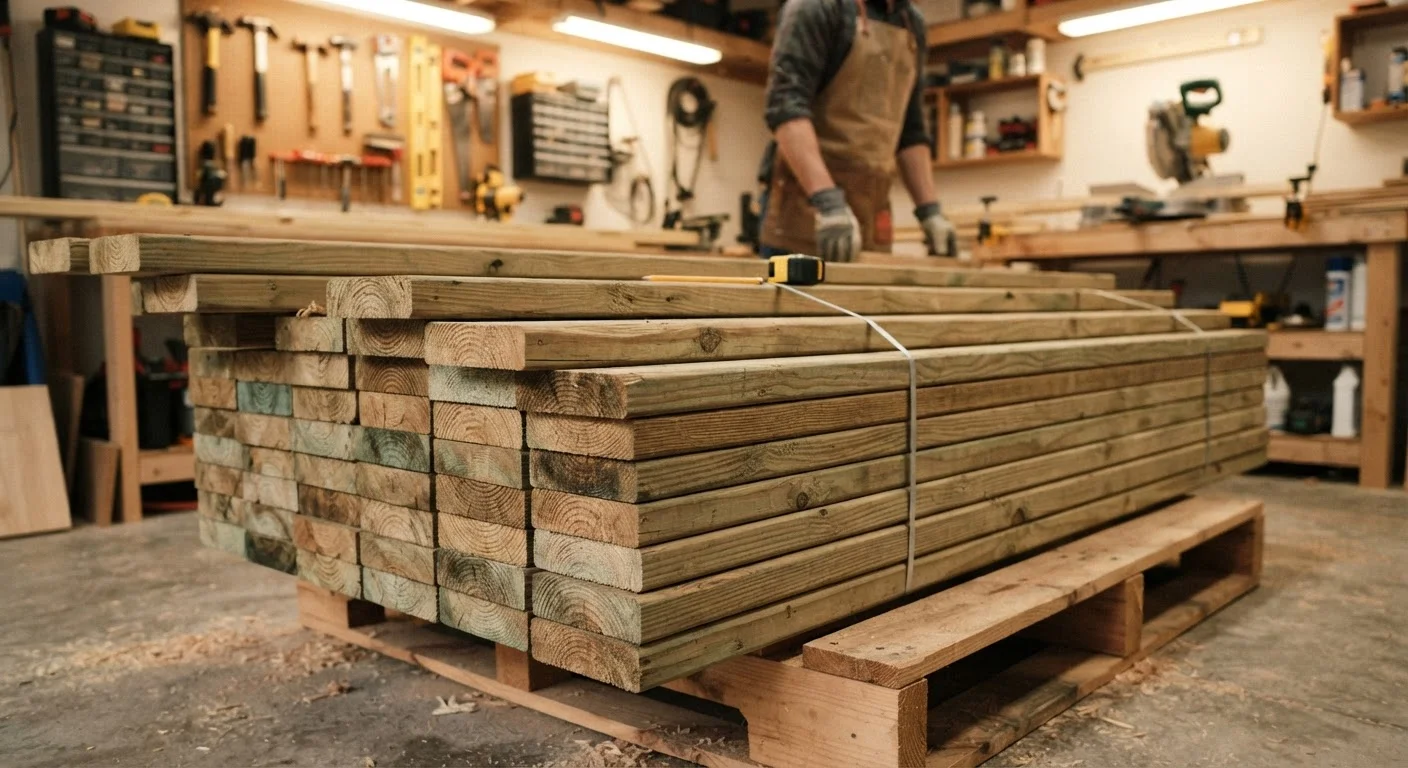
Understanding what treated wood actually is - softwood lumber, most commonly southern yellow pine or Douglas fir, infused with chemical preservatives under pressure - helps demystify most of the fears around it. The preservatives bond deeply into the wood fibers, which is precisely why treated lumber resists insects and fungal decay far better than untreated wood in ground-contact or wet applications.
Never Burn Treated Lumber Offcuts
Burning pressure-treated wood - even modern copper-based formulations - releases toxic compounds in the smoke and ash. This applies to outdoor fire pits, burn barrels, and wood stoves. Treated lumber offcuts should be disposed of through your local solid waste facility, not incinerated. Check your municipality's guidelines, as disposal rules vary by region.
One practical consideration that catches many first-time deck builders off guard: treated lumber is typically sold wet, meaning it still holds moisture from the treatment process. It will shrink and may warp as it dries. Cutting, fastening, and finishing schedules should account for this. If you're weighing treated timber against composite alternatives, our comparison of composite decking vs pressure-treated timber covers the real-world trade-offs across cost, lifespan, and maintenance.
Always check the end-tag stamp on treated lumber. It will indicate the preservative type, retention level (measured in pounds of preservative per cubic foot), and approved use categories - above ground, ground contact, or freshwater contact. Selecting a lower retention level than your application requires is one of the most common and costly mistakes a DIYer can make. If you're also weighing the appeal of reclaimed wood, our guide on the real trade-offs of reclaimed wood is worth reading alongside this one.
This article is for general informational purposes only. Always consult local building codes, permit requirements, and product-specific safety data sheets before starting any construction project involving treated lumber.
The content on this site is for informational purposes only and is not a substitute for professional advice. Always consult a qualified professional for guidance specific to your situation.