

Our Verdict
Reclaimed wood rewards patient, detail-oriented DIYers who are willing to invest time in sourcing and preparation. For structural, high-moisture, or code-regulated applications, the risks typically outweigh the aesthetic appeal. As an accent or decorative material, it delivers character and sustainability that new lumber rarely matches.
Best for experienced DIYers tackling accent walls, shelving, furniture, or decor who have time to properly inspect, clean, and prep each piece before use.
What Reclaimed Wood Actually Is
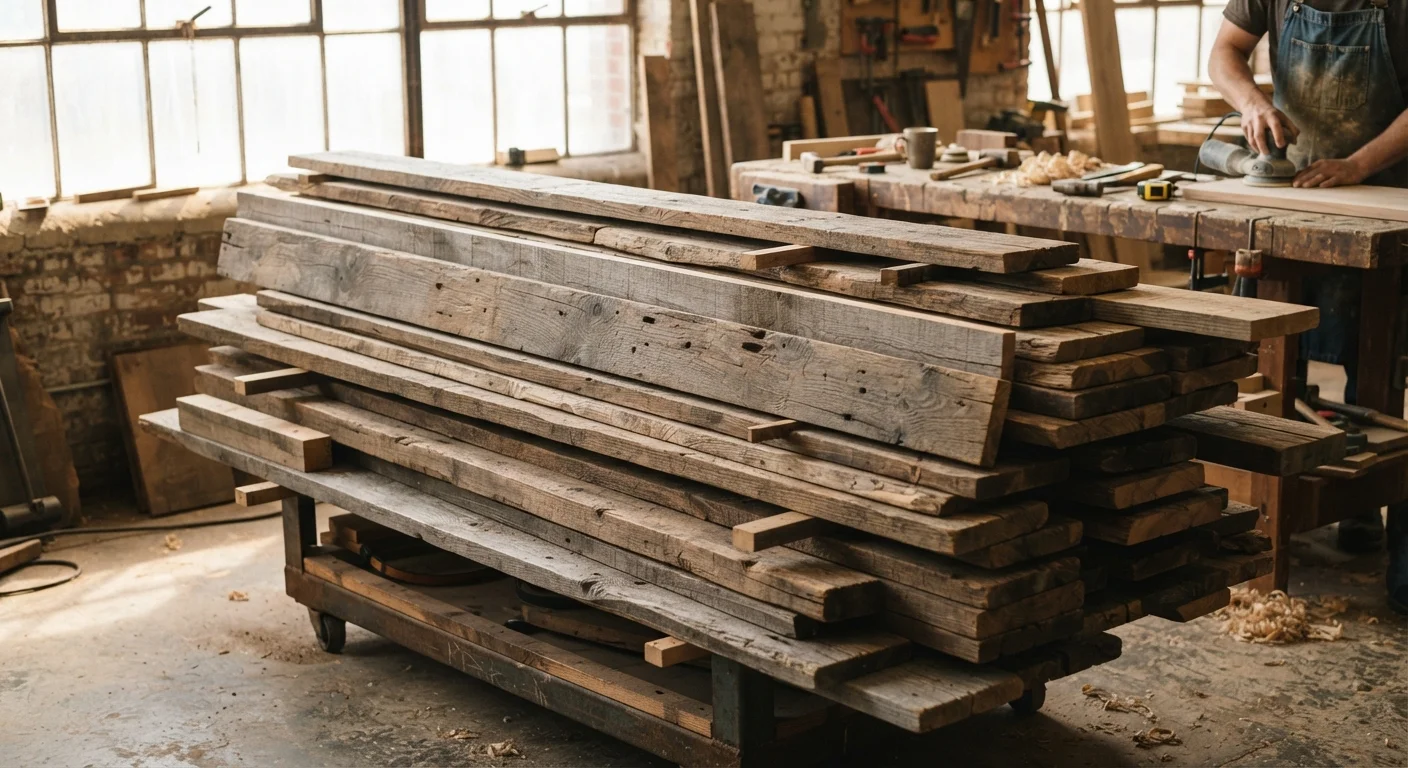
Reclaimed wood refers to timber salvaged from demolished or deconstructed structures - barns, factories, warehouses, old homes, and even wine casks or gym floors. Unlike new lumber milled from freshly harvested trees, reclaimed wood has already lived at least one full life. That history is both its greatest asset and its biggest complication.
It's worth distinguishing reclaimed wood from recycled wood products (like particleboard made from wood waste) and from sustainably harvested new lumber. Each category has different properties, risks, and appropriate applications. For DIYers drawn to the look and the environmental story, reclaimed solid wood is the material in question here.
See our guide to treated timber myths if you're also comparing pressure-treated options for your project.
The Genuine Advantages
Distinctive character no new lumber can match
Weathered grain, nail holes, saw marks, and natural patina give reclaimed wood a visual depth that takes decades to develop. These features are impossible to fully replicate with artificial distressing techniques.
Reduces demand for newly harvested timber
Using salvaged material diverts wood from landfills and reduces pressure on forests. For environmentally motivated DIYers, this is a meaningful and tangible benefit.
Often sourced from dense, slow-grown old-growth trees
Timber from pre-20th-century structures frequently came from old-growth forests with tighter growth rings, making it denser and sometimes harder than comparable modern lumber species.
Can be cost-effective when sourced directly
Salvage yards, architectural salvage dealers, and demolition sites can yield reclaimed wood at low or no material cost, particularly for smaller accent projects.
Supports local salvage economies and deconstruction trades
Purchasing from local salvage operations supports deconstruction businesses that create jobs and keep useful materials in circulation rather than in landfills.
Beyond aesthetics, reclaimed wood often comes from old-growth timber - trees that grew slowly over centuries, producing denser, tighter grain than most commercially available lumber today. That density can translate to impressive durability when the wood is properly prepared and used in appropriate applications.
From a budget perspective, reclaimed wood can be genuinely cost-effective when sourced directly from demolition sites, salvage yards, or online marketplaces - though those savings erode quickly once labor-intensive prep work begins. For more on managing material costs across a renovation, understanding where renovation budgets leak is worth a read.
The Real Disadvantages
May contain lead paint, chemicals, or contaminants
Wood from structures built before 1978 can carry lead-based paint. Industrial salvage may contain petroleum products, pesticides, or chemical preservatives that are unsafe indoors without thorough remediation.
Hidden fasteners damage tools and pose safety risks
Embedded nails, screws, and bolts are nearly invisible in rough lumber and can shatter saw blades or become dangerous projectiles during cutting. A metal detector sweep is essential before any machining.
Dimensional inconsistency complicates installation
Reclaimed boards vary in thickness, width, and straightness in ways that new dimensional lumber does not. Fitting pieces together evenly often requires significant milling, planing, or shimming.
Rarely meets building code certification requirements
Most jurisdictions require graded, stamped lumber for structural and permitted work. Reclaimed wood typically lacks this certification, effectively excluding it from load-bearing or inspected applications.
Prep work erodes the cost advantage
Cleaning, metal detection, acclimation, milling, and finishing all take time and may require renting or purchasing specialized tools. These costs can quickly exceed the savings on material.
Moisture content may cause warping after installation
Salvaged wood that hasn't been kiln-dried or properly acclimated can swell, shrink, or warp after installation as it adjusts to indoor humidity levels - causing gaps, cupping, or cracking.
Pest infestation risk requires careful inspection
Wood from old structures can harbor termites, wood-boring beetles, or their eggs. Introducing infested lumber into your home can spread damage to existing woodwork and structural elements.
The hidden hazards deserve special attention. Older wood - particularly anything pre-1978 - may carry lead paint. Salvaged industrial timber can be contaminated with oils, chemicals, or preservatives. Embedded nails, screws, and metal fasteners are not just a nuisance; they can damage saw blades and create dangerous projectiles if hit unexpectedly during cutting.
Moisture content is another variable that catches DIYers off guard. Reclaimed wood doesn't arrive kiln-dried and ready to use. If installed with high moisture content, it can warp, crack, or shrink as it acclimates to your home's interior environment. Before committing to a large reclaimed wood project, learn what to inspect before it enters your home.
Where Reclaimed Wood Works - and Where It Doesn't
Reclaimed wood excels in decorative and accent applications: feature walls, open shelving, mantels, tabletops, and picture frames. These uses play to its visual strengths while minimizing structural demands and reducing the consequences of dimensional inconsistency.
Structural framing, load-bearing applications, decking, and any project subject to building permits are where reclaimed wood becomes problematic. Most building codes require lumber to carry a grade stamp from a recognized grading agency. Reclaimed wood typically lacks this certification, making it difficult or impossible to use in permitted construction without additional testing and documentation.
Permits and Codes Still Apply
Even when reclaimed wood is used for decorative purposes, any project that affects walls, ceilings, or structural elements may require a building permit. Reclaimed wood's lack of a grading stamp can complicate permit approvals for structural applications. Always check with your local building department before starting work, and never assume salvaged materials are exempt from code requirements.
If you're curious how reclaimed wood compares to another salvage material with a devoted online following, our honest breakdown of pallet wood projects covers similar sourcing and safety ground.
Practical Guidance Before You Start
If you've weighed the trade-offs and reclaimed wood is right for your project, preparation is everything. Allow boards to acclimate indoors for at least two weeks before installation. Use a metal detector to locate hidden fasteners before cutting. Sand or strip any painted surfaces and test for lead using an inexpensive test kit available at most hardware stores. A moisture meter - typically an affordable tool - helps confirm the wood is within an acceptable range before it goes up on a wall or into a piece of furniture.
Budget realistically. The material itself may be inexpensive or even free, but the additional tools, time, and finishing products needed to make reclaimed wood project-ready are real costs. Pairing reclaimed materials with surplus or overstock new lumber is one way to manage those costs - here's when surplus materials make sense and when they don't.
This article is for informational and educational purposes only. Always verify local building codes and permit requirements before starting any construction project, and consult a licensed professional for structural or regulated work.
The content on this site is for informational purposes only and is not a substitute for professional advice. Always consult a qualified professional for guidance specific to your situation.