

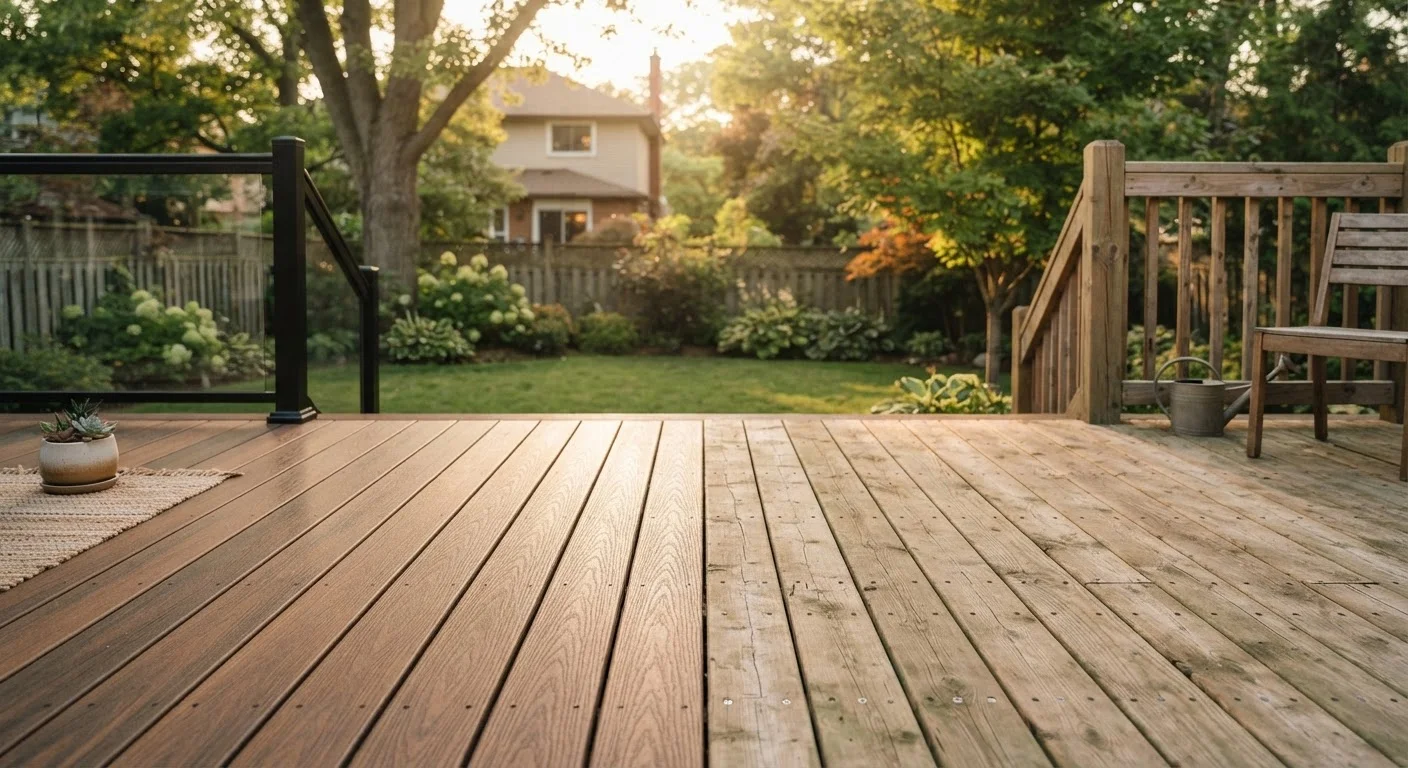
Option A
Composite Decking
The low-maintenance, engineered alternative.
Best for: Homeowners who want a long-lasting deck with minimal annual upkeep and a uniform appearance.
Option B
Pressure-Treated Timber
The accessible, time-tested classic.
Best for: Budget-conscious DIYers who are comfortable with periodic maintenance and want a natural wood look.
Lifespan: How Long Does Each Material Actually Last?
Lifespan is the headline question for any decking decision, and the honest answer depends heavily on installation quality, climate, and how consistently you maintain the surface.
Pressure-treated timber is lumber that has been impregnated with chemical preservatives - most commonly alkaline copper quaternary (ACQ) or copper azole - under high pressure to resist rot, fungi, and insects. A properly maintained pressure-treated deck can realistically last 15 to 25 years. Without regular sealing or staining every two to three years, that range drops sharply. Wood that's allowed to cycle through wet and dry seasons without protection will check, warp, and eventually rot at fastener points and board ends first.
Composite decking is an engineered material made from a blend of wood fiber and recycled plastic (typically polyethylene or polypropylene). Most products are capped with a protective polymer shell that resists staining, fading, and moisture intrusion. Under typical residential conditions, composite decking is generally rated to last 25 to 30 years or longer, and many manufacturers back this with warranties in that range. That said, uncapped or lower-quality composites can show surface deterioration, mold, or staining within a decade - so product quality within the composite category varies meaningfully.
For context on how engineered versus natural materials compare in other parts of the home, see our engineered hardwood vs. solid hardwood comparison.
| Criterion | Composite Decking | Pressure-Treated Timber |
|---|---|---|
| Typical Lifespan | 25-30+ years | 15-25 years (maintained) |
| Upfront Material Cost | Higher (2-4× timber) | Lower, widely available |
| Annual Maintenance | Wash 1-2× per year | Seal/stain every 2-3 years |
| Rot & Insect Resistance | Excellent (no preservatives needed) | Good (chemical treatment required) |
| Heat Retention | Can get very hot in direct sun | Cooler underfoot than composite |
| Aesthetic Flexibility | Limited (pre-coloured boards) | High (stain, paint, or weather) |
| DIY Workability | Moderate (heavier, specialised clips) | Easy (standard saw and screws) |
| End-of-Life Disposal | Mostly landfill | Biodegradable (no burning treated wood) |
Maintenance Requirements: What You're Signing Up For
Both materials require some care, but the type and frequency differ substantially.
With pressure-treated timber, plan for a recurring maintenance cycle. Newly installed boards should be allowed to dry for several weeks before any sealer or stain is applied. After that, inspect annually for checking (surface cracks), raised grain, and any soft spots around fasteners. Depending on your climate and the deck's sun and moisture exposure, reapplication of a water-repellent sealer or penetrating stain is typically needed every two to three years. Neglecting this cycle accelerates surface degradation noticeably. Boards can also split and splinter over time, creating a barefoot-hazard that requires sanding or board replacement.
Composite decking dramatically reduces that cycle. Routine maintenance is largely limited to sweeping off debris and washing the surface with soap and water - or a deck cleaner formulated for composites - once or twice a year. The main failure modes to watch for are staining from tannin bleed (especially near wood planters or furniture), mold growth in shaded or poorly drained spots, and thermal expansion causing board gaps to shift seasonally. Good installation technique - leaving appropriate spacing between boards and ensuring adequate substructure drainage - prevents most of these issues.
For a broader look at how different outdoor surfaces compare on maintenance demands, our patio surface materials guide covers concrete, pavers, and gravel alongside decking options.
Cost, Environmental Impact, and What to Watch Out For
Upfront cost favors pressure-treated timber clearly. Timber is one of the most affordable structural decking materials available, and it's stocked at virtually every lumber yard and home improvement warehouse nationwide. Composite decking typically costs two to four times more per square foot for materials alone, with higher-end capped products at the upper end of that range. However, when you factor in the cost of sealers, stains, and the labor or time involved in recurring timber maintenance over 20-plus years, the lifetime cost gap between the two materials narrows - though composite rarely becomes cheaper in total cost for most homeowners.
Environmental considerations are more nuanced than they first appear. Pressure-treated timber uses chemical preservatives that require care when cutting (always wear a dust mask and eye protection, and dispose of offcuts according to local regulations - do not burn treated wood). Modern preservatives are considerably less hazardous than older arsenic-based treatments phased out in the early 2000s, but they are still present in sawdust and should be handled carefully. Common myths about treated timber covers what the evidence actually shows about safety and appropriate use.
Composite decking often incorporates recycled plastic content, which can be a genuine sustainability positive. However, most composites are not readily recyclable at end of life and will ultimately go to landfill. Timber, by contrast, is biodegradable and sourced from a renewable resource - though responsible sourcing matters here.
25-30 yrs
Typical composite deck warranty length
Many composite decking manufacturers offer warranties in this range, reflecting the material's engineered durability advantage over untreated wood.
2-3 yrs
Pressure-treated resealing interval
Deck maintenance guides from cooperative extension programs consistently recommend reapplying water-repellent sealer or stain on this cycle to preserve timber performance.
~30%
Recycled content in many composite boards
Many composite decking products incorporate recycled plastic and wood fiber, though exact percentages vary by manufacturer and product line.
One often-overlooked factor is heat retention: composite boards, especially darker colors, can become significantly hotter underfoot on sunny summer days compared to timber. If barefoot comfort is a priority in a sun-exposed yard, this is worth factoring into your decision. Similarly, the outdoor elements affect not just decking - see why outdoor furniture degrades faster than it should for related weathering considerations.
The content on this site is for informational purposes only and is not a substitute for professional advice. Always consult a qualified professional for guidance specific to your situation.