

Why Engineered Wood Exists - and Why It Matters
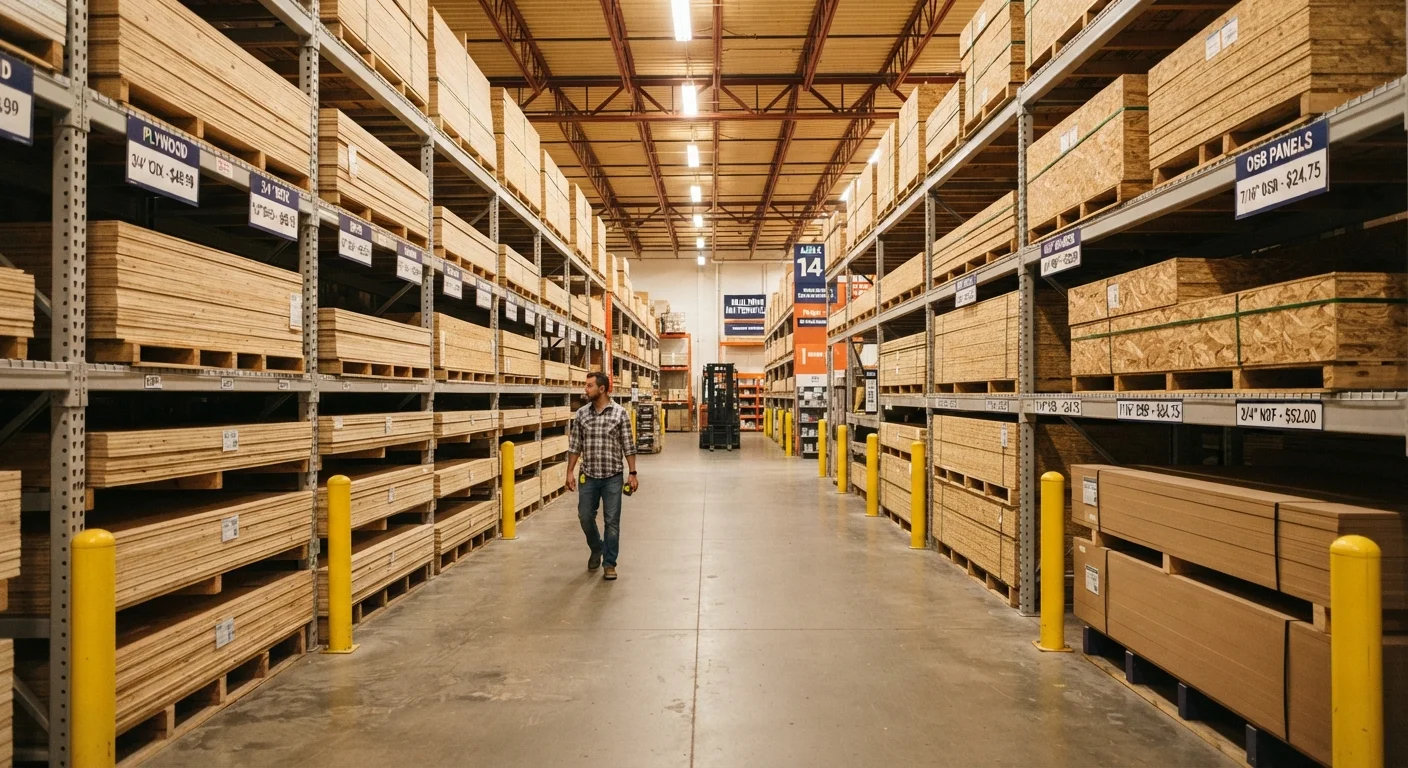
Walk the lumber aisle and you'll find far more than dimensional pine. Engineered wood products - panels, sheets, and beams made by bonding wood fibers, veneers, or strands together under heat and pressure - now fill most of that aisle. They exist for good reason: they're dimensionally stable, available in large formats, and often less expensive than clear solid lumber for the same structural task.
The catch is that each product is optimized for a different purpose. Using MDF where moisture resistance matters, or OSB where a smooth paintable surface is required, leads to frustrating failures. This field guide cuts through the confusion so you can grab the right sheet on the first trip.
For a parallel look at solid lumber classifications, see our guide to lumber grade stamps - knowing both systems makes you a more confident buyer.
Cross-grain construction
A layering technique in plywood where each veneer's wood grain runs perpendicular to the one above and below it. This alternating pattern resists warping and gives the panel strength in two directions.
Exterior-rated
A classification indicating that waterproof adhesive was used between plies or strands, making the panel suitable for applications where it may be exposed to moisture. Does not mean the face veneer is weatherproof indefinitely.
Span rating
A number stamped on structural panels or beams indicating the maximum recommended distance between supports. Used to select the right thickness of subfloor sheathing or beam size for a given load and span.
Dimensional stability
A material's resistance to expanding, shrinking, warping, or twisting in response to changes in temperature and humidity. Engineered wood products are generally more dimensionally stable than solid lumber.
Resin binder
The adhesive mixed into or applied between wood fibers, strands, or veneers during manufacturing. The type of resin largely determines a panel's moisture resistance and off-gassing characteristics.
LVL (Laminated Veneer Lumber)
An engineered beam product made from thin wood veneers all oriented with grain running parallel, bonded under heat and pressure. Produces a consistent, warp-resistant structural member used in headers and beams.
The Main Products, Explained
Plywood
Plywood is built from thin wood veneers (called plies) glued with alternating grain directions. That cross-grain construction gives it excellent two-way strength and resistance to warping. It comes in interior and exterior grades - the difference is the waterproof glue used between plies, not just the face veneer. Exterior-rated plywood (often marked CDX) can handle moisture exposure. Use plywood for subfloors, roof sheathing, cabinet carcasses, and anywhere you need reliable screw-holding along an edge.
OSB (Oriented Strand Board)
OSB is made from compressed wood strands arranged in oriented layers, bonded with resin. It's the dominant structural sheathing material for walls and roofs largely because it's consistent and cost-effective. OSB is strong in bending but swells noticeably at cut edges when wet - always seal exposed edges on roof and floor applications. It does not hold screws at edges as well as plywood does.
MDF (Medium-Density Fiberboard)
MDF is produced by breaking down wood into fine fibers, mixing them with resin, and pressing them into dense, smooth sheets. It has a perfectly flat, void-free surface that paints exceptionally well - making it a go-to for painted cabinet doors, baseboards, and interior trim. The downsides: it's heavy, it does not tolerate moisture at all, and it requires proper dust protection when cutting (the fine particles are a respiratory hazard - wear an N95 respirator). MDF should never be used in bathrooms, laundry rooms, or outdoors.
Hardboard (HDF)
Hardboard - sometimes called high-density fiberboard or by the trade name Masonite - is a denser, thinner cousin of MDF. It's most often used as pegboard, drawer bottoms, cabinet backs, and underlayment. One side is smooth; the other is textured. It's inexpensive and takes paint well but is not structural.
LVL (Laminated Veneer Lumber)
LVL is an engineered beam made from thin veneers all glued with parallel grain. The result is a predictably strong, dimensionally consistent beam used for headers above doors and windows, ridge beams, and floor beams. LVL doesn't bow, twist, or shrink the way dimensional lumber can. Sizing and span ratings must be calculated for structural applications - consult local building codes or a qualified professional before specifying LVL in load-bearing situations.
If you're working on flooring repairs alongside a subfloor project, our article on choosing the right gap filler for floors pairs well with this material overview.
| Plywood - best for | Subfloors, sheathing, cabinetry |
| OSB - best for | Wall and roof structural sheathing |
| MDF - best for | Painted interior trim, flat cabinet doors |
| Hardboard - best for | Cabinet backs, drawer bottoms, pegboard |
| LVL - best for | Structural headers and beams |
| MDF moisture tolerance | Very low - interior dry use only |
| OSB edge vulnerability | Swells when wet - always seal cut edges |
| Plywood vs. OSB edge fastening | Plywood holds screws better at edges |
Choosing the Right Product for Your Project
A useful rule of thumb: match the product to the surface exposure and the mechanical demands of the job.
- Structural sheathing (walls, roofs): OSB or exterior plywood. Seal OSB edges.
- Subfloors: Tongue-and-groove plywood is the standard; OSB subfloor panels are a cost-effective alternative if edges are kept dry during construction.
- Painted interior millwork and cabinetry: MDF for flat, paintable surfaces. Avoid anywhere moisture is present.
- Cabinet backs and drawer bottoms: Hardboard - lightweight and smooth enough for a finished interior look.
- Structural beams and headers: LVL. Always verify sizing requirements against local codes.
Budget decisions are easier once you understand what you're actually trading off. Plywood costs more than OSB but holds fasteners better at edges - worth the extra spend for flooring. MDF is cheaper than solid wood trim but needs primer before paint or it will absorb unevenly. For a deeper look at balancing grade and cost on solid lumber purchases, see Lumber Grades Decoded: Choosing the Right Board Without Overspending.
Note: Any structural or load-bearing application - headers, beams, floor systems - may require a building permit and inspection in your jurisdiction. Always check local codes before beginning structural work, and consult a licensed professional when in doubt.
The content on this site is for informational purposes only and is not a substitute for professional advice. Always consult a qualified professional for guidance specific to your situation.