

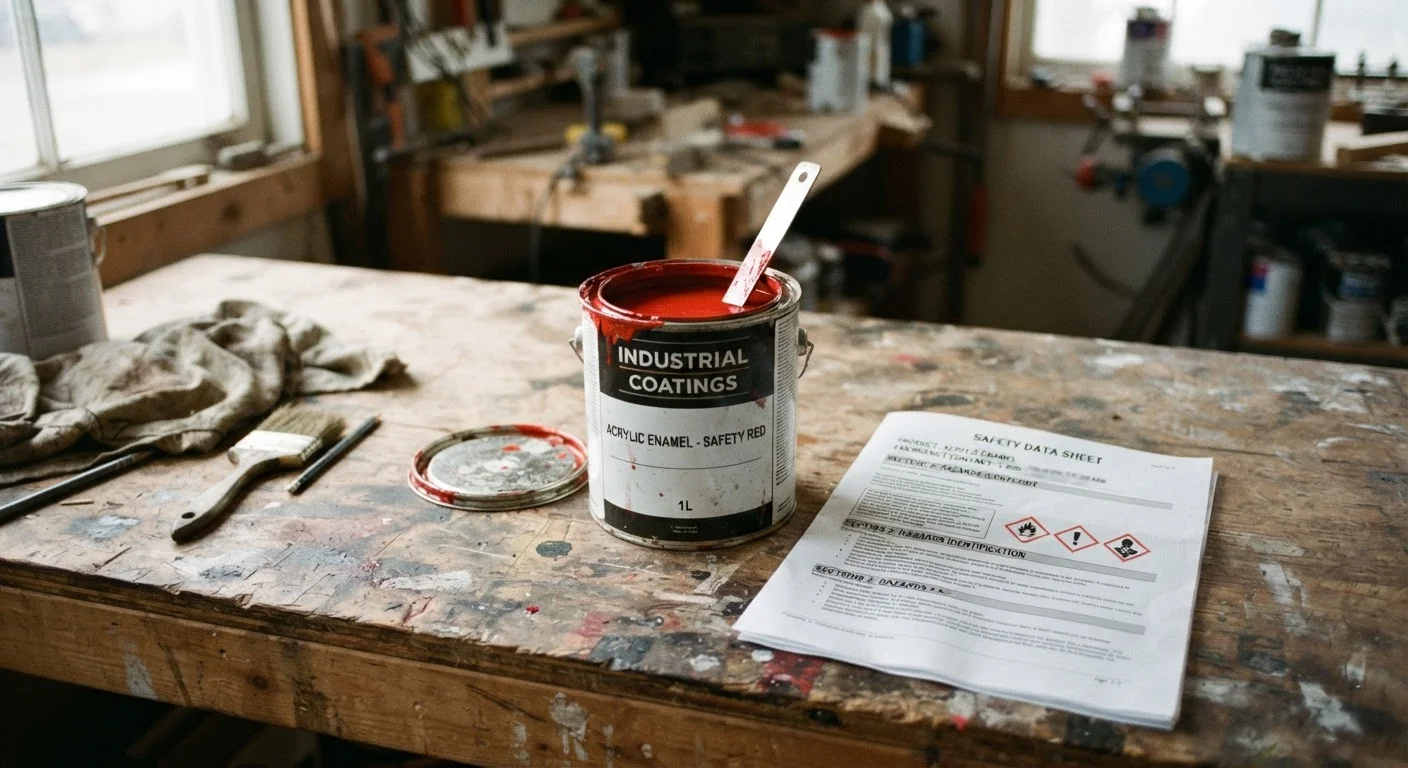
Why an SDS Matters More Than the Label
Every regulated building product sold in the US - paints, adhesives, solvents, caulks, insulation materials - is required to have a Safety Data Sheet. The label on the tin or bag is a summary; the SDS is the complete technical document. A label might tell you a product is flammable. The SDS tells you the exact flashpoint, what concentration in air becomes dangerous, how long skin contact can occur before injury risk increases, and what to do if things go wrong.
For DIYers, the SDS closes the gap between 'I've used this stuff before' and genuinely informed decision-making. This matters especially when you're working in confined spaces, mixing products near each other, or handling materials that could affect others in the home - children, pets, or anyone with respiratory sensitivities. If you're working with insulation products in particular, also see our guide to installing insulation safely, which covers material-specific hazards in that context.
MSDS vs. SDS: Know the Current Term
The term 'Material Safety Data Sheet' (MSDS) has been officially replaced by 'Safety Data Sheet' (SDS) under the Globally Harmonized System (GHS), which the US adopted through OSHA's Hazard Communication Standard. Both terms refer to the same document, and you'll still hear 'MSDS' used casually on job sites and in hardware stores. Regardless of what it's called on the packaging, the 16-section format described in this guide is what you're looking for.
The SDS also functions as your reference document in an emergency. Keep a printed or easily accessible digital copy on-site any time you're using a regulated product.
Never Rely Solely on Label Summaries
Product labels carry only a fraction of the safety information contained in a full SDS. A label might say 'use in a well-ventilated area' without specifying that ventilation means a specific air-change rate or respiratory protection. Always treat the SDS as the authoritative source, and check it for every product you use - even ones that seem familiar.
Navigating the 16-Section Format
All SDS documents follow a standardized 16-section structure established under OSHA's Hazard Communication Standard. You don't need to read every section from start to finish on every job - but you do need to know which sections are most relevant to your immediate task.
What you will need
The sections most useful to everyday DIYers are:
- Section 1 - Product identification and emergency contacts
- Section 2 - Hazard classification, signal words, and pictograms
- Section 7 - Handling and storage requirements
- Section 8 - Exposure limits and PPE specifications
- Section 13 - Disposal considerations
- Section 15 - Regulatory information
The remaining sections cover chemical composition, first-aid measures, fire-fighting information, and physical properties - worth reviewing for unfamiliar products, but less immediately actionable for a typical weekend project.
Download Before You Buy
Most manufacturers post SDS documents on their websites as free PDFs. Download the SDS for any product you're considering before you purchase it - not just after. Reviewing it in advance lets you budget for the right PPE and confirm the ventilation requirements of your workspace before committing to a product.
Note that the SDS is distinct from a manufacturer's technical or specification data sheet. The latter covers performance characteristics like compressive strength or VOC content - useful at the planning stage, as discussed in our guide to reading material data sheets. The SDS is focused exclusively on safety.
SDS / MSDS document
The primary source of hazard, handling, storage, and disposal information for any building product.
Personal protective equipment (PPE)
Gloves, goggles, and respiratory protection recommended in Section 8 of the SDS for the specific product.
Printed SDS copy
A hard copy kept on-site during work provides fast reference if an incident occurs and internet access is unavailable.
Putting It Into Practice
The habit of reading an SDS before opening a product takes less than 15 minutes and consistently prevents the most common avoidable injuries on DIY projects: skin sensitization from repeated unprotected contact, eye irritation from splashes, and inhalation exposure from working in poorly ventilated areas without appropriate respiratory protection.
Follow the steps below each time you work with a new product. Once you've read an SDS for a product category - interior latex paint, for example - the process becomes faster because the hazard language and PPE requirements will follow predictable patterns. For those just getting started with material selection and planning, our introduction to material planning for first renovations covers how to integrate safety research into your overall project prep.
Locate the SDS for your product
Search the manufacturer's website for the exact product name plus 'SDS' or 'Safety Data Sheet.' Most manufacturers maintain a searchable database. If you can't find it online, the retailer is legally required to provide one on request. Save or print the document before you start work.
Read Section 1: Identification
Section 1 confirms the product name, intended use, manufacturer contact, and emergency phone number. Verify this matches the product in your hand. Note the emergency number - in a spill or exposure event, this number connects you to a specialist who can advise you in real time.
Review Section 2: Hazard Identification
This is the first critical section for DIYers. It lists GHS hazard classifications (flammable, toxic, corrosive, etc.), signal words ('Warning' or 'Danger'), and pictograms. Read every hazard statement carefully - this section tells you what can go wrong and under what conditions. Pay particular attention to skin, eye, and inhalation hazards.
Check Section 7: Handling and Storage
Section 7 tells you how to handle the product safely during use and how to store it afterward. Look for requirements around ignition sources, temperature ranges, incompatible materials, and container disposal. This section also informs safe on-site storage - a subject covered in more depth in our guide to storing building materials on site.
Identify PPE requirements in Section 8
Section 8 (Exposure Controls and Personal Protection) specifies the exact PPE required: glove material type, eye protection rating, and respiratory protection level. Generic 'wear gloves' advice on a label is expanded here into specifics - for example, whether standard nitrile gloves are adequate or whether you need thicker chemical-resistant gloves. Source your PPE to match these requirements before opening the product.
Note Sections 13 and 15: Disposal and Regulatory Information
Section 13 explains how to dispose of the product and its packaging legally. Many common DIY products - paints, solvents, adhesives - are classified as hazardous waste and cannot go in household trash. Section 15 lists applicable regulations and may flag state-specific requirements. Contact your local household hazardous waste facility to confirm disposal options in your area.
This article is for general informational and educational purposes only. Always consult the specific SDS for each product you use and follow all applicable local regulations for handling, storage, and disposal of hazardous materials.
The content on this site is for informational purposes only and is not a substitute for professional advice. Always consult a qualified professional for guidance specific to your situation.