

Why These Myths Stick Around
Hand tool myths circulate for understandable reasons. Hardware store layouts favor upselling. Hobbyist forums reward elaborate kit photos. And beginners, uncertain about what they actually need, often default to the assumption that more - and more expensive - equals better prepared.
The result is wasted money, cluttered toolboxes, and the creeping belief that DIY is inherently expensive or complicated. Most of it isn't. The hand tools every first-time DIYer actually needs fit in a single tote and cost far less than most beginners expect.
Breaking down the most persistent myths helps you spend smarter, start sooner, and build real skill instead of a real collection.
Myth
Expensive hand tools are always higher quality than affordable ones.
Fact
Price reflects many factors beyond performance - branding, retail markup, and aesthetics among them. Mid-range tools from reputable manufacturers frequently match or exceed premium options for everyday DIY work.
Tool pricing is influenced by manufacturing origin, retail channel, handle materials, and finish - not purely by cutting performance or durability. A mid-range hand saw with properly set and tensioned teeth will cut more cleanly than a premium saw that hasn't been maintained. What actually separates a capable tool from a poor one is the quality of the steel (especially for cutting tools), the accuracy of machined surfaces (for squares and planes), and the integrity of the handle attachment. These qualities exist across a wide price range. Before assuming cost equals capability, handle the tool, check its tolerances, and read about the steel grade if it's a cutting tool.
Myth
You need a large tool collection before you can tackle real projects.
Fact
The vast majority of beginner home projects - patching, assembling, measuring, and basic carpentry - require fewer than a dozen hand tools.
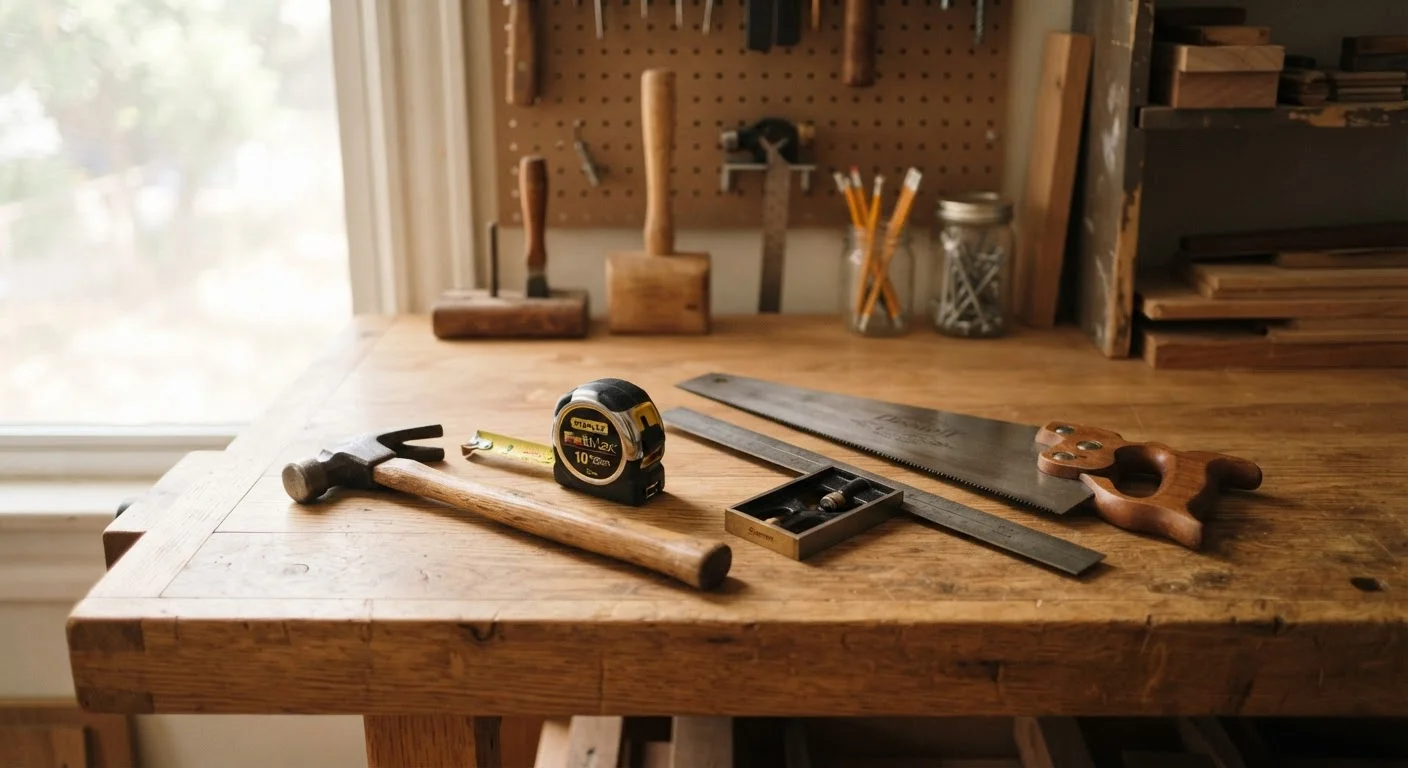
A hammer, tape measure, combination square, utility knife, level, a couple of screwdrivers, and a hand saw cover an enormous range of household tasks. The impulse to accumulate tools before starting projects delays the hands-on experience that actually builds skill. Specialty tools earn their place in a kit when a specific job demands them - not before. Starting small also means you learn which tools you genuinely reach for, which guides smarter additions over time rather than impulse purchases that gather dust.
Myth
Hand tools are slower and less effective than power tools for almost every job.
Fact
Hand tools outperform power tools in precision, control, and quietness for many common tasks, and they require no setup, charging, or cords.
Power tools excel at repetitive, high-volume work - driving dozens of screws, cutting sheet goods, or sanding large surfaces. But for a single dovetail joint, a flush trim cut, or fine paring work, a sharp hand tool offers control that a power tool can't match without significant skill. Hand tools are also safer for beginners in many low-stakes situations: no kickback, no blade speed, and no noise that masks feedback. Understanding both categories - and choosing the right one for each task - is a more useful skill than defaulting to power for everything. Power tool myths follow a similar pattern of misplaced assumptions worth examining.
Myth
A new tool will perform well right out of the package without any adjustment.
Fact
Many hand tools - particularly planes, chisels, and saws - benefit from tuning or sharpening before first use, regardless of price.
Manufacturing tolerances mean that a new chisel's edge is often only sharp enough to demonstrate sharpness in a store, not to cut cleanly in hardwood. Plane soles may need flattening. Hand saw teeth may need a light touch of setting. This isn't a defect - it's a normal part of working with hand tools, and learning to tune a tool is one of the foundational skills of the craft. Expecting out-of-box perfection leads to blaming the tool for poor results that are actually about preparation. A basic sharpening setup is one of the most valuable additions to any hand tool kit.
Myth
Any tool labeled for a task is the right tool for that task.
Fact
Tool categories often contain wide variation in design and suitability. The label tells you the general category, not whether the specific tool suits your material, grip size, or project type.
"Screwdriver" covers everything from a stubby offset driver to a long-shanked cabinetmaker's version. "Hand saw" spans rip-cut saws, crosscut saws, backsaws, and flush-cut saws - each optimized for different cuts and materials. Buying a saw labeled "general purpose" for detailed joinery, or a finish hammer for framing, can make the job harder rather than easier. Understanding what a tool is actually designed to do - and matching that to your specific task - matters far more than simply finding something with the right category name on the package. Safe tool use also depends on using tools as designed.
What Actually Matters When Choosing Hand Tools
Once the myths are cleared away, a practical framework emerges. The questions worth asking before any tool purchase are: Does this tool fit the work I actually do? Can I hold and control it comfortably? Is it made from materials that will hold an edge or maintain alignment over time?
Ergonomics matter more than most beginners realize. A handle that fits your grip reduces fatigue and improves control - both of which affect the quality of your work. A tool you reach for willingly is more valuable than an expensive one you avoid because it feels awkward.
Maintenance is the other underappreciated factor. A mid-range chisel that gets sharpened regularly will outcut an expensive one left dull in a drawer. See our guide to keeping hand tools in working order for practical upkeep routines that extend tool life significantly.
If you're unsure how hand tools compare to power options for a specific task, a balanced look at hand tools vs. power tools can help you decide which category fits the job - and your current skill level.
The goal isn't the largest collection. It's a kit built gradually without buying things twice - adding tools as projects demand them, not in anticipation of projects that may never come.
The content on this site is for informational purposes only and is not a substitute for professional advice. Always consult a qualified professional for guidance specific to your situation.