

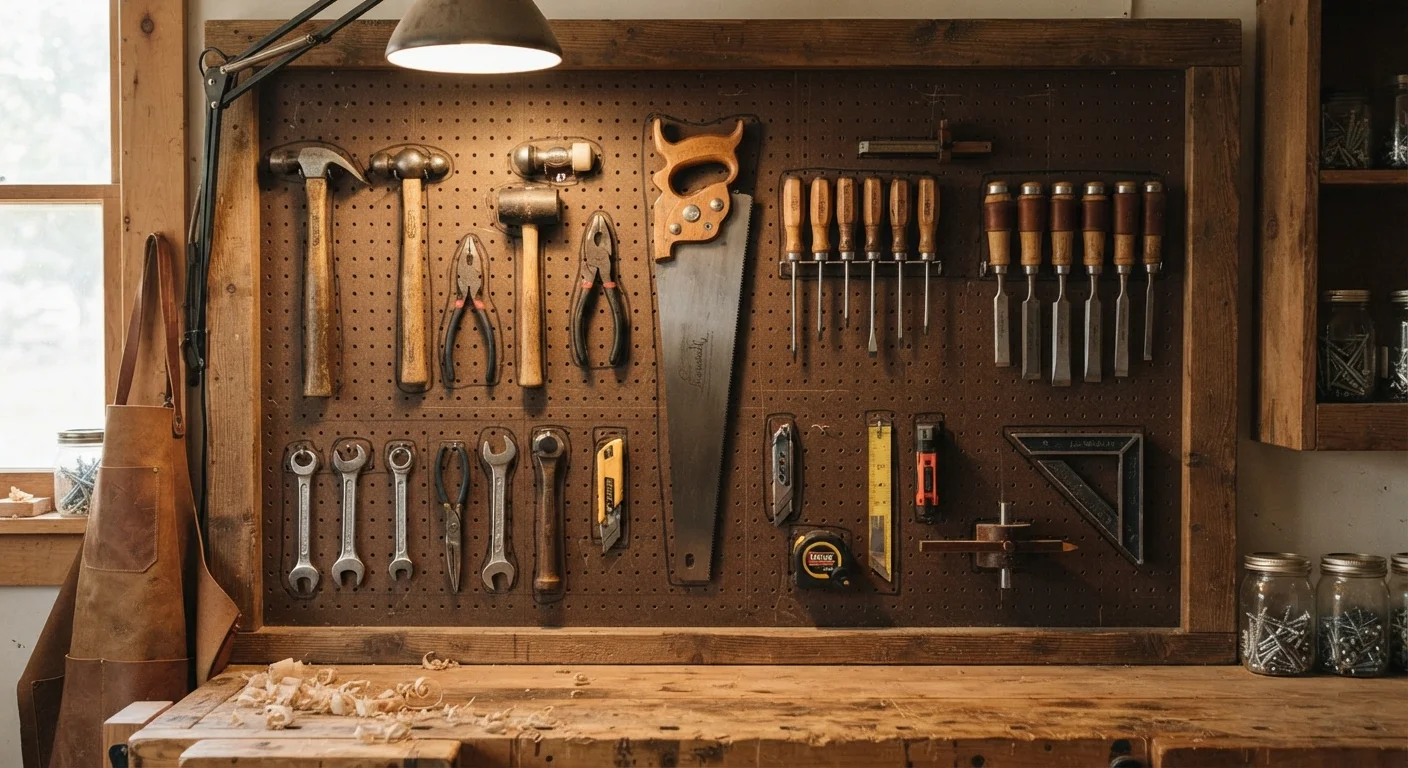
Why Most Beginners Over-Buy Early
The impulse to stock up before a project starts is understandable - nobody wants to stop mid-task for a missing tool. But buying broadly and quickly almost always leads to duplicates, low-quality items that get replaced, and a drawer full of tools that never earn their keep. The smarter path is deliberate and incremental.
The core problem is confusing having tools with being capable. A compact kit of well-chosen hand tools will get you through a surprising range of jobs. See our guide on common hand tool myths for a closer look at how misleading assumptions push beginners toward poor purchasing decisions.
The Core Tools That Earn Their Place First
Rather than thinking in categories, think in terms of jobs. The tools below cover the widest range of common DIY tasks and should form the foundation of any new kit:
- Claw hammer (16 oz) - drives and pulls nails, doubles as a general persuader. One is enough to start.
- Multi-bit screwdriver - interchangeable bits handle most Phillips and flathead fasteners without buying six separate drivers.
- Tape measure (25 ft) - a longer tape handles both furniture assembly and room measurements without needing a second one.
- Utility knife - cuts drywall, scores materials, opens packaging, and trims. Replaceable blades keep it perpetually sharp.
- Combination square - marks accurate 90° and 45° angles; far more versatile than a standard try square alone.
- Slip-joint pliers - adjustable grip handles a wider range of tasks than fixed-jaw pliers at the same price point.
- Level (24 in) - useful for shelves, frames, and tile work. A 24-inch level works where a 48-inch would be cumbersome.
Notice there's no saw on this list yet. For most early projects, a single hand saw or pull saw can be added once you have a clear need - and the weekend renovation toolkit guide helps you decide what's worth owning versus borrowing.
Adding Tools by Project, Not by Aisle
The most reliable rule for expanding your kit without buying things twice: only add a tool when a specific job requires it. This sounds obvious, but it's easy to ignore when you're standing in a hardware store with a project in mind and optimism in abundance.
Before any new purchase, ask yourself two questions: Does this tool unlock a category of work I'll return to, or is it a one-time need? And does anything I already own come close enough? A good maintenance routine for your hand tools also extends tool life significantly - sometimes sharpening a chisel you already own beats buying a second one.
For specialty tools - pipe wrenches, tile cutters, bolt cutters - renting is often the better economic choice. Many hardware stores and tool libraries offer short-term rentals that cost a fraction of ownership. If you've used a rented tool three or more times, that's a signal it's earned a permanent place in your kit.
Where Quality Matters - and Where It Doesn't
Spending more on the right tools is not the same as spending more on every tool. Prioritize quality where it directly affects results and safety:
- Invest more in: chisels, hand planes, and saws - dull or poorly made versions fight you on every cut.
- Mid-range is fine for: hammers, tape measures, squares - these are relatively simple tools where durability matters more than precision engineering.
- Save money on: clamps, sawhorses, and layout tools you'll use occasionally - these rarely justify a premium.
Building safe tool habits from the start also reduces the wear and risk that come from using tools incorrectly - which, incidentally, is how a lot of handles crack and blades chip prematurely.
If your budget is tight, resist the urge to compensate by buying more lower-quality items. A smaller set of dependable tools will outperform a large set of frustrating ones every time.
The content on this site is for informational purposes only and is not a substitute for professional advice. Always consult a qualified professional for guidance specific to your situation.