

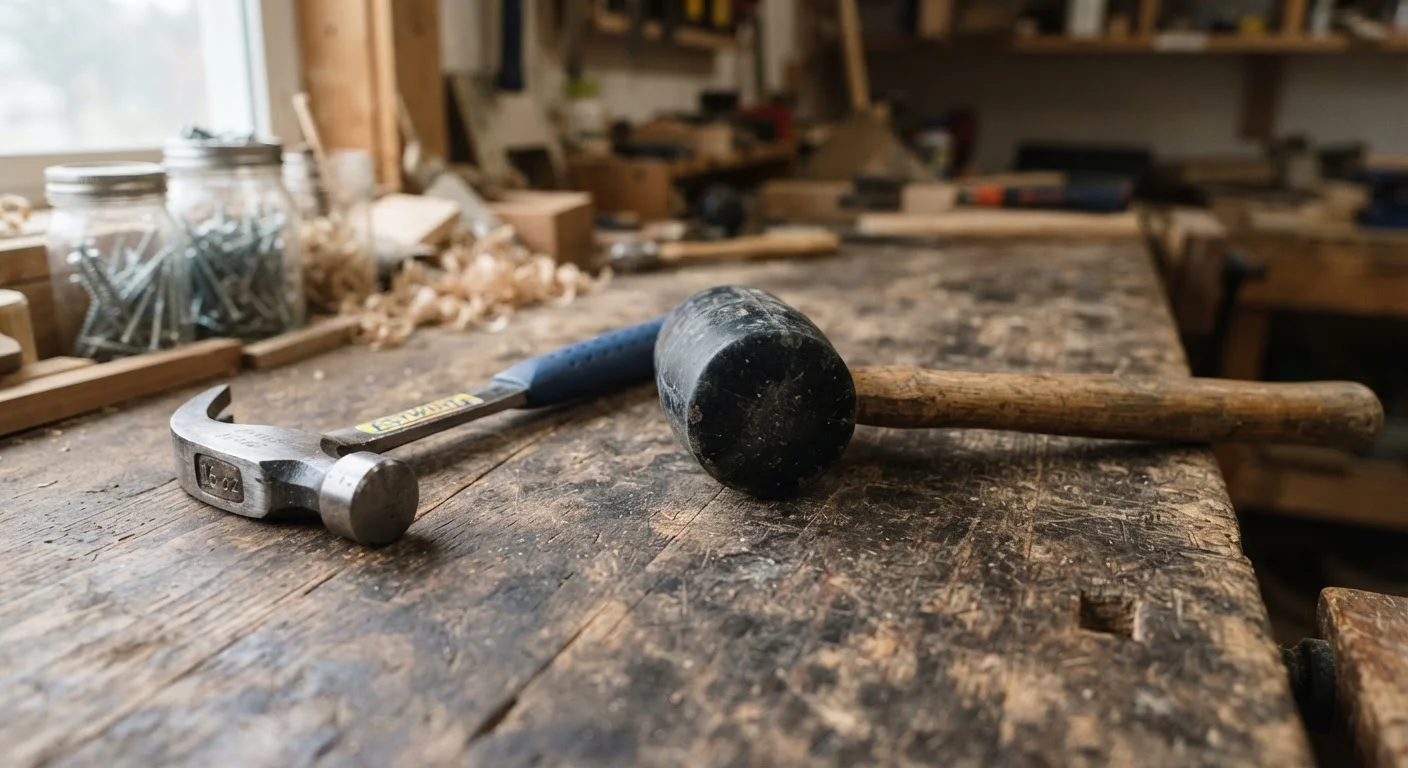
Option A
Claw Hammer
The all-purpose driving and pulling workhorse.
Best for: Driving and pulling nails in framing, finish carpentry, and general construction tasks.
Option B
Mallet
The gentle persuader for delicate and precise work.
Best for: Assembling joinery, tapping chisels, and moving materials without leaving marks.
What Each Tool Is Actually Built to Do
Both tools strike things - that's where the similarity ends. A claw hammer has a hardened steel head with a flat striking face on one end and a forked claw on the other. The steel face is engineered to drive nail heads flush without deforming, and the claw provides leverage for pulling nails cleanly from wood. It's a two-function tool built around a single fastener: the nail.
A mallet, by contrast, has a head made from softer material - rubber, wood, or plastic - and no claw. That softer head is the entire point: it delivers a blow that spreads force more gently, protecting whatever it contacts. A wooden mallet is the traditional choice for driving wood chisels (it won't split the handle the way steel would). A rubber or dead-blow mallet is ideal for seating joints, fitting flooring planks, or repositioning tiles without cracking them.
Understanding this distinction keeps you from a very common beginner mistake: reaching for a claw hammer when a mallet is what the job demands. For a broader look at which hand tools genuinely belong in your kit, see The Hand Tools Every First-Time DIYer Actually Needs.
| Criterion | Claw Hammer | Mallet |
|---|---|---|
| Head material | Hardened steel | Rubber, wood, or plastic |
| Primary use | Driving and pulling nails | Controlled striking without surface damage |
| Safe to use on chisels | No - damages handles | Yes - wooden mallet is standard |
| Safe on finished wood | No - will dent and bruise | Yes - rubber/plastic face protects surface |
| Nail removal | Yes - via forked claw | No |
| Typical weight range | 7-32 oz. (16 oz. most common) | 8-32 oz. depending on type |
| Best for flooring installation | Limited - risk of damage | Yes - rubber or dead-blow |
When to Reach for the Claw Hammer
A claw hammer shines anywhere nails are the primary fastener. Framing rough lumber, tacking down trim, assembling a garden raised bed, or patching a fence - these are its native territory. The 16 oz. smooth-face version is the most versatile weight for general DIY use: heavy enough to drive a 16d framing nail with reasonable effort, light enough for finish work without fatiguing your wrist.
The claw is equally important. Removing nails without a proper claw means prying with screwdrivers or pliers, which damages wood and tires your hands. A good claw provides mechanical advantage - place a thin scrap of wood under the head to protect the surface, then lever the nail out cleanly.
Where it falls short: Never use a steel-faced hammer to strike a wood chisel. The impact is too concentrated and will mushroom or crack the chisel's handle over time. Similarly, using a claw hammer to tap assembled furniture joints or floating floor planks will leave dents and potentially split the workpiece.
When to Reach for the Mallet
Pull out the mallet any time the goal is controlled force without surface damage. The three most common DIY scenarios are:
- Woodworking with chisels: A wooden mallet drives a chisel with a controlled, cushioned blow. Steel on wood-handled chisels degrades the handle quickly.
- Assembling joinery: Fitting mortise-and-tenon joints, drawer boxes, or flat-pack furniture often requires a firm tap. A rubber mallet seats pieces squarely without bruising the wood.
- Flooring and tile work: Tongue-and-groove planks, hardwood strips, and ceramic tiles all benefit from a rubber or dead-blow mallet. These surfaces crack or dent under steel. For more on material-specific considerations, see our guide to masonry materials.
A dead-blow mallet - filled with loose shot or sand - is a useful upgrade. It minimizes bounce-back after each strike, giving you more precise, fatigue-reducing control, especially in tight spaces.
Dead-Blow vs. Standard Rubber Mallet
A dead-blow mallet contains a cavity filled with loose shot or sand that shifts on impact, absorbing rebound. This makes it more controlled than a standard rubber mallet for precision fitting work. Standard rubber mallets are lighter and cheaper, and are perfectly adequate for most flooring and furniture tasks. The dead-blow version is worth adding to your kit if you find yourself doing a lot of joinery or cabinetry work.
How to Choose and Use Each One Safely
Choosing the right weight matters as much as choosing the right type. A hammer that's too heavy for your grip leads to wrist strain and missed strikes; too light and you're working harder than necessary. For most DIYers, a 16 oz. claw hammer and a medium rubber mallet (around 12-16 oz.) cover the vast majority of projects.
Safe use basics for both tools:
- Inspect the handle before every use. Cracks, splinters, or a loose head are hazards - replace or repair before striking anything.
- Strike squarely. Glancing blows bend nails, chip chisels, and send tools skipping unpredictably.
- Wear safety glasses. Even a rubber mallet can dislodge debris or chip a tile edge.
- Keep your grip firm but not white-knuckled - tension in the forearm leads to faster fatigue and less control.
If you're expanding into power-assisted striking or drilling, understanding when to use a hammer drill vs. a standard drill is a natural next step. And for a wider view of how hand tools and power tools fit together on real projects, see Hand Tools vs. Power Tools: Understanding the Trade-Offs.
This article is for general educational purposes. Always follow manufacturer guidelines and local safety codes when using striking tools. Consult a qualified professional for structural or permitted work.
The content on this site is for informational purposes only and is not a substitute for professional advice. Always consult a qualified professional for guidance specific to your situation.