

Why Safety Habits Matter From the Very First Cut
Many new DIYers assume hand tool safety is a concern reserved for power tools - saws, drills, and grinders that spin at high speed. In reality, hand tools account for a significant share of workshop injuries every year, precisely because they feel familiar and low-stakes. A hammer, a chisel, a utility knife - these tools demand real respect.
The good news is that forming solid safety habits early is far easier than correcting poor ones later. If you build the right instincts from your very first project, they become automatic. Before you even think about which tools to start with, check out The Hand Tools Every First-Time DIYer Actually Needs - understanding what belongs in your kit helps you use each tool correctly from the outset.
Core Safety Practices Worth Building Into Every Session
The practices below aren't complicated. They require awareness and a small investment of time - both of which pay back immediately in reduced risk and better results.
One habit that often surprises beginners: maintaining your tools is a safety practice, not just a maintenance chore. Keeping Your Hand Tools in Working Order covers exactly what to check and how often.
Setting Up a Workspace That Works With You, Not Against You
Even perfect technique breaks down in a chaotic workspace. Clutter underfoot, poor lighting, and an unstable work surface all multiply risk during an otherwise routine task.
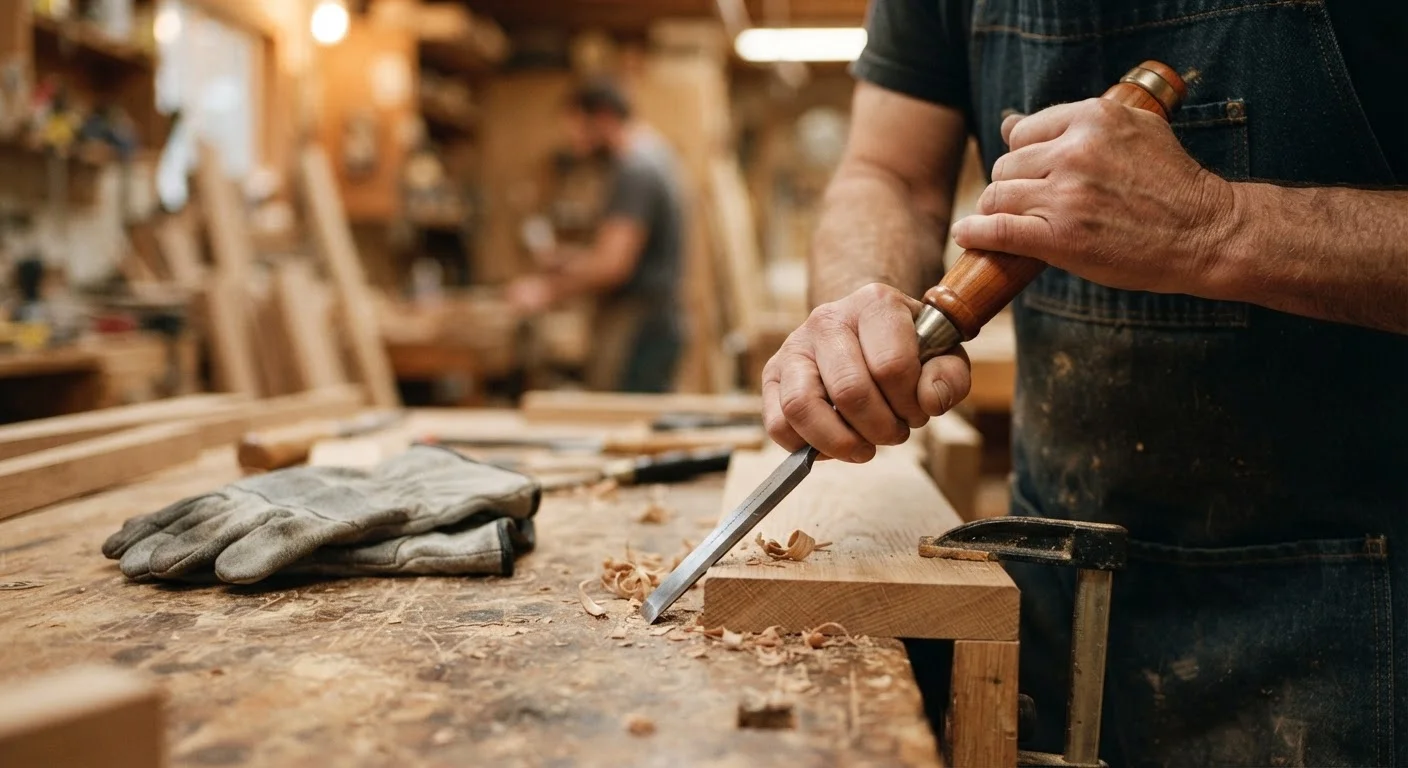
Before starting any hand tool work, clear the area around your workpiece. Secure the material in a vise, clamp, or bench hook so both hands remain free for tool control - never hold a workpiece in one hand while cutting or striking with the other. Ensure lighting falls directly on your work surface without casting shadows across the cut line.
If you're planning a more permanent workshop setup, the principles in Setting Up a Safe Home Workshop for Power Tool Projects apply equally to hand tool spaces - especially bench height and lighting placement.
Protective Equipment: What You Actually Need for Hand Tool Work
Personal protective equipment (PPE) isn't optional, even when no motor is running. Eye protection matters whenever you're chiseling, cutting wire, or working with wood that can splinter unpredictably. A flying chip doesn't require a power tool to cause serious harm.
Cut-resistant gloves provide meaningful protection during utility knife work, but note that gloves can reduce grip sensitivity - choose task-appropriate gloves rather than assuming thicker is always safer. Hearing protection is less critical for hand tools than for power tools, but dust masks remain relevant when sanding by hand or working with treated timber.
This article provides general educational information about hand tool safety practices. Always consult tool-specific instructions, and seek professional guidance for tasks that involve structural, electrical, or other regulated work.
The content on this site is for informational purposes only and is not a substitute for professional advice. Always consult a qualified professional for guidance specific to your situation.