

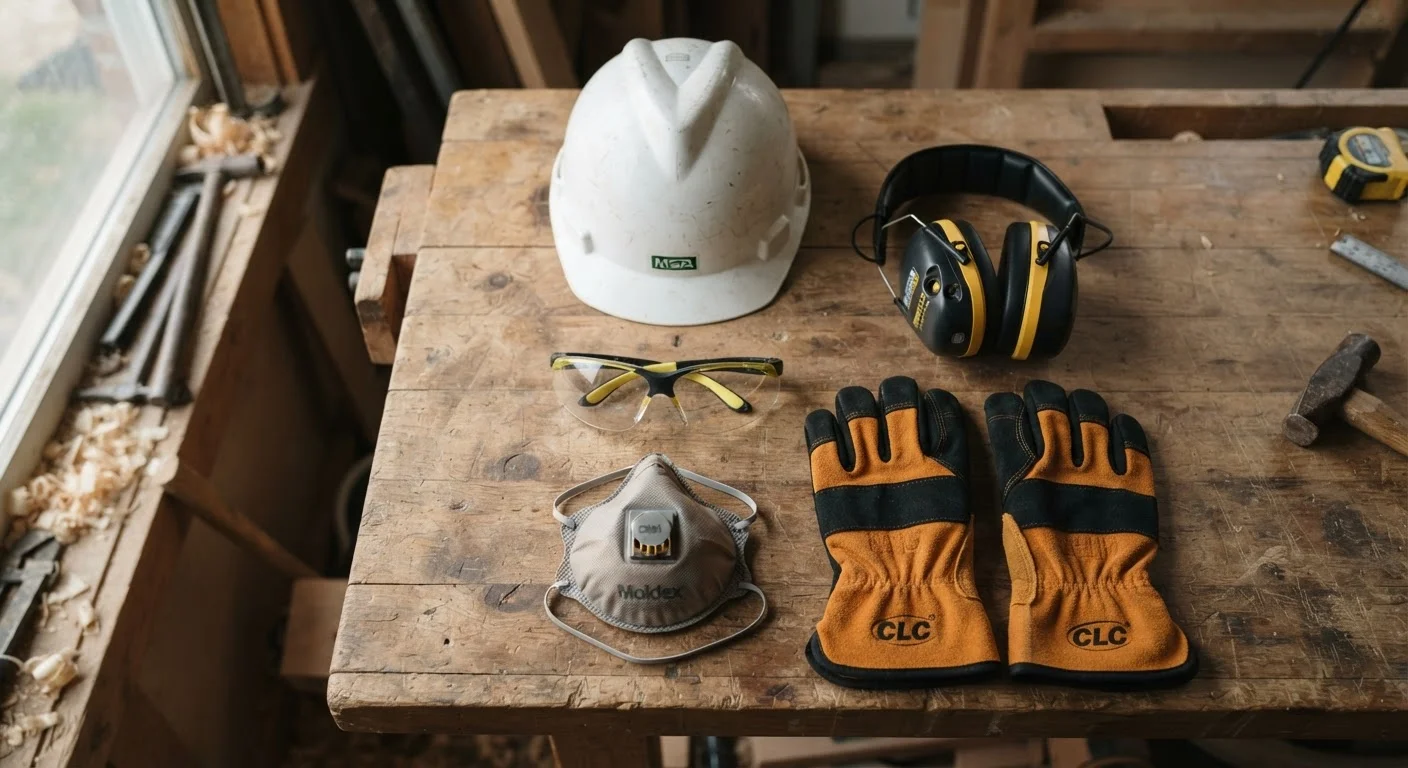
Why PPE Is the Last Line of Defense, Not the First
Good power tool safety starts well before you strap on a dust mask. Proper workspace setup, sharp and well-maintained tools, and sound technique all reduce hazards at the source. PPE steps in to handle whatever residual risk remains after those measures are in place. Think of it as a layered system - not a substitute for careful work, but an essential backup when things don't go perfectly.
That said, power tools create hazards that no amount of technique eliminates entirely: flying chips, sustained noise, and fine airborne dust are unavoidable byproducts of the work. That's exactly where PPE earns its place. Before every session, the power tool preparation checklist is a useful habit to build - PPE verification is part of it.
Eye Protection: The Non-Negotiable Baseline
Eye injuries from power tools are among the most common and most preventable workshop accidents. Fragments from saw blades, grinding sparks, and wood chips travel faster than your reflexes - eye protection must already be in place before the tool starts.
Look for eyewear marked ANSI Z87.1, the US standard for occupational eye protection. This rating confirms the lenses and frames have passed standardized impact tests. Safety glasses work well for most cutting and drilling tasks. For grinding or work that generates fine dust or liquid splashes, switch to safety goggles that seal around the eye socket - they close the gaps that standard glasses leave open.
Prescription glasses alone are not sufficient. Over-glasses safety frames (designed to fit over prescription lenses) or prescription safety glasses with the ANSI rating are both acceptable solutions if you wear corrective lenses.
Keep a Spare Pair at the Workbench
Store a pair of ANSI-rated safety glasses directly at your workbench rather than in a drawer or cabinet. When protective gear is immediately visible and within reach, you're far more likely to put it on before every task - including the 'quick' ones. Scratched or damaged lenses reduce visibility and protection, so replace them when they degrade.
Hearing Protection: The Hazard Most DIYers Underestimate
Hearing loss from noise is permanent and cumulative. The problem with power tool noise is that the damage feels invisible until it's done - there's no immediate pain signal. Most power saws, routers, and angle grinders operate in the 95-110 dB range, well above the 85 dB level where sustained exposure begins to cause damage.
Two practical options cover most home workshop needs:
- Foam earplugs - inexpensive, easy to carry, and effective when inserted correctly (rolled, inserted deep, and allowed to expand). Look for a Noise Reduction Rating (NRR) of 25-33.
- Earmuffs - easier to put on and take off repeatedly, slightly less portable, and effective for longer sessions. An NRR of 25 or higher handles most power tool noise levels.
Either type works; choose whichever you'll actually wear consistently. For very loud work like extended router use or concrete grinding, doubling up - foam plugs under earmuffs - provides the highest protection.
Respiratory Protection: Matching the Mask to the Material
Not all dust is the same. Fine wood dust from a miter saw carries different risks than silica dust from cutting concrete or fibers released by cutting older composite materials. Choosing the right respiratory protection means thinking about what you're cutting, not just that you're cutting something.
For most wood cutting and sanding tasks, an N95 particulate respirator is the practical minimum. These filter at least 95% of airborne particles and are widely available. A simple paper dust mask - the kind without a rating - does not offer meaningful protection against fine particles and shouldn't be relied on for power tool work.
For tasks involving chemical exposure - spray finishes, solvent-based adhesives, or stripping products - you need a half-face respirator with organic vapor cartridges. The cartridge type must match the chemical hazard; check the product's safety data sheet (SDS) for guidance. Good ventilation, covered in more detail in setting up a safe home workshop, reduces airborne concentrations before they reach your mask.
85 dB
Noise level where hearing damage begins
The U.S. National Institute for Occupational Safety and Health (NIOSH) identifies 85 dB as the threshold above which sustained exposure causes cumulative hearing loss over time.
N95
Minimum respirator rating for fine dust
NIOSH-approved N95 respirators filter at least 95% of airborne particles, making them the practical baseline for wood dust, drywall dust, and similar particulates generated by power tools.
ANSI Z87.1
US standard for protective eyewear impact rating
The American National Standards Institute Z87.1 standard specifies impact resistance requirements for safety glasses and goggles used in occupational and DIY settings.
Gloves: When to Wear Them and When to Leave Them Off
Gloves are one of the most misunderstood pieces of PPE in power tool work. The instinct to protect your hands makes sense, but the wrong glove at the wrong tool is genuinely dangerous. Loose fabric or thick leather gloves can snag on a spinning router bit or saw blade and draw your hand into the cutting zone faster than you can react.
A practical rule of thumb: keep gloves off when operating tools with exposed rotating parts - circular saws, jigsaws, routers, drill bits, and angle grinders all fall into this category. Wear gloves for material handling - carrying lumber, moving sheet goods, or cleaning up cut pieces - but remove them before you start the tool.
Where gloves do help with power tools: handling rough materials with a nailer or working with sheet metal edges, where snug-fitting cut-resistant gloves (not loose work gloves) reduce laceration risk without creating a snagging hazard. It's also worth reviewing what common power tool myths say about gloves - the 'gloves always protect you' assumption is one of the most persistent misconceptions beginners encounter.
Additional PPE Worth Knowing
Beyond the core three - eyes, ears, lungs - a few other protective items are worth having on your radar depending on the work:
- Dust collection and face shields: A face shield worn over safety glasses adds full-face protection for aggressive grinding or turning operations. It's not a substitute for safety glasses but an addition to them.
- Knee pads and back support: Not glamorous, but sustained floor-level work puts real strain on joints. Foam knee pads reduce fatigue and long-term discomfort.
- Closed-toe footwear: Sandals and open shoes have no place in a workshop. Falling material and rolling heavy stock are constant risks. Sturdy leather footwear provides meaningful protection; steel-toed boots add a margin for anyone regularly moving heavy materials.
PPE choices don't exist in isolation from the broader safety picture. Hand tool safety habits share several protective principles - consistent pre-task checks, appropriate protective gear, and respect for what a tool can do if misused. Whether you're working with a chisel or a cordless saw, the mindset is the same.
This article is for general informational and educational purposes only. Always consult tool manufacturer guidelines and applicable safety standards for your specific equipment and materials. Requirements for permits, ventilation, or professional assistance vary by task and locality - verify local codes before beginning any project.
Frequently Asked Questions
Yes. Hearing damage is cumulative and permanent - repeated short exposures add up over time. A circular saw typically operates at 100-110 dB, well above the 85 dB threshold where damage begins. Foam earplugs or earmuffs rated NRR 25 or higher provide meaningful protection for even occasional use.
A standard dust mask filters large particles but offers little protection against fine wood dust or chemical vapors. An N95 respirator filters at least 95% of airborne particles, making it appropriate for wood cutting, drywall work, and similar tasks. For solvent fumes or spray finishing, you need a respirator with the appropriate cartridge for organic vapors.
Generally no. Loose or thick gloves can catch on rotating parts and pull your hand toward a blade, which is more dangerous than bare hands. Gloves are appropriate for material handling before and after cutting, but remove or switch to snug-fitting cut-resistant gloves only if they don't interfere with your grip or control.
No - they offer different levels of protection. Safety glasses protect against impact from the front and sides but have gaps around the frame. Goggles seal around the eye socket, providing protection from dust, fine particles, and splashes. For grinding or working with chemicals, goggles are the stronger choice.
No. Regular sunglasses are not rated for impact resistance and can shatter on impact, potentially making an injury worse. Look for eyewear marked ANSI Z87.1, which confirms the lenses and frames have passed standardized impact tests.
At minimum, an N95 dust mask or respirator and safety glasses. Sanders generate very fine airborne dust that lingers in the air long after you stop working. If you're sanding in an enclosed space, consider goggles to keep fine particles out of your eyes and ensure adequate ventilation.
The content on this site is for informational purposes only and is not a substitute for professional advice. Always consult a qualified professional for guidance specific to your situation.