

Our Verdict
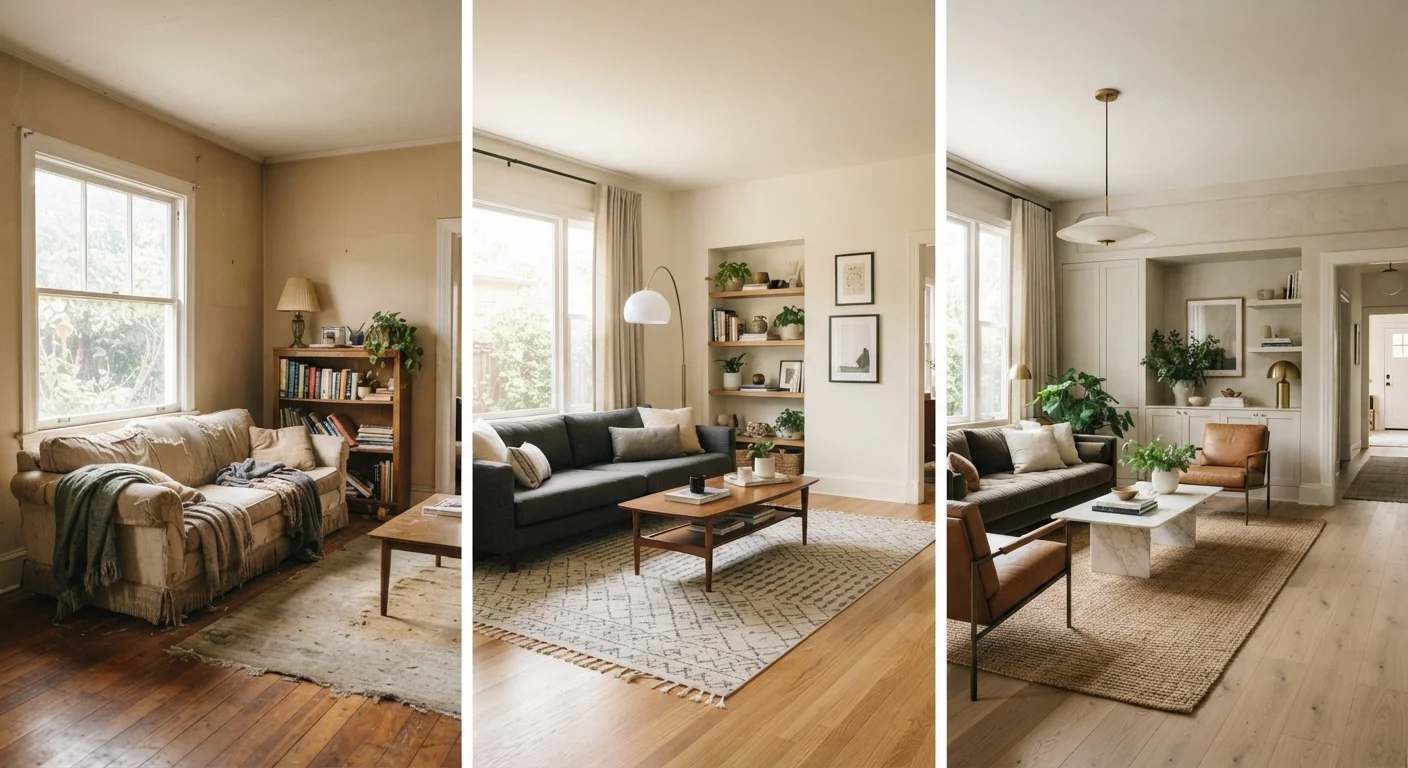
All three budget levels can produce meaningful results, but what they deliver is fundamentally different. A £100 refresh succeeds through editing and surface color; £500 adds material upgrades that change how a room feels underfoot and overhead; £1,500 brings genuine transformation through layered, coordinated improvements. The right target depends on your room's baseline condition and how long you plan to stay.
| Best for | Recommended |
|---|---|
| Renters or those wanting a quick visible refresh | £100 budget |
| Homeowners updating a single room with one or two feature changes | £500 budget |
| DIYers planning a full room overhaul they'll live with for years | £1,500 budget |
How to Think About Budget Tiers Before You Spend Anything
Budget comparisons only help if you're honest about your room's starting point. A space that's structurally sound with decent bones responds well to a £100 intervention. A room with damaged walls, tired flooring, and mismatched fixtures needs more - no amount of styling will fix what materials and prep haven't addressed first.
Before committing to any tier, use a room makeover planning checklist to assess what you're actually working with. Write down the room's problem areas in order of visual impact, then map your budget against that list rather than browsing for inspiration first. Impulse buys are how budgets collapse at every tier.
One consistent pattern across all three levels: labor time is your hidden currency. At £100, nearly everything is self-installed. By £1,500, you may still be doing all the work yourself - but if you're not, a single day of professional labor can easily consume £200-£400 of that budget. Factor this in before allocating funds to materials.
£100: Surface Refresh Only - and That's Not Nothing
At £100, you're working with paint, accessories, and editing - and those three levers are more powerful than most people expect. A single feature wall in a bold or contrasting color costs roughly £20-£35 in paint and supplies and changes the perceived proportions of almost any room. Pair that with decluttering (free), rearranging existing furniture (free), and one or two intentional accessory swaps - a new cushion set, a secondhand mirror, a plant - and the room reads differently.
What £100 will not fix: damaged flooring, poor lighting, dated window treatments, or mismatched large furniture. If those are your room's core problems, a surface refresh will feel cosmetic and temporary. Be honest about whether this tier solves the actual issue.
For the biggest return at this level, prioritize paint over accessories every time. See which room updates deliver the most visual return for a fuller breakdown of where color sits in the impact hierarchy.
| £100 Refresh | £500 Upgrade | £1,500 Overhaul | |
|---|---|---|---|
| Paint | One feature wall or touch-ups | Full room repaint | Full room plus trim and ceiling |
| Flooring | Rug only | Budget laminate or vinyl plank | Mid-range flooring, full room |
| Lighting | Swap one bulb type or add lamp | New pendant or floor lamp | Layered scheme with multiple fixtures |
| Window treatments | Not realistic at this tier | One window, budget curtains | Full room, quality curtains or blinds |
| Accessories & soft furnishings | 2-3 targeted swaps | Modest refresh | Cohesive full scheme |
| Typical DIY time required | Half a day to one day | One to two weekends | Two to four weekends |
| Best suited for | Renters, quick refresh | Single feature upgrade | Full room transformation |
£500: One or Two Material Upgrades That Shift the Room's Character
At £500, you can afford to change something structural about how the room looks and feels - not just its surface color. Common high-impact options at this level include: budget-friendly laminate or vinyl plank flooring for a small-to-medium room (roughly £150-£250 in materials for around 15-20 sq meters), a new ceiling or floor lamp plus two accent lights (£80-£150), or made-to-measure curtains with a proper track (£150-£250 depending on window size).
The rule at £500 is to concentrate spending rather than spread it thin. One genuinely good change - new flooring throughout, or proper window treatments - outperforms four half-measures. If you split the budget across paint, a rug, new cushions, and a light fitting, you'll end up with a room that's merely updated rather than transformed.
Be aware that flooring installation, if you're not doing it yourself, will typically consume £100-£200 of this tier. Factor that honestly. Hidden costs in budget renovations are the most common reason mid-tier makeovers stall halfway through.
£1,500: A Coordinated Overhaul With Staying Power
At £1,500, the conversation changes from "what one thing can I improve" to "how do I make this room cohesive." This budget can realistically cover: fresh paint throughout (£80-£120), new flooring for a medium room (£200-£350), updated window treatments (£150-£250), a statement lighting fixture plus supporting lamps (£150-£250), updated soft furnishings (£100-£200), and still leave a contingency for prep materials, filler, primer, and hardware - the items that eat budgets quietly.
The key discipline at this level is sequencing. Paint before flooring goes down. Flooring before furniture is repositioned. Lighting rough-in (if you're replacing a fixture rather than adding a plug-in) should happen before walls are painted. If electrical work is involved, consult a qualified electrician - do not attempt to rewire fixtures or install new circuits yourself.
If you're a first-timer approaching a full room makeover, £1,500 is a realistic ceiling for a DIY-executed project in a single room. Beyond this point, returns diminish unless you're tackling significant structural or systems issues - which is a different category of project entirely. For that, see upgrading home systems on a tight budget.
Costs cited throughout are approximate ranges based on typical US and UK material pricing for common products; actual costs vary by region, supplier, and room size. Always verify current pricing before budgeting.
The content on this site is for informational purposes only and is not a substitute for professional advice. Always consult a qualified professional for guidance specific to your situation.