

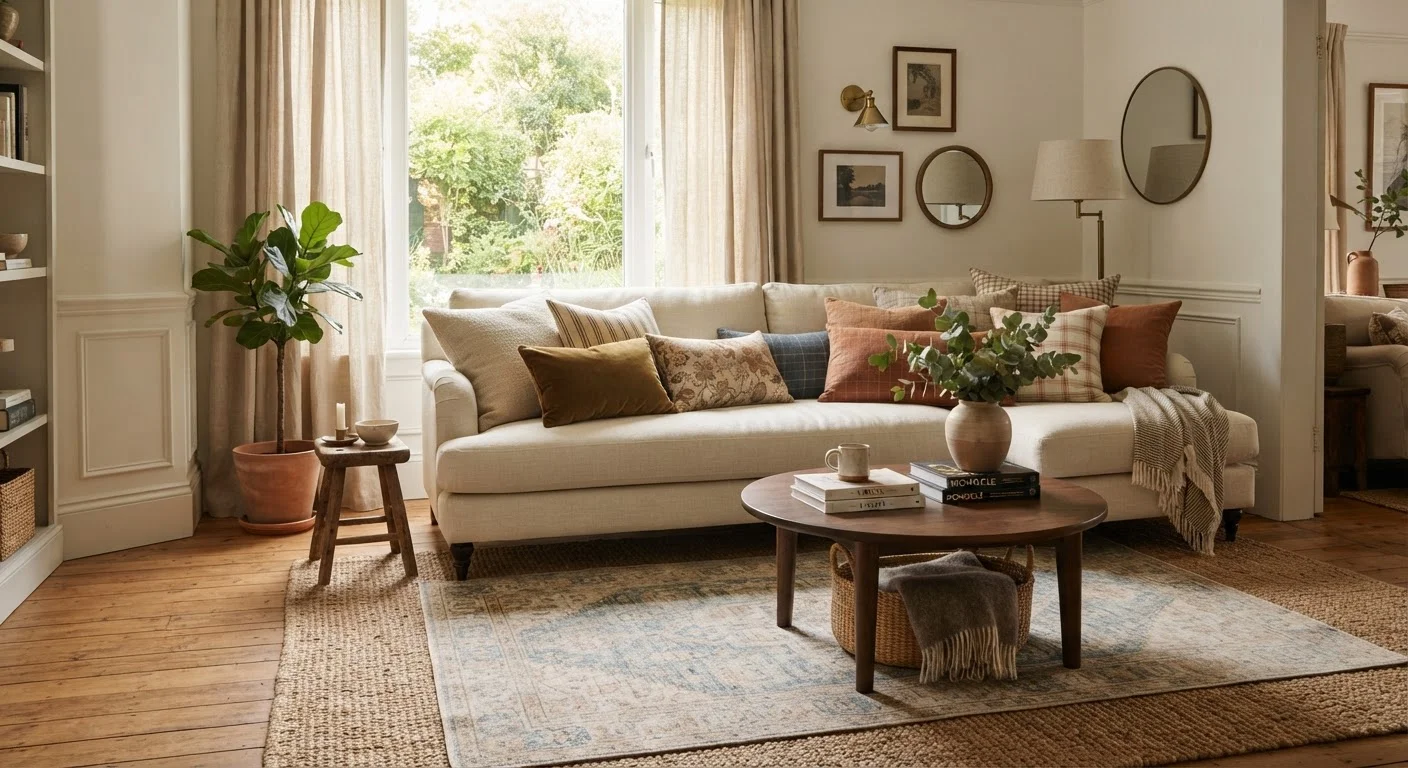
Why Textiles Carry More Weight Than You Think
Paint and furniture get most of the credit in a room refresh, but soft furnishings - rugs, cushions, curtains - quietly do the heaviest decorative lifting. They define zones, absorb sound, add warmth, and introduce color, pattern, and texture simultaneously. More importantly, they are reversible. Unlike a new sofa or a repainted wall, a rug swap or a curtain change can be undone without loss or mess.
That reversibility makes textiles the single most cost-effective lever available to a DIY decorator. A room that feels flat, cold, or unfinished can be transformed in an afternoon with the right combination of fabric, scale, and placement - no contractor required. For a broader foundation on how these elements interact, the Room Styling Tips hub covers the full spectrum of affordable transformation approaches.
The catch: textiles only work when you understand the rules behind them. Poor scale, wrong hang height, or a clashing mix of pattern weight are just as capable of making a room feel worse than it did before. This guide covers the mechanics behind each of the three core soft furnishing categories so you can apply them with confidence.
Rugs: Anchoring a Room with Scale and Placement
The most repeated mistake in living rooms is a rug that is too small. A rug should anchor the seating group, not float in the middle of it. The general rule: all major furniture legs should sit on the rug, or at minimum the front two legs of each sofa and chair. A rug that only sits under the coffee table creates a disconnected, cluttered look regardless of how attractive the rug itself is.
For a typical living room seating arrangement, a 8×10 ft rug is usually the smallest workable size; a 9×12 ft is often better. In a dining room, the rug should extend at least 24 inches beyond the table edge on all sides so chairs remain on the rug when pulled out.
When testing rug size, use painter's tape on the floor to mark out the rug's footprint before purchasing. This step alone prevents the most expensive soft furnishing mistake most people make.
A rug that looks appropriately sized online frequently looks wrong once placed in an actual room. Physically marking the space takes five minutes and eliminates costly returns.
Buy curtain panels in the longest length available and hem them to fit your ceiling height, rather than buying panels sized to your window. Off-the-shelf lengths rarely match the ceiling-mount hang height that transforms a room.
Hanging curtains high requires longer panels than window-mounted installations. Starting with excess length gives you flexibility; starting too short leaves no options.
Texture matters as much as pattern. A flat-woven rug reads differently than a high-pile shag or a jute weave, and layering two rugs - a natural fiber base under a smaller patterned piece - adds depth without requiring a single expensive statement rug. For more on how texture alone shifts a room's feeling, see using texture as a design tool.
If a patterned rug is your starting point, it can anchor your entire color palette. Pull two or three colors from the rug and use them to guide cushion and curtain choices throughout the room - a technique explored in depth in pulling a palette from a patterned piece you already own.
Cushions: Layering Color, Pattern, and Texture
Cushions are the most forgiving element in the textile toolkit. They are low-cost, easy to swap seasonally, and capable of introducing bold pattern or color without committing to it long-term. The challenge is avoiding a random collection of pillows that reads as clutter rather than intention.
A workable formula: choose three cushion sizes (typically 22-inch, 18-inch, and a lumbar), arrange in odd-numbered groupings, and vary the texture across the set. One solid, one pattern, one textured fabric (boucle, velvet, linen) tends to create a cohesive but visually interesting result. Keep pattern scale in mind - mix a large repeat with a smaller geometric or solid to avoid visual competition.
Inserts make a noticeable difference. An overstuffed insert in a quality cover creates the plump, full look seen in well-styled spaces; a cheap flat insert undermines even an expensive cover. Down or down-alternative inserts sized one or two inches larger than the cover are a reliable approach.
For a deeper look at how to layer textiles across an entire room - not just the sofa - layering textures for a cozy room walks through the full principle.
Curtains: Height, Weight, and Hang
Curtains are arguably the most impactful single textile change you can make to a room, and the most commonly done wrong. The two variables that matter most are hang height and panel width.
Hang the rod as close to the ceiling as practical - typically 4 to 6 inches below the ceiling line - regardless of where the actual window frame sits. This draws the eye upward and makes ceilings feel taller. Mounting a rod directly above the window frame, a common default, shortens the visual height of any room.
Panel width should be generous. A curtain that barely covers the window when closed looks skimpy and unintentional. Each panel should be 1.5 to 2 times the width of the space it covers to allow a full, gathered drape when open. For a standard window, two panels totaling 100-120 inches of fabric width is a reasonable starting point.
Fabric weight affects both function and feel. Sheer linen panels diffuse light softly and suit relaxed, airy spaces. Heavier cotton, velvet, or lined panels block light and add thermal insulation - worthwhile in rooms with temperature extremes. Floor-length panels that just graze or have a small break (1-2 inches) on the floor read as more intentional than panels that hover awkwardly mid-baseboard.
Note: Any curtain installation involving drilling into masonry, load-bearing walls, or working near electrical conduit should be approached with care. If uncertain about what lies behind a wall, consult a qualified tradesperson before drilling.
Making All Three Work Together
The payoff from textiles comes when the three elements - rug, cushions, curtains - are chosen as a system rather than independently. A practical approach: identify one anchor piece (usually the rug or a key cushion fabric), extract two or three colors from it, and let those guide the remaining choices. This does not mean everything should match; contrast and variation are desirable. It means the pieces should feel like they belong to the same conversation.
Balance pattern distribution across the room. If the rug carries a bold pattern, keep curtains in a solid or subtle texture and use cushions to bridge the two. If curtains are a statement print, a solid or low-key rug grounds the space without competing. The unexpected ways designers use pattern article shows how restraint in patterning can produce more sophisticated results than maximalism.
Budget allocation across the three: rugs tend to warrant the largest spend because they take the most physical wear. Curtains are worth investing in for fabric quality, since cheap thin fabric rarely hangs well. Cushion covers are the place to experiment - switch them out seasonally without significant outlay. For the full framework on using color and pattern strategically across a room, the Color & Pattern Play hub is a useful reference.
This article provides general decorating guidance for informational purposes only. Results will vary based on individual room dimensions, existing furnishings, and personal preference. Always verify safe installation practices before mounting hardware.
The content on this site is for informational purposes only and is not a substitute for professional advice. Always consult a qualified professional for guidance specific to your situation.