

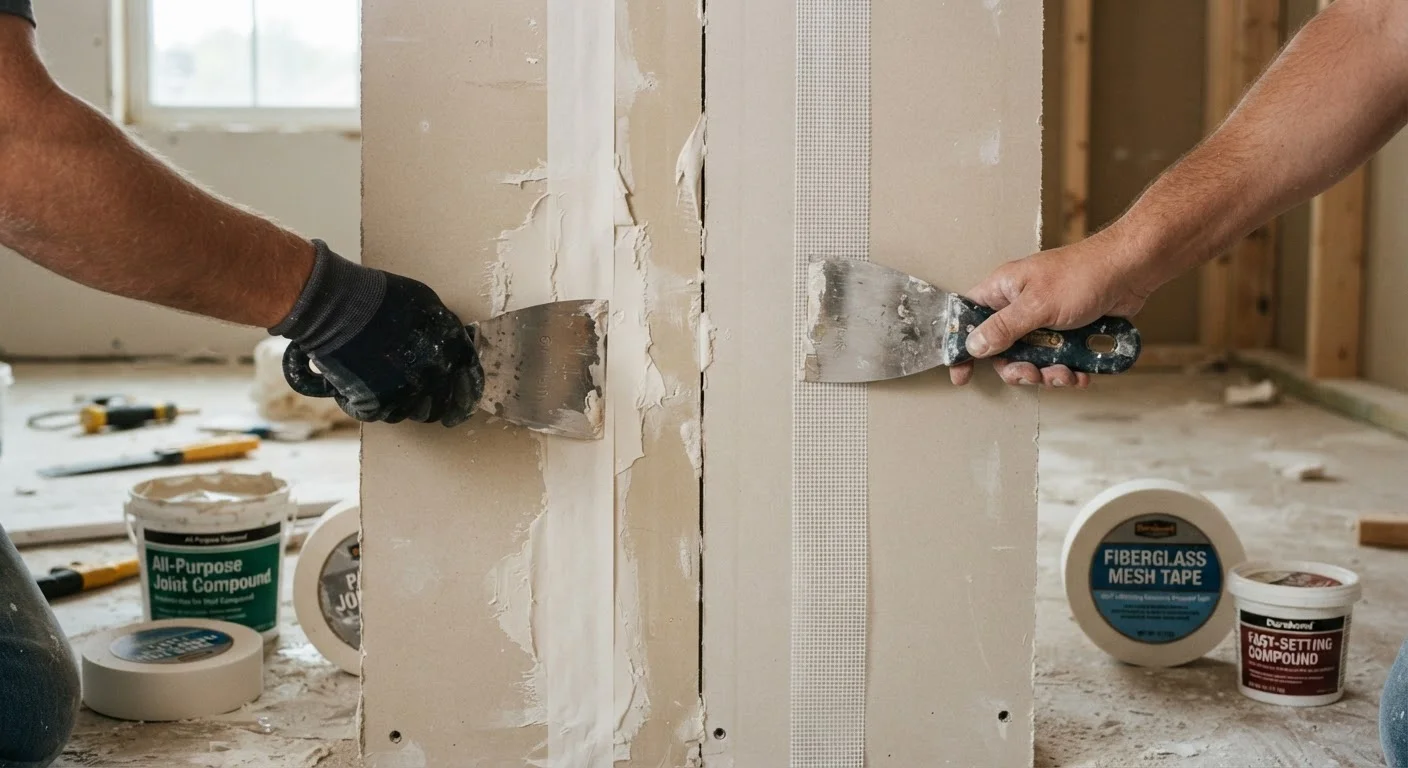
Option A
Paper Tape
The time-tested standard for strong, crack-resistant joints.
Best for: Best for flat seams, butt joints, and any situation where long-term crack resistance matters most.
Option B
Mesh Tape
The beginner-friendly option for fast, self-adhesive application.
Best for: Best for small patches, corner repairs, and situations where speed of application is the priority.
What Each Tape Is and How It Works
Drywall tape reinforces the joints between panels - without it, even perfectly applied joint compound will crack as the wall shifts and settles. But not all tape works the same way. Understanding the material difference is essential before picking up a roll.
Paper tape is a thin, fibrous strip - usually crepe or flat paper - that must be embedded into a layer of wet joint compound before any additional coats go on. It forms a mechanical bond with the compound as both dry together, creating a unified surface layer. Paper tape has a slight ridge down the center that helps it fold cleanly for inside corners.
Mesh tape (also called fiberglass mesh tape) is a woven, open-weave tape with a self-adhesive backing. You press it directly onto the dry drywall surface before applying compound over the top. The compound squeezes through the mesh openings to anchor it - but this also means the tape sits slightly proud of the surface, requiring more compound to feather it smooth.
For a broader look at how these two fit within the full range of drywall taping options, see Drywall Tape Types and Where Each One Belongs.
Strength, Cracking Resistance, and Compound Compatibility
This is where the two tapes diverge most meaningfully. Paper tape, when properly embedded, becomes part of the compound layer. It resists the lateral stress that causes joints to crack as framing lumber dries and walls flex. On long butt joints - where two square-edged panels meet - paper tape's superior tensile strength is a clear advantage.
Mesh tape, by contrast, sits on top of the surface rather than within it. This makes it more prone to cracking over time on flat joints, particularly in areas with temperature swings or structural movement. Its strength depends heavily on the type of compound used: mesh tape should always be paired with setting-type compound (also called hot mud), which hardens through a chemical reaction rather than drying. All-purpose compound doesn't bond as securely through the mesh weave and is a common source of eventual cracking. If you're unsure which compound to reach for, Joint Compound vs Spackling Paste walks through the key differences.
| Criterion | Paper Tape | Mesh Tape |
|---|---|---|
| Application method | Embedded in wet compound | Self-adhesive; sticks to dry surface |
| Crack resistance on flat joints | Excellent | Moderate; prone to cracking over time |
| Best compound type | All-purpose or topping compound | Setting-type (hot mud) recommended |
| Ease of use for beginners | Moderate - technique required | Easy - no embedding needed |
| Inside corners | Excellent - folds cleanly | Difficult - tends to shift or wrinkle |
| Small patches and repairs | Workable but less convenient | Very well suited |
| Long butt joints | Preferred choice | Not recommended |
Mesh tape's relative weakness on flat seams doesn't mean it's a poor product - it means it's the wrong tool for that job. Used on small patches and repairs where the substrate is stable, it performs reliably.
Ease of Application and Where Each Tape Makes Sense
Paper tape has a learning curve. You spread a thin, even bed coat of joint compound, lay the tape into it, and use a 6-inch knife to embed and smooth it - eliminating air bubbles without tearing the paper. Air bubbles trapped beneath paper tape will blister and peel, requiring you to cut them out and re-tape. That said, most paper tape problems are avoidable once you understand why they happen.
Mesh tape is genuinely easier to apply. You peel it, stick it, and start troweling compound over it. There's no wet bed coat to manage, and the tape holds itself in place while you work. For a homeowner repairing a doorway hole or a small crack, this simplicity is a real advantage.
Inside corners are a case where paper tape has an edge even for beginners: its center crease lets it fold precisely into the corner, holding its position naturally. Mesh tape in corners can shift or wrinkle before the compound sets.
If you're new to drywall work overall, Everything a First-Timer Needs to Know About Working with Drywall covers taping alongside other essential techniques to help you build a solid foundation before starting your project.
Always follow compound and tape manufacturer instructions for drying times, coat counts, and compound compatibility. Local building codes may apply to certain wall repairs - verify requirements before beginning any significant drywall work.
The content on this site is for informational purposes only and is not a substitute for professional advice. Always consult a qualified professional for guidance specific to your situation.