

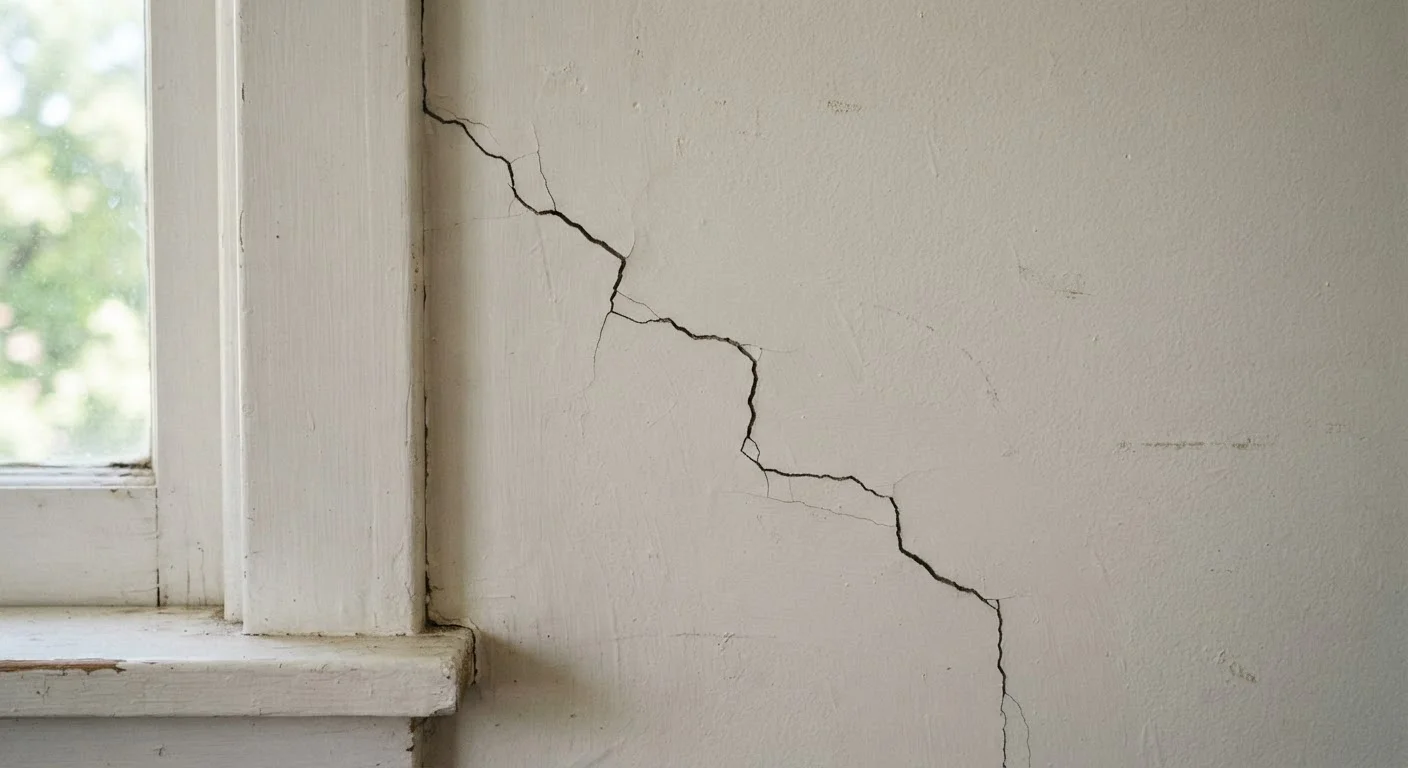
The Real Reason Patches Fail
If you've filled the same crack twice and watched it reopen by spring, you already understand the core problem: patching without diagnosing is just temporary concealment. Joint compound fills a void, but it has no ability to resist the forces that created it. When those forces repeat - and they almost always do - the compound cracks again, often along the exact same line.
Think of a recurring drywall crack the way you'd think of a drain that keeps clogging - clearing the symptom without fixing the source only guarantees the problem returns. The productive question isn't how do I patch this? but why does this crack keep forming here?
Before reaching for the compound, spend five minutes examining the crack's shape, location, and pattern. These clues tell you what's actually happening behind the wall.
Seasonal Movement: The Most Common Culprit
Wood framing - the studs, plates, and joists behind your drywall - is a living material that absorbs and releases moisture with the seasons. In summer, humidity causes wood fibers to swell slightly. In winter, heated indoor air dries the framing out and the wood contracts. This cycle repeats every year, and drywall - which is rigid - cannot flex with it.
The result is predictable: cracks open in winter as framing shrinks and may partially close in summer as it swells back. Hairline cracks at taped seams, especially along the ceiling-wall junction or in corners, are the most typical sign. These are generally cosmetic and can be managed with the right repair materials.
Choose Repair Materials That Can Flex
For cracks driven by seasonal movement, mesh tape combined with a setting-type or elastomeric compound performs better than standard all-purpose compound alone. The mesh distributes stress across a wider area, reducing the chance of the crack re-forming at the same point. Always prime the repaired area before painting to seal the compound and improve paint adhesion.
For seasonal cracks, standard all-purpose joint compound is often the wrong choice for the final coat - it remains relatively brittle once cured. A setting-type compound or a product formulated for flexibility can better accommodate minor ongoing movement. Always apply mesh tape over the crack before skim-coating to reinforce the repair.
Settlement, Foundation Shifts, and Framing Deflection
Diagonal cracks that angle away from the corners of windows and doors are a different animal entirely. These are classic stress fractures caused by differential movement - when one part of the structure moves relative to another. In many homes, this is normal early settlement, particularly in new construction during the first few years. In others, it can reflect soil movement, foundation issues, or overloaded framing.
A key distinction: hairline diagonal cracks that appeared during the first two years of a home's life and haven't changed are usually benign. Cracks that are actively growing wider, that appear suddenly in an older home, or that are accompanied by other signs - sticking doors, uneven floors, gaps between walls and ceilings - warrant a closer look from a licensed structural engineer or home inspector before any patching takes place.
For a broader picture of what different crack types mean and how to approach repairs, see our guide on drywall repair from nail pops to large holes.
Moisture and the Cracks It Mimics
Water intrusion behind drywall can cause cracking that looks deceptively like normal settlement. As drywall paper gets wet, the gypsum core softens and the surface can crack, buckle, or separate from tape. Once the area dries, a crack remains - and if the moisture source isn't fixed, the cycle repeats every time it rains or the plumbing leaks.
Distinguishing moisture-driven cracks from mechanical ones requires looking beyond the crack itself. Discoloration, a soft or papery texture around the crack, peeling paint, or any musty smell all point toward a water source. Check the area above - a leaking roof, overflowing gutter, or sweating pipe may be the real cause. Our companion article on recognizing moisture damage behind drywall walks through how to identify these signs before they escalate.
Repair Moisture Damage Before Patching
Patching over drywall that still contains moisture is one of the most common reasons drywall repairs fail prematurely. The compound will not bond correctly to wet gypsum, and trapped moisture can encourage mold growth behind the finished surface. Confirm with a moisture meter or by feel that the area is fully dry - and that the source of water has been corrected - before beginning any repair work.
Always confirm the moisture source is fully resolved and the drywall is completely dry before making any repair. Patching over damp drywall will fail and may promote mold growth.
Repair Approach: Matching the Fix to the Cause
Once you've identified the driver, your repair strategy changes accordingly. For seasonal movement cracks, reinforcing with self-adhesive fiberglass mesh tape before skim-coating - rather than paper tape alone - adds tensile strength that resists reopening. For cracks at corners, metal or vinyl corner bead provides rigid structure that joint compound alone cannot.
For structural or settlement cracks, the rule is simple: stabilize first, repair second. No patch material will hold if the underlying movement continues. Once a structural professional has confirmed the movement has stopped or been corrected, you can proceed with a standard repair. Be aware that some structural repairs may require permits or licensed contractors depending on your jurisdiction - always verify local requirements before proceeding.
If you've been relying on habits learned from common DIY sources, it's worth reviewing drywall myths that lead to costly rework - some widely repeated techniques actually make recurring cracks more likely.
This article is for general informational purposes only. Always consult a licensed professional for structural concerns or before undertaking repairs that may require permits in your area.
Frequently Asked Questions
Cracks that reopen in the same location are almost always driven by a repeating force - seasonal wood movement, a settling foundation, or ongoing moisture. The patch fails because the cause is still active. Identify and address the underlying driver before repatching.
Most recurring cracks are caused by normal seasonal movement and are not structurally dangerous. However, wide cracks (wider than 1/4 inch), stair-step patterns in brick or block, or cracks accompanied by sloping floors or sticking doors can indicate settlement issues worth having a structural professional evaluate.
Moisture-related cracks are often accompanied by staining, bubbling paint, soft or spongy drywall, or musty odors. Check the area above and behind the wall for plumbing, roof, or flashing issues. Our guide on <a href="/diy-home-repairs/drywall-and-walls/moisture-damage-behind-drywall-recognising-it-before-it-spreads">recognizing moisture damage behind drywall</a> covers the warning signs in detail.
There is no single universal fix, because the right repair depends on the cause. For seasonal movement, flexible mesh tape and a fiberglass-reinforced compound can better accommodate minor shifts. For structural causes, the movement itself must be stabilized before any patch will hold long-term.
Yes. Newly built homes experience lumber drying and initial settlement during the first one to three years, which commonly produces hairline cracks at seams and corners. These typically stabilize on their own and are generally considered cosmetic rather than structural.
The content on this site is for informational purposes only and is not a substitute for professional advice. Always consult a qualified professional for guidance specific to your situation.