

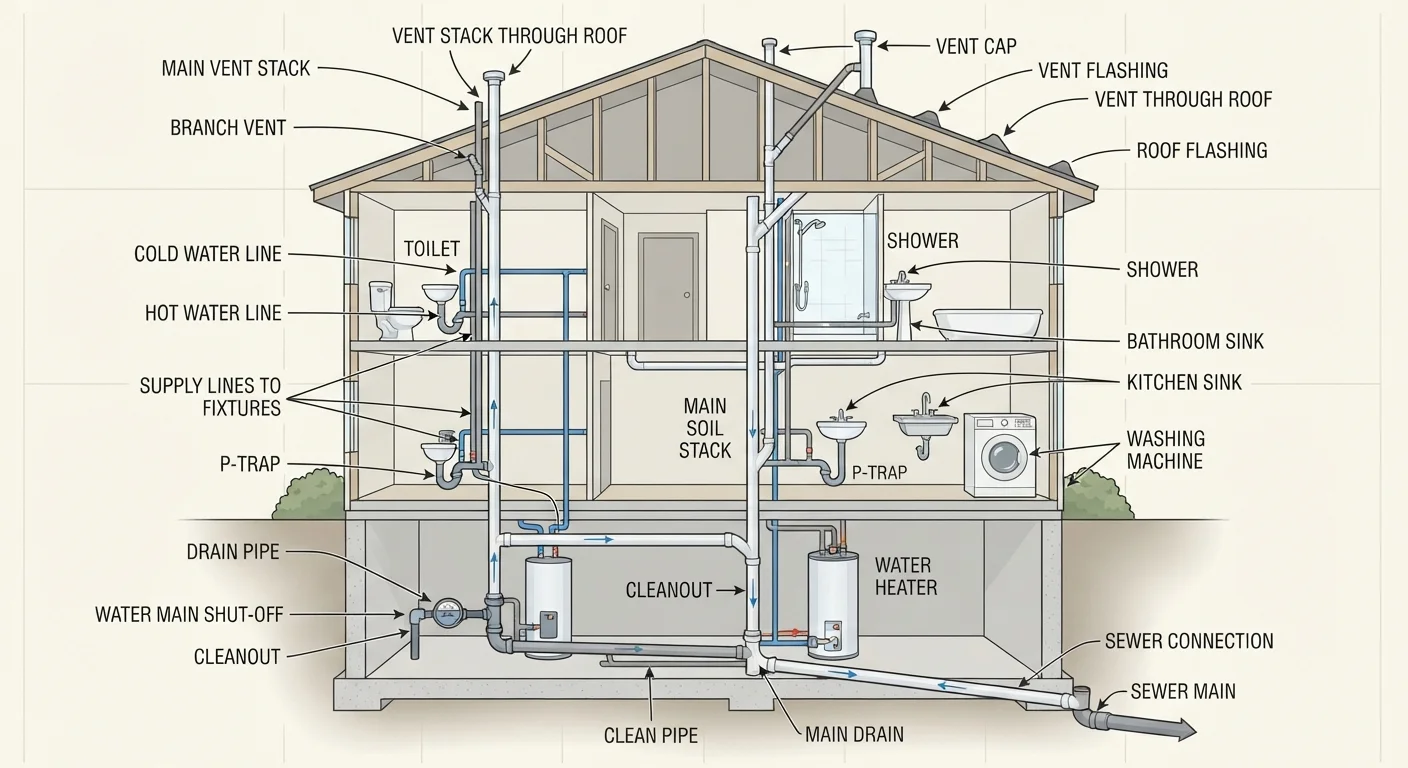
How Household Plumbing Is Organized
Residential plumbing is best understood as three cooperating subsystems. The supply system delivers pressurized fresh water from the municipal main or a private well into your home, branching to cold-water lines and a water heater that feeds hot-water lines. The drain-waste-vent (DWV) system carries used water and waste away by gravity to the sewer or septic tank. The fixture layer - sinks, toilets, tubs, appliances - is where the two systems meet at the point of use.
These systems are entirely separate. Supply pipes are always under pressure; drain pipes rely on slope and gravity. Mixing up a repair approach between them is one of the most common beginner errors. For a broader introduction to how all three work together, see The Homeowner's Introduction to Household Plumbing Systems.
Pipe Materials: What's in Your Walls
Knowing your pipe material determines which fittings, tools, and repair techniques apply. Here are the most common types found in US homes:
- Copper: Durable, corrosion-resistant, and still widely used for supply lines. Joined by soldering (sweating), compression fittings, or push-to-connect fittings. Homes built between the 1950s and 1990s often rely heavily on copper.
- CPVC (Chlorinated Polyvinyl Chloride): A rigid plastic rated for hot and cold supply lines. Joined with solvent cement. Common in homes built from the 1970s onward.
- PEX (Cross-linked Polyethylene): Flexible tubing now dominant in new construction and remodels. Crimped, clamped, or expanded onto fittings. Resistant to freezing damage and easy to route through walls.
- Galvanized Steel: Found in homes built before the 1960s. Prone to interior corrosion and scale buildup that reduces flow. If your home has galvanized supply lines, a licensed plumber should assess their remaining lifespan.
- PVC (Polyvinyl Chloride): The standard for drain, waste, and vent lines in modern construction. White or cream colored, joined with solvent cement. Not rated for hot-water supply.
- ABS (Acrylonitrile Butadiene Styrene): A black rigid plastic also used for DWV systems, common in homes built in the 1970s-1980s, particularly in western states.
- Cast Iron: Heavy, durable drain pipe found in older homes. Quieter than plastic for drain noise. Repairs typically require specialty cutters and mechanical couplings.
Take a photo of your exposed pipe connections before closing up any wall or cabinet - label it by room and date and store it with your home records. This single habit saves hours of guesswork during future repairs.
Homeowners frequently can't recall pipe types or connection styles once access panels are closed, leading to incompatible part purchases and wasted trips to the hardware store.
Test every fixture shut-off valve once a year by turning it fully closed and then fully open again. A valve that's never operated will seize, leaving you without a local shut-off during a leak emergency.
Angle stop valves - especially older compression-style valves - corrode in the open position and can fail catastrophically under the stress of sudden operation.
Before buying any fittings or patch materials, identify your pipe type and confirm compatibility. Mixing incompatible materials without a proper transition fitting causes leaks and may violate local codes.
The Drain-Waste-Vent System Explained
The DWV system works on two principles: gravity and air pressure balance. Drain pipes slope downward at roughly 1/4 inch per foot toward the main stack - a large vertical pipe that runs from the foundation to the roof. Waste exits through the sewer line underground.
The vent portion is what most homeowners overlook. Every fixture drain connects to a vent pipe that exits through the roof. Vents serve two critical roles: they allow air into the drain pipes so water flows freely (instead of creating a siphon), and they route sewer gases - including methane and hydrogen sulfide - safely out of the building. A gurgling toilet or a drain that empties slowly despite being clear of clogs often signals a venting problem, not a blockage.
P-traps are the curved pipe sections visible under sinks. They hold a small amount of water that seals out sewer gas. If a fixture goes unused for weeks, that water can evaporate - simply running the tap for a few seconds restores the seal.
Never Ignore Sewer Gas Odors Indoors
A persistent rotten-egg or sulfur smell inside your home may indicate a dry P-trap, a cracked vent pipe, or a failed wax ring seal at a toilet base. Sewer gases include methane, which is flammable, and hydrogen sulfide, which is toxic at elevated concentrations. Do not attempt to locate or repair cracked vent pipes inside walls yourself - contact a licensed plumber for diagnosis.
Shut-Off Valves: Locations and How to Use Them
Finding and testing every shut-off valve in your home before you need one in an emergency is among the most practical things you can do as a homeowner. Use this reference to locate each type:
- Main Shut-Off
- Stops all water entering the home. Typically found where the supply line enters the foundation - often near the water meter, in a basement, crawlspace, utility room, or exterior valve box. Know exactly where yours is and confirm it turns fully.
- Fixture Shut-Offs (Angle Stops)
- Small valves on the supply tubes feeding each toilet and sink. Turn clockwise to close. Test these annually - valves that haven't moved in years can seize or fail when you most need them.
- Appliance Shut-Offs
- Washing machines typically have dedicated hot and cold valves behind or beside the unit. Water heaters have a cold-supply shut-off on the inlet pipe at the top of the tank.
- Hose Bibb / Outdoor Spigot
- Has an interior shut-off (an inline valve or a frost-free valve stem) that should be closed and the exterior drained before freezing temperatures arrive.
After shutting off water for any repair, open a downstream faucet to relieve pressure before disconnecting supply lines. This prevents unexpected spray. Pair this knowledge with the right tools for the job so you're fully prepared.
Water Pressure Fundamentals
Residential water pressure in the US is generally maintained between 40 and 80 psi (pounds per square inch). Most plumbing fixtures and appliances are designed for this range. Pressure outside these bounds creates distinct problems:
- Low pressure (below 40 psi): Weak shower flow, slow-filling fixtures, and appliances that cycle incorrectly. Causes include partially closed valves, failing pressure-reducing valves (PRVs), corroded supply lines, or municipal supply issues.
- High pressure (above 80 psi): Accelerated wear on washers and valve seats, banging pipes (water hammer), and increased risk of supply line failures. A PRV, installed on the main supply line, reduces incoming pressure to a safe working range. PRV installation involves working on the main supply line and should be assessed by a licensed plumber.
A basic pressure gauge with a hose-thread fitting (available at hardware stores) lets you test pressure at any hose bibb. Take the reading when no other fixtures are running for an accurate baseline. Persistent low pressure warrants a systematic room-by-room audit to isolate the cause before calling a professional.
Common DIY Fixes and When to Call a Pro
Many routine plumbing tasks are well within reach for a prepared homeowner:
- Replacing a toilet flapper or fill valve
- Swapping a faucet cartridge or aerator
- Clearing a sink P-trap clog
- Tightening or replacing supply line connections under a sink
- Fixing a running toilet
These tasks share a common trait: they're downstream of an accessible shut-off, involve no cutting into walls, and require no permits in most jurisdictions. Always verify local code requirements before starting any work - what's permit-exempt in one municipality may require inspection in another.
Permits and Licensed Work Are Not Optional
In most US jurisdictions, adding new drain or supply lines, replacing a water heater, or altering a DWV stack requires a permit and inspection. Unpermitted plumbing work can void homeowner's insurance coverage for related damage and create serious complications when selling the home. Always check with your local building department before starting any work beyond basic fixture repairs.
For larger projects - installing new fixture branches, moving drain lines, any work touching the main stack, or repairs involving gas-adjacent water heaters - hire a licensed plumber. Mistakes in these areas can cause water damage, failed inspections, or health hazards from sewer gas exposure. This reference is an educational starting point, not a substitute for professional assessment when the scope exceeds basic repairs.
Building your overall home maintenance confidence goes hand in hand with plumbing knowledge. Whether you're planning a bathroom refresh or tackling a broader renovation, resources like a complete DIY project planning guide can help you approach the full scope of work methodically.
This article is for general educational purposes only. Always verify local plumbing codes and permit requirements before beginning any repair. For work involving structural, gas-adjacent, or main-supply systems, consult a licensed plumber.
The content on this site is for informational purposes only and is not a substitute for professional advice. Always consult a qualified professional for guidance specific to your situation.