

How Home Heating Systems Actually Work
Most US homes are heated by a forced-air furnace, a heat pump, or a boiler - and all of them share one important characteristic: they operate at a fixed output. When your thermostat calls for heat, the system switches on and runs at essentially the same capacity whether the target temperature is 68°F or 80°F.
Think of it like a light switch rather than a dimmer. The thermostat doesn't tell the furnace to work harder - it simply tells it when to turn on and when to shut off. The furnace has no "high gear" to engage when you push the dial further. For a broader look at how heating fits into your home's overall energy picture, see Your Home's Three Biggest Energy Systems Explained.
The thermostat's job is purely to monitor room temperature and trigger the system once that temperature drops below the set point. Once the room reaches the target, the system switches off. The higher you set that target, the longer the system runs - not faster.
Common Mistakes That Waste Energy and Comfort
Even well-intentioned homeowners fall into habits that make their heating systems work inefficiently. These mistakes are easy to make precisely because the logic behind them feels right - but doesn't match how the equipment actually behaves.
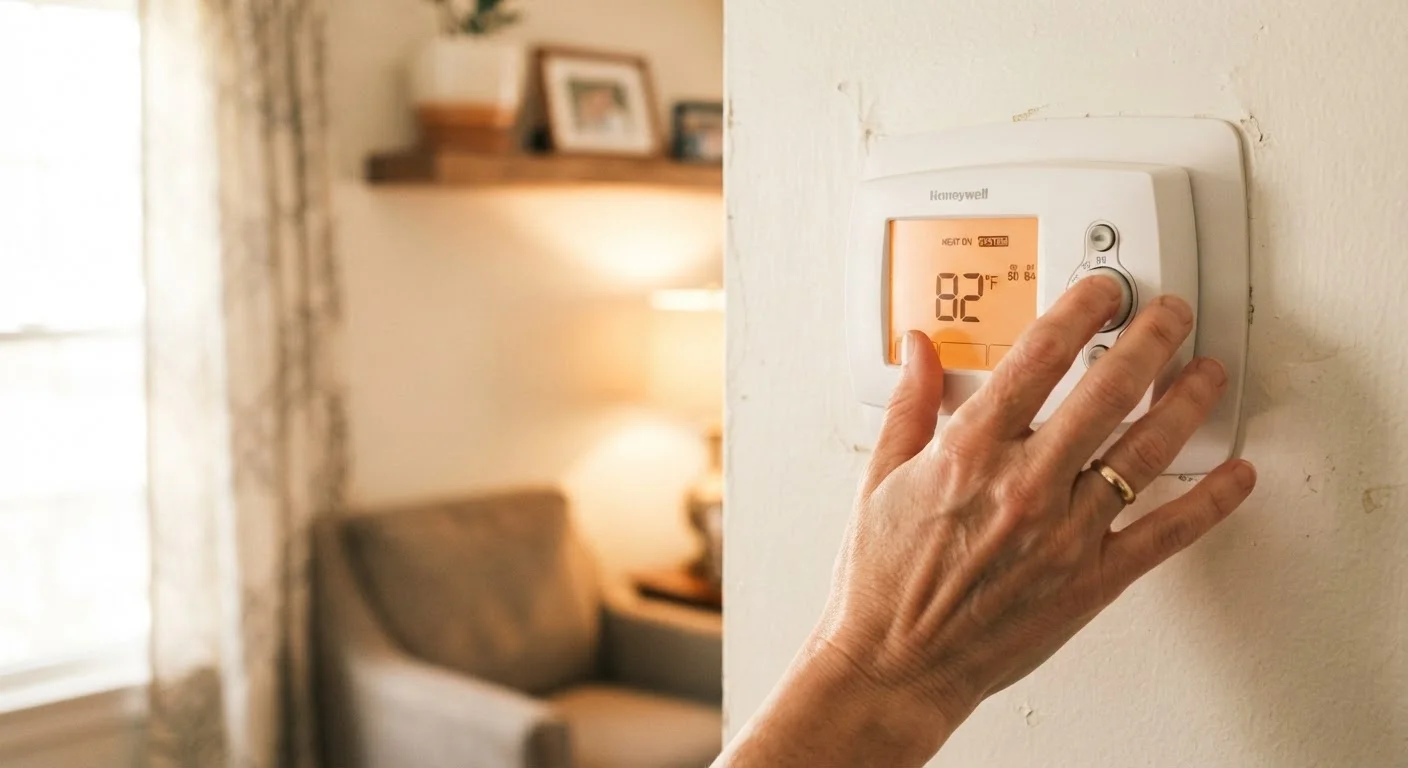
Cranking the thermostat well above the desired temperature to heat the room faster.
Why it happens: It mirrors intuition from other appliances - turning a burner higher produces more heat immediately. Homeowners assume thermostats work the same way.
Turning the thermostat all the way down to 50°F or off when leaving, then blasting it on return.
Why it happens: The reasoning is that zero heat use saves the most energy. But extreme setbacks create a large temperature deficit that takes substantial energy to recover from.
Leaving the thermostat at the same high setting around the clock, even when nobody is home.
Why it happens: Some homeowners believe a steady temperature is more efficient than letting it fluctuate. In most climates and with most systems, this is not accurate for extended absences.
Assuming a warmer thermostat setting compensates for poor insulation or drafts.
Why it happens: When a home feels cold despite the heat running, the instinct is to demand more warmth from the thermostat rather than address why heat is escaping.
If some of these patterns sound familiar, you're not alone. Many of the most persistent heating misconceptions are covered in depth in Energy-Saving Myths That Homeowners Still Believe.
Smarter Habits That Actually Help
The most effective change most households can make is straightforward: set the thermostat to the temperature you actually want and leave it there. Resist the urge to overshoot. If your home is cold and you want it at 70°F, set it to 70°F - not 78°F in hopes of speeding things up.
Beyond that, consistent scheduling makes a meaningful difference. Letting the temperature drop a few degrees while you sleep or when the house is empty, then allowing the system to restore comfort before you need it, reduces total runtime without sacrificing warmth. Thermostat Schedules That Actually Reduce Energy Use walks through practical ways to build that kind of routine.
If you're still using a manual thermostat, a programmable or smart model can handle the discipline for you - automatically. Comparing your options is easier than you might think: Manual Thermostat vs. Programmable vs. Smart: Choosing the Right Fit breaks down what suits different households and budgets.
Finally, if your system seems to run constantly without reaching target temperatures, or if rooms warm unevenly, those are signs worth investigating. Signs Your HVAC System Is Working Harder Than It Should can help you identify whether an efficiency problem - rather than thermostat habits - is the real culprit. Good insulation also plays a major role in how quickly and efficiently your home holds heat; Home Insulation covers practical upgrades that support any heating system.
The content on this site is for informational purposes only and is not a substitute for professional advice. Always consult a qualified professional for guidance specific to your situation.