

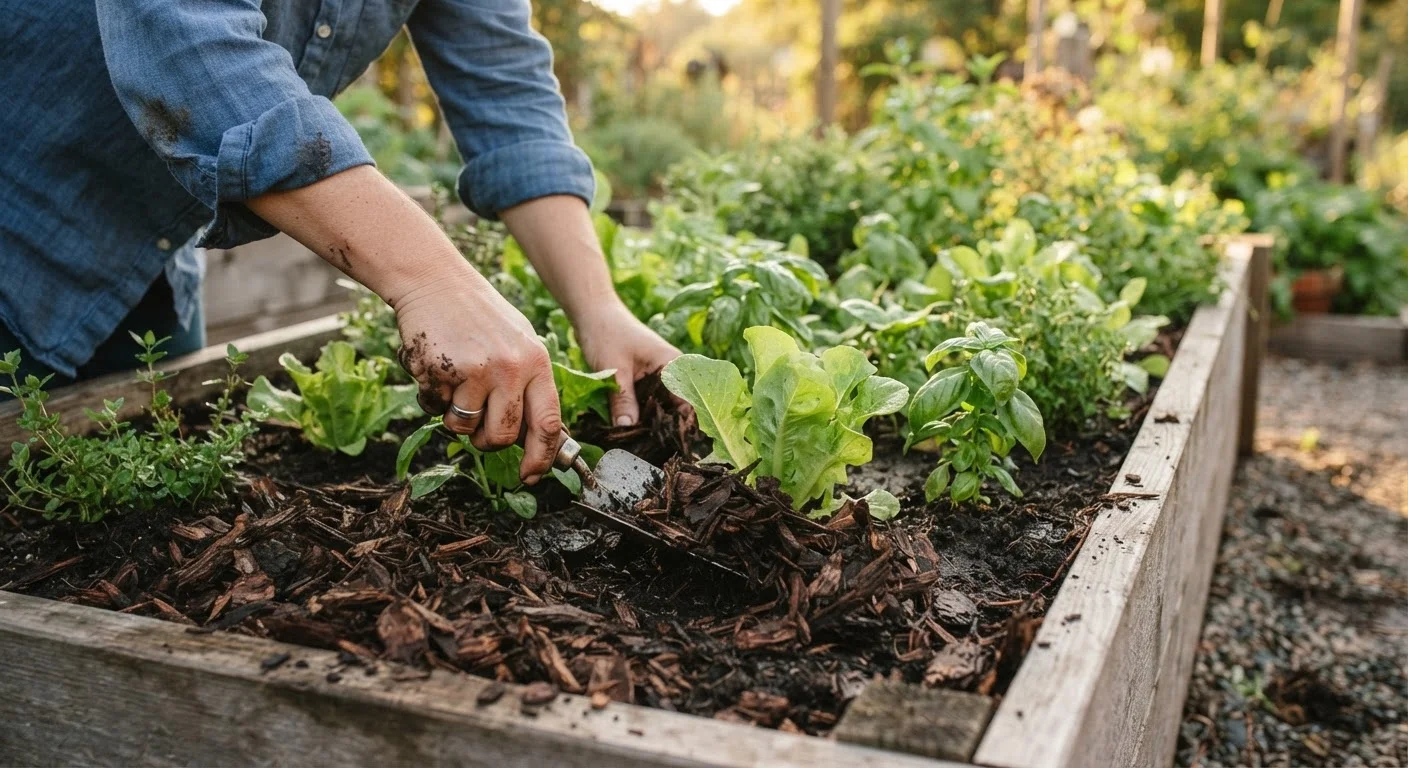
What Mulch Actually Does Underground
Most gardeners think of mulch as a finishing touch - something that makes beds look neat. In practice, it's one of the most functional materials you can apply to soil. Mulch works on several levels simultaneously: it buffers soil temperature, slows water evaporation, physically blocks weed germination, and - when organic - gradually feeds the microbial community living beneath your plants.
Bare soil loses moisture quickly through evaporation, especially on warm or windy days. A layer of mulch acts as insulation, keeping the soil surface cooler in summer and warmer during cold snaps. This stability matters because roots grow steadily in consistent conditions and struggle when the ground swings between extremes. For guidance on how moisture management connects to plant health more broadly, see our water management guide.
Applying Mulch the Right Way
Depth and placement are where most gardeners go wrong. Too little mulch - under an inch - barely suppresses weeds or retains moisture. Too much, particularly over 4 inches, can suffocate soil by restricting oxygen and trapping excess moisture against plant crowns, which encourages rot and fungal disease.
The sweet spot for most garden beds is 2 to 3 inches of organic mulch. Pull it back at least 2 inches from the base of any woody stem or trunk - the so-called "volcano mulching" habit of piling mulch directly against tree trunks is a well-documented way to encourage bark decay and pest damage. It's the kind of practice that sounds helpful but quietly causes harm, much like the gardening folklore covered in our article on common garden myths.
Choosing the Right Type for Your Garden
Mulch isn't one-size-fits-all. The right choice depends on your plants, your climate, and what you want the mulch to do over time.
- Wood chips and bark: Long-lasting and effective for ornamental beds and around trees. Break down slowly, adding organic matter gradually.
- Straw: Excellent for vegetable gardens. Lightweight, easy to move, and breaks down within a season to feed the soil.
- Compost: Acts as mulch and soil amendment in one. Best applied in a thinner layer (1-2 inches) since it can compact.
- Shredded leaves: Free, effective, and brilliant for woodland-style planting. They break down quickly and earthworms love them.
- Gravel and stone: Not organic, so they don't feed the soil, but they work well in drought-tolerant or Mediterranean-style plantings where moisture retention is less critical. For more on this approach, see our guide to gravel garden design.
Avoid using dyed or treated wood products near edible plants, as the source material and additives aren't always disclosed. When in doubt, stick with unprocessed organic materials.
Timing, Maintenance, and When to Refresh
Mulch breaks down. That's the point with organic types - but it means you need to top up periodically. Check depth each spring before the growing season peaks and again in autumn when preparing beds for winter. Many gardeners apply a fresh layer in late spring, once the soil has had a chance to warm up after winter. Applying too early over cold, wet soil can delay warming and slow root activity.
In autumn, a mulch refresh helps insulate roots through frost cycles and suppresses winter annual weeds before they establish. Rake back old, matted mulch and add fresh material on top rather than simply piling layer upon layer - over time, compressed old mulch can form a water-repellent crust. For more on how small maintenance habits prevent bigger problems over time, see our piece on maintenance mistakes.
Used consistently and correctly, mulch is one of the highest-return habits in any garden - reducing labour, supporting soil health, and giving plants a more stable environment to grow in.
The content on this site is for informational purposes only and is not a substitute for professional advice. Always consult a qualified professional for guidance specific to your situation.