

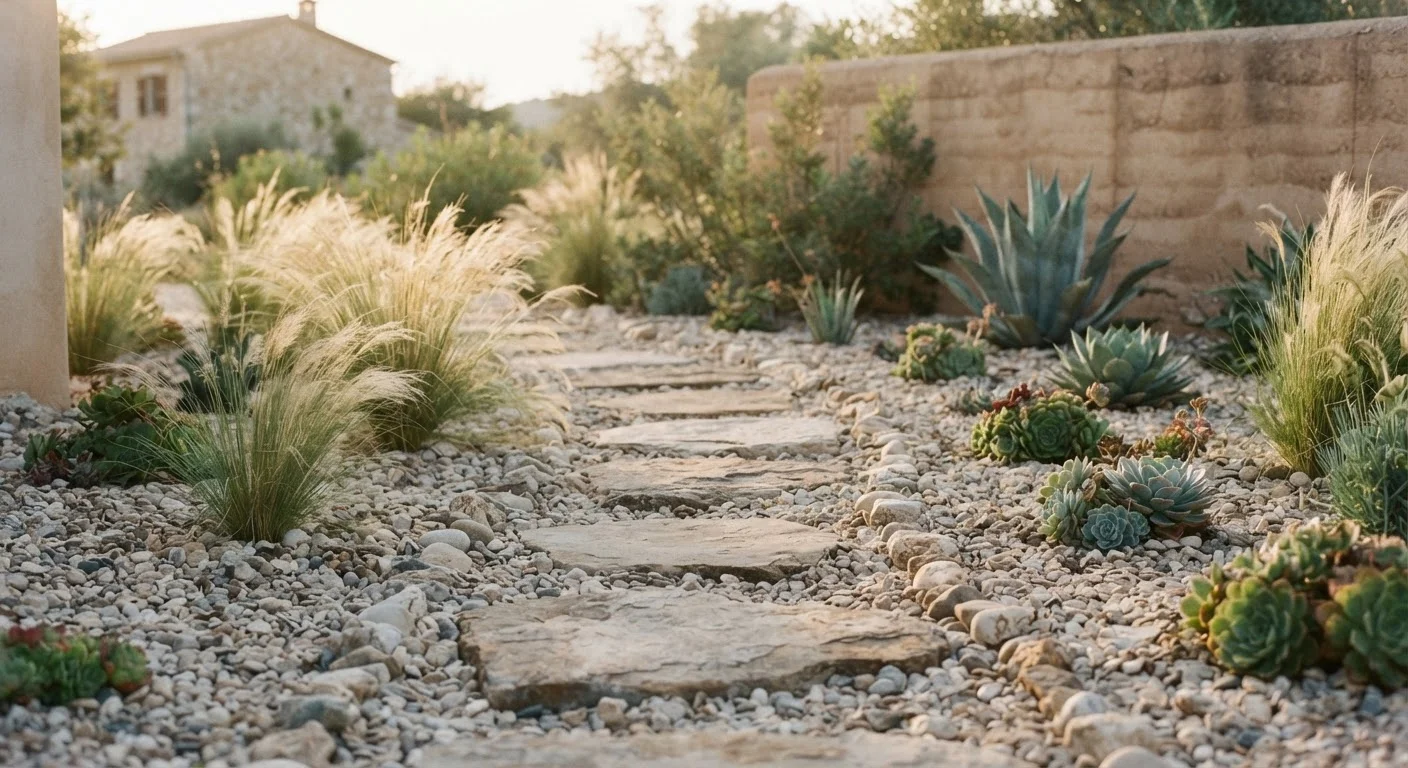
What a Gravel Garden Actually Is
A gravel garden is straightforwardly what it sounds like: a planted outdoor space where gravel serves as the primary surface material instead of grass, bark mulch, or bare earth. But it's more than just spreading stone over soil. At its best, a gravel garden is a designed system - one where plant selection, drainage, and surface material work together to create a self-sustaining landscape that asks little of the gardener once it's established.
The concept draws on planting traditions from dry climates worldwide. Gardens in coastal California, the American Southwest, and the Mediterranean basin have long relied on gravelly, fast-draining soils to support tough, beautiful plants. Modern gravel gardens translate those conditions deliberately, using the material as both a practical mulch and a design element.
It's worth distinguishing a true gravel garden from simply adding decorative stone as a border. In a functioning gravel garden, the gravel layer actively shapes the growing environment - moderating soil temperature, reducing surface evaporation, and preventing the soil compaction that occurs when rain hits bare ground directly. See our guide to mulching for context on how surface materials influence the root zone.
How a Gravel Garden Is Constructed
Construction follows a logical sequence. Getting the groundwork right matters far more than which decorative gravel you choose.
- Clear and prepare the site. Remove existing grass or plants. For lawn conversion, stripping the turf or smothering it with cardboard and compost several months in advance are both viable approaches. Level the ground and address any significant drainage problems before proceeding. For more on how drainage interacts with surface materials, see common patio drainage myths.
- Install edging. Metal, stone, or treated timber edging keeps gravel contained and prevents it from migrating into adjacent lawn areas or beds.
- Lay a weed-suppressing membrane. A woven, permeable landscape fabric allows water through while blocking light from below. Avoid solid plastic sheeting - it prevents drainage and harms soil biology.
- Plant through the membrane. Cut X-shaped slits in the fabric, dig your planting holes, and install drought-tolerant species before spreading gravel.
- Apply gravel to a depth of 2-3 inches. Rake level, ensuring gravel sits snugly around plant stems without burying them.
Gravel type is largely an aesthetic choice within reason. Pea gravel (small, rounded) is comfortable underfoot; crushed stone (angular) locks together more firmly and is less prone to movement; decorative slate or river pebbles can anchor a particular design style. For a broader comparison of how gravel performs against other patio surfaces, see patio surface materials compared.
Plant Before You Gravel
Always install your plants before spreading the gravel layer, not after. Cutting through an established gravel surface and membrane to add plants later is awkward and risks displacing the membrane. Plan your planting layout first, position plants through the membrane, then finish with gravel to lock everything in.
Plant Selection: The Core of a Successful Gravel Garden
No gravel garden thrives on stone alone - the plants are what make it a living, functional space rather than an expensive car park. The key principle is matching plants to conditions: free-draining, low-fertility soil with limited summer moisture.
Reliable performers across much of the US include:
- Lavender - fragrant, pollinator-friendly, and extremely drought-tolerant once established.
- Sedum (stonecrop) - succulent groundcovers and upright varieties that suit both visual texture and poor soil.
- Ornamental grasses such as blue fescue (Festuca glauca) or Mexican feather grass - movement, fine texture, and minimal care.
- Salvia species - long-flowering, deer-resistant, and adaptable across USDA hardiness zones.
- Echinacea (coneflower) - native to prairie regions, tolerant of rocky dry soil, and excellent for wildlife.
- Thyme and other low herbs - functional as groundcovers and scented underfoot on stepping stone paths.
Avoid combining gravel garden conditions with moisture-lovers like hostas, astilbes, or ferns. Those plants would struggle, and the contrast in care needs undermines the low-maintenance logic. If you want to grow moisture-sensitive or tender plants nearby, container gardening on patios gives you the flexibility to control their environment separately.
50-70%
Potential reduction in outdoor water use
The EPA's WaterSense program estimates that landscape irrigation accounts for nearly one-third of all residential water use, and drought-tolerant landscaping strategies can reduce that significantly depending on the plants replaced.
2-3 inches
Recommended gravel depth for weed suppression
Horticultural guidance consistently points to this depth range as the practical minimum for effective weed suppression and moisture retention benefits at the soil surface.
30%
Of US lawns in water-stressed regions
The USDA estimates that a substantial proportion of American residential turf is grown in climates where natural rainfall is insufficient, requiring supplemental irrigation to stay green.
Gravel Gardens vs. Lawn: An Honest Comparison
For homeowners considering whether to replace lawn with gravel, the tradeoff is straightforward: you're exchanging ongoing weekly effort for a meaningful upfront investment of time and cost.
Lawns require regular mowing, seasonal fertilizing, aeration, overseeding, and irrigation - particularly in hot or dry summers. Gravel gardens, once established, need occasional top-dressing with fresh gravel every few years, periodic weeding of wind-dispersed seeds from the surface, and light pruning of plants. The lawn care hub outlines the full scope of what turf maintenance involves, which helps put the comparison in perspective.
One honest limitation: gravel gardens don't replace the functional role of lawn as a recreational surface. They're not suitable for children's play areas or spaces where foot traffic is heavy and unpredictable. For compact yards where visual appeal and usability need to coexist, small outdoor space design principles offers useful frameworks for dividing zones purposefully.
Gravel gardens also raise a legitimate sustainability question. While they reduce water use and eliminate chemical lawn treatments, large areas of gravel with only sparse planting can increase surface runoff and reduce habitat for soil organisms. A well-planted gravel garden - dense with perennials and groundcovers - navigates this more responsibly than a purely mineral surface.
This article is for general informational purposes only. Local conditions, soil types, and climate zones vary significantly across the US. Consult your local cooperative extension service for regionally specific planting and landscaping guidance.
Frequently Asked Questions
Established gravel gardens planted with drought-tolerant species need very little supplemental watering, especially in most US climates with seasonal rainfall. During the first growing season, new plants still need regular watering to develop deep root systems. Once established, occasional deep watering during extended dry spells is usually sufficient.
Weeds can and do appear in gravel gardens, mainly from windblown seeds landing on the surface rather than from below. A woven landscape fabric installed beneath the gravel reduces but does not eliminate this. Choosing dense, spreading ground-cover plants helps shade out opportunistic weeds over time.
A depth of 2 to 3 inches is the general practical range for most garden applications. Shallower than 2 inches and weed suppression becomes less effective; deeper than 3-4 inches can make planting harder and may impede drainage in some soil types.
Yes - it's one of the most common gravel garden projects. The lawn must first be killed or stripped, the soil leveled and compacted, edging installed to contain the gravel, and a membrane laid before the gravel is applied. It's a significant one-time effort that pays off in reduced ongoing maintenance.
Plants native to rocky, dry, or Mediterranean climates perform best: lavender, sedum, salvia, echinacea, ornamental alliums, agave, festuca grasses, and thyme are reliable choices across much of the US. Avoid moisture-loving plants - the fast-draining environment will stress them.
Gravel gardens generally use less water and require no mowing or fertilizing, which reduces chemical and fuel inputs. However, gravel is a mined, non-renewable material, and large impermeable surfaces can increase runoff. Using permeable ground fabric and incorporating plants helps balance these concerns.
The content on this site is for informational purposes only and is not a substitute for professional advice. Always consult a qualified professional for guidance specific to your situation.