

Why Compacted Soil Is the Enemy of Healthy Grass
Grass roots need three things to thrive underground: oxygen, water, and nutrients. When soil particles are pressed tightly together - by foot traffic, heavy machinery, or simply the weight of clay-rich soil over time - those essentials can no longer move freely through the profile. The result is grass that looks stressed even when you're doing everything else right.
Compaction is especially common in lawns that double as play areas or sports surfaces, on clay-heavy soils, and in areas where water pools after rain. If you push a screwdriver into your lawn and it meets significant resistance within two inches of the surface, compaction is likely affecting root development. You may also notice water running off rather than soaking in - a reliable indicator that the soil has lost its porosity.
For a broader view of what compaction symptoms look like alongside other lawn problems, the lawn troubleshooting guide can help you pinpoint what's actually going on.
Quick Compaction Test Before You Aerate
Push a standard screwdriver into your lawn with firm hand pressure. If it sinks two inches or more without real resistance, your soil is likely in good shape. If it stops at one inch or less, compaction is probably limiting your grass roots. Mark problem areas before you aerate so you can make extra passes where it matters most.
Spike Aeration vs. Core Aeration: Which Method Does More
There are two main approaches to aerating a lawn, and they are not equally effective.
Spike aeration uses solid metal tines to push holes into the soil. It's simple and the equipment is inexpensive, but there's a catch: driving a solid spike into compacted ground can actually press soil particles more tightly together on either side of the hole. For mildly compacted lawns, spike aeration offers some benefit. For seriously compacted ground, it can make things marginally worse over time.
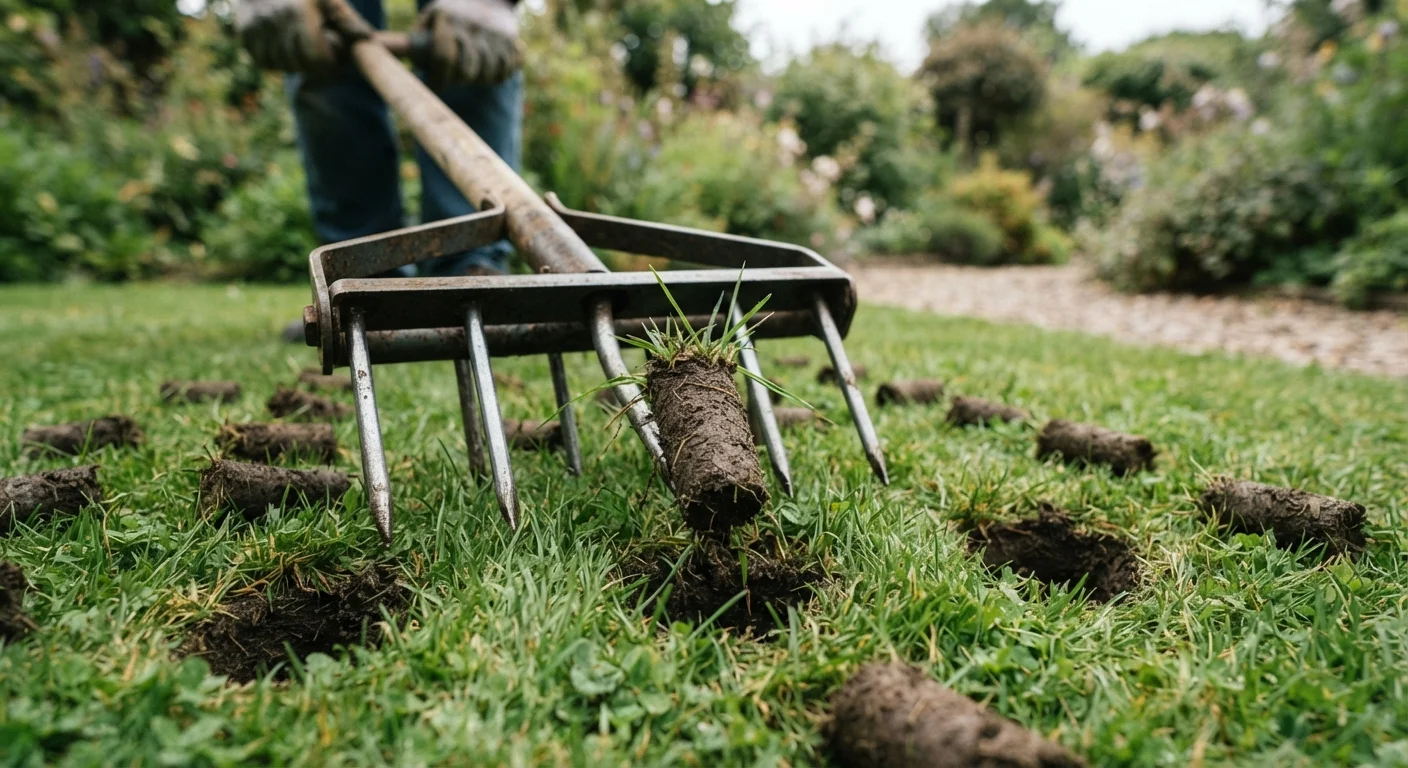
Core aeration (also called plug aeration) uses hollow tines to pull out cylinders of soil - typically half an inch in diameter and two to three inches deep - and deposit them on the surface. Because material is physically removed rather than displaced, the channels that remain are true open pathways. Surrounding soil decompresses slightly, and the holes allow water, fertilizer, and oxygen direct access to the root zone.
For most homeowners dealing with compacted lawns, core aeration is the more reliable choice. Core aerators are widely available to rent from equipment rental centers if you don't want to purchase one outright.
~2 in
Minimum core depth for effective aeration
University extension guidelines generally recommend hollow tines penetrate at least two inches to reach the compacted layer where root access is most restricted.
6 in
Ideal spacing between aeration holes
Turfgrass specialists suggest hole spacing of four to six inches across the lawn surface for meaningful decompression of the soil profile.
2-4 weeks
Time for surface plugs to break down
Under normal watering and mowing conditions, soil cores left on the lawn surface typically decompose and disappear within two to four weeks.
When to Aerate: Timing Your Treatment to the Grass Type
Timing aeration to your grass type's active growing season is critical. Aerating during dormancy puts unnecessary stress on the plant without giving it a chance to recover quickly.
- Cool-season grasses (Kentucky bluegrass, tall fescue, perennial ryegrass) grow most vigorously in spring and fall. Early fall - late August through October across much of the northern US - is the optimal window. The grass recovers fast, and reduced weed pressure means fewer seeds germinate in the open holes.
- Warm-season grasses (Bermuda, zoysia, St. Augustine, centipede) hit peak growth in late spring and summer. Aerate between May and July, once the lawn has fully greened up and is growing actively.
Aeration also pairs well with other treatments. Applying fertilizer or overseeding immediately after core aeration means those inputs fall directly into the channels and contact the soil. For a complete seasonal schedule that integrates aeration with feeding, mowing, and watering, the Lawn Care Calendar is a useful year-round reference.
One more consideration: soil chemistry affects how well any lawn treatment works. If your pH is far out of range for your grass type, aeration alone won't compensate. Pairing aeration with a soil pH check is a smart step, especially on lawns that haven't been tested in several years.
After Aeration: Getting the Most From Open Soil
The window immediately following aeration is when your lawn is most receptive to inputs. Prioritize these steps to compound the benefit:
- Overseed thin areas. Seed dropped into aeration holes has direct soil contact and is protected from drying out - germination rates are noticeably higher than broadcast seeding on an untreated surface.
- Apply a balanced fertilizer. Nutrients can travel straight into the root zone rather than sitting on the surface or running off.
- Water consistently. In the two weeks following aeration, keep the soil moist to support recovery and, if you've overseeded, to promote germination. Review deep-watering principles in our guide to watering a lawn well to avoid undoing your work with poor irrigation habits.
Leave the soil plugs where they fall. They'll break down within a few weeks, returning beneficial microbes and organic matter to the surface layer. Avoid heavy foot traffic on the lawn for at least a week post-aeration to let the channels remain open while the grass recovers.
Frequently Asked Questions
Most lawns benefit from aeration once a year. Lawns with heavy clay soil or heavy foot traffic may need it twice annually. Sandy or well-draining soils typically require less frequent treatment.
Spike aeration uses solid tines to punch holes, which can actually increase compaction around the hole. Core (plug) aeration removes cylinders of soil, physically reducing density and creating open channels without compressing surrounding soil.
Yes - aerating slightly moist soil is much easier and more effective. Water your lawn one to two days before aerating so the ground is damp but not waterlogged. Dry, rock-hard soil resists penetration and reduces the depth of cores removed.
Leave them in place. The plugs break down naturally within two to four weeks, returning organic matter and microorganisms to the surface. You can speed breakdown by running a mower over them or watering regularly.
It is generally advisable to wait until a new lawn has been through at least one full growing season before aerating. Disturbing immature root systems too early can set back establishment.
Aeration can help indirectly by introducing soil microbes to the thatch layer, which accelerates decomposition. However, if thatch exceeds about half an inch, scarifying is the more targeted treatment. See our guide on <a href="/garden-outdoors/lawn-care/scarifying-vs-aerating-choosing-the-right-lawn-treatment">scarifying vs aerating</a> for a detailed comparison.
The content on this site is for informational purposes only and is not a substitute for professional advice. Always consult a qualified professional for guidance specific to your situation.