

Why Moss Appears: Reading the Signals
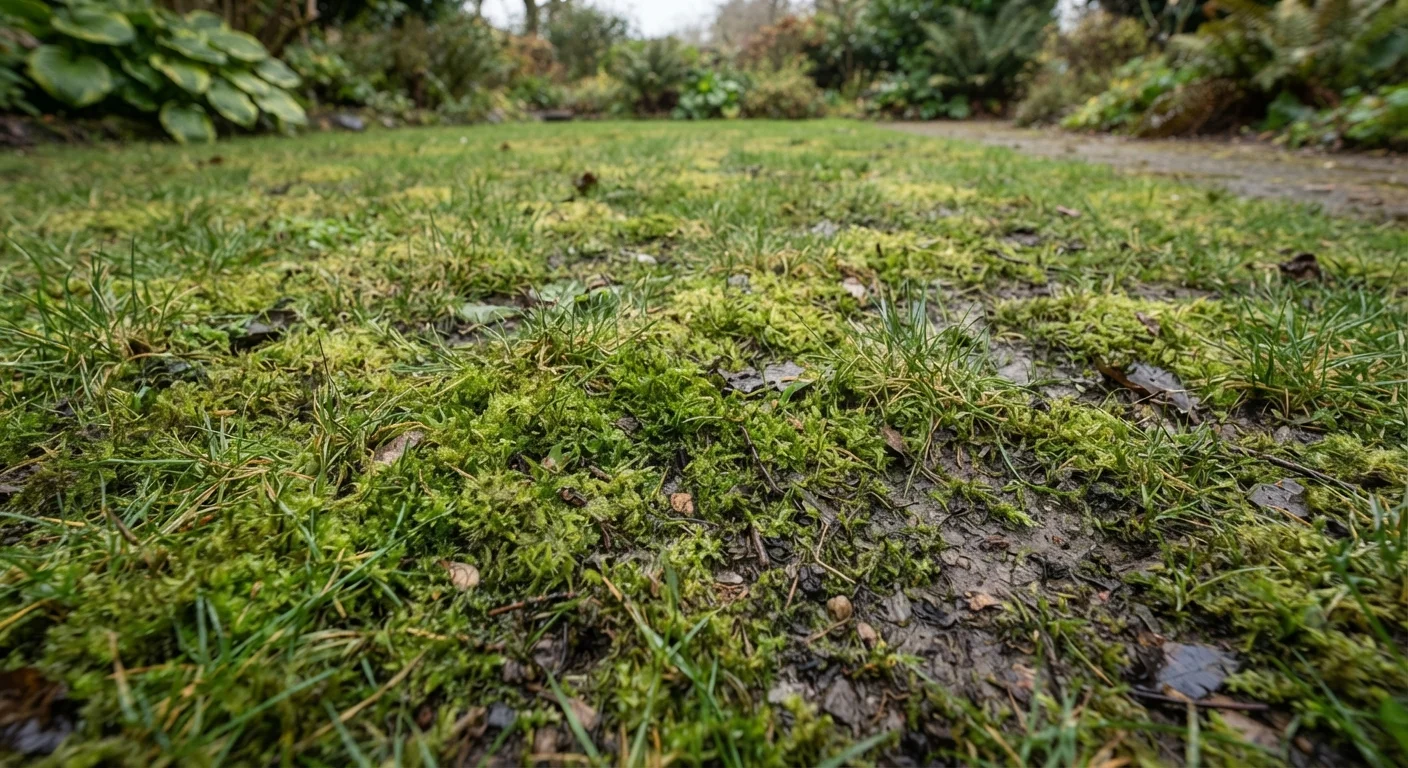
Moss doesn't invade healthy lawns. It colonizes turf that is already in retreat - and understanding why grass has retreated is the real starting point for control. The four most common triggers are poor drainage, low soil pH, shade, and compaction, and they often appear in combination.
Poor drainage keeps soil waterlogged long after rain. Grass roots need oxygen in the soil pore spaces; when those spaces are filled with water for extended periods, roots suffocate and die back. Moss, which absorbs moisture through its leaves rather than roots, thrives in these same wet conditions. If you notice moss concentrated near downspouts, along the base of slopes, or in low-lying areas, drainage is likely the primary culprit. For a broader look at how water behaves around outdoor surfaces, see our guide to patio drainage misconceptions.
Soil acidity is another major factor. When soil pH drops below approximately 5.5, the nutrient availability for most lawn grasses declines sharply, even if fertilizer has been applied. Moss, by contrast, is well-adapted to acidic conditions. A soil test - available through most cooperative extension offices - is the only reliable way to confirm pH.
Shade weakens grass over time. Most common lawn grasses are sun-dependent and gradually thin under a dense tree canopy or alongside buildings. Moss, needing no direct light for photosynthesis in the same way, fills the gap. Trimming lower limbs to increase light penetration, or transitioning to a shade-tolerant grass variety, are the most practical responses.
Compaction reduces the air and water movement grass roots depend on. High foot traffic, heavy clay soils, and repeated mowing on wet ground all compact the soil over time. A simple screwdriver test - if you can't push it 6 inches into moist soil with hand pressure - suggests meaningful compaction.
Moss Isn't Always the Enemy
In areas of deep shade or poor soil where grass genuinely cannot thrive long-term, moss can actually be a stable, low-maintenance ground cover. Some gardeners intentionally cultivate it in shaded beds, between stepping stones, or under dense tree canopies. If repeated attempts to establish grass in a particular spot keep failing, it may be worth considering whether grass is the right plant for that location at all.
What Moss Does - and Doesn't - Do to Your Lawn
Moss is often mischaracterized as an aggressive weed that crowds out grass. In practice, it's an opportunist. Grass thins first; moss follows. This distinction matters because it shapes how you respond.
A moss-covered lawn won't recover by simply killing the moss. The grass seed you oversow into bare, waterlogged, acidic, or compacted soil faces the same unfavorable conditions that caused the problem in the first place. Without soil remediation, you're likely to see the same pattern repeat within one or two growing seasons.
That said, a dense moss layer does have some secondary effects worth noting. It can hold surface moisture against the soil, potentially compounding drainage issues. It also makes it harder to assess the true condition of the soil underneath. When you pull back a mat of moss, you often find compacted, dark, anaerobic soil - useful diagnostic information.
For a broader look at how moss fits alongside other common lawn problems, the lawn troubleshooting guide covers the full range of symptoms and what each one typically indicates.
Long-Term Control: Fixing the Conditions, Not Just the Moss
Durable moss control follows a logical sequence: diagnose, correct, restore. Skipping straight to restoration without correction is where most DIY attempts fall short.
Step 1 - Diagnose with a soil test
Before doing anything else, take a soil sample and have it tested. This tells you pH, nutrient levels, and sometimes organic matter content. Most cooperative extension programs offer low-cost testing. Results guide every subsequent decision, particularly whether and how much lime to apply.
Step 2 - Improve drainage and reduce compaction
Core aeration - using a machine that removes small plugs of soil - is the most effective mechanical intervention for compaction. For persistently wet areas, consider whether the grading around the lawn directs water toward or away from the problem zone. Surface water management at the landscape level can make a significant difference. Topdressing with coarse sand or compost after aeration helps improve long-term soil structure.
Step 3 - Adjust pH if needed
Ground limestone (calcitic or dolomitic) raises soil pH gradually. Application rates depend entirely on your soil test results and soil type - clay soils buffer pH change more than sandy soils and typically need more lime. Work within the ranges your soil test recommends, and retest in 12 months to track progress.
Step 4 - Scarify and overseed
Once underlying conditions are improved, mechanically rake out or scarify the moss. Overseed with a grass variety appropriate to your light conditions - shade-tolerant blends for problem areas under trees, standard fescue or bluegrass mixes for open areas. Keep seeded areas consistently moist until germination is established. Review your lawn watering habits to avoid the overwatering that can hinder seed establishment.
Step 5 - Maintain grass health going forward
Healthy grass is the best long-term defense against moss. Avoid mowing too short - scalping removes the leaf tissue grass needs to photosynthesize effectively. Dull mower blades and cutting wet grass also set turf back. The most common mowing mistakes are worth reviewing if your lawn has repeatedly struggled despite other interventions.
Test Soil Before Applying Lime
Never apply lime based on guesswork - over-liming can raise pH too high, which creates its own nutrient availability problems. A soil test costs very little through most cooperative extension offices and gives you an exact starting point. Retest every 12 to 18 months to track changes and adjust your approach accordingly.
Frequently Asked Questions
Moss returns because the conditions that favored it - poor drainage, shade, compaction, or low pH - haven't changed. Removing moss without correcting those root causes simply leaves the same hostile environment for grass, which moss will re-colonize quickly. Address the soil and light conditions first.
Moss doesn't actively kill grass - it fills in where grass has already thinned or died. Grass retreats because of unfavorable conditions, and moss, being tolerant of those same conditions, moves in. Restoring healthy grass requires fixing what weakened it in the first place.
Moss itself doesn't damage soil chemistry or structure. However, a thick moss layer can trap moisture against the soil surface, potentially worsening drainage over time. It also indicates that soil conditions are already compromised in some way.
Yes. Scarifying (raking out) moss mechanically is effective in the short term. Paired with aeration, liming to raise pH, and improving drainage or light, you can reduce moss sustainably without chemical treatments. Results take more time but address root causes.
Most lawn grasses prefer a pH between 6.0 and 7.0. Moss tends to thrive in more acidic soils below pH 5.5. A soil test will tell you your current pH, and ground limestone can be applied to raise it gradually toward the range grass prefers.
Late summer through early fall is often the best window - grass is still actively growing and can recover well after scarification and overseeding. Spring treatments are also viable, but avoid working on waterlogged or frost-affected ground.
The content on this site is for informational purposes only and is not a substitute for professional advice. Always consult a qualified professional for guidance specific to your situation.