

Our Verdict
Scarifying and aerating are complementary treatments, not interchangeable ones. Scarifying targets surface thatch and moss; aerating addresses compacted soil deeper down. Many lawns will benefit from both at different intervals, but understanding which problem is limiting your grass growth tells you where to start.
| Best for | Recommended |
|---|---|
| Lawns with visible thatch, moss patches, or a spongy feel underfoot | Scarifying |
| Lawns on heavy clay soil or in high-traffic areas with poor drainage | Aerating |
| Established lawns with both compaction and surface buildup | Both - aerate first, then scarify in the same season |
| New or recently renovated lawns needing gentle annual maintenance | Aerating only |
What Each Treatment Actually Does
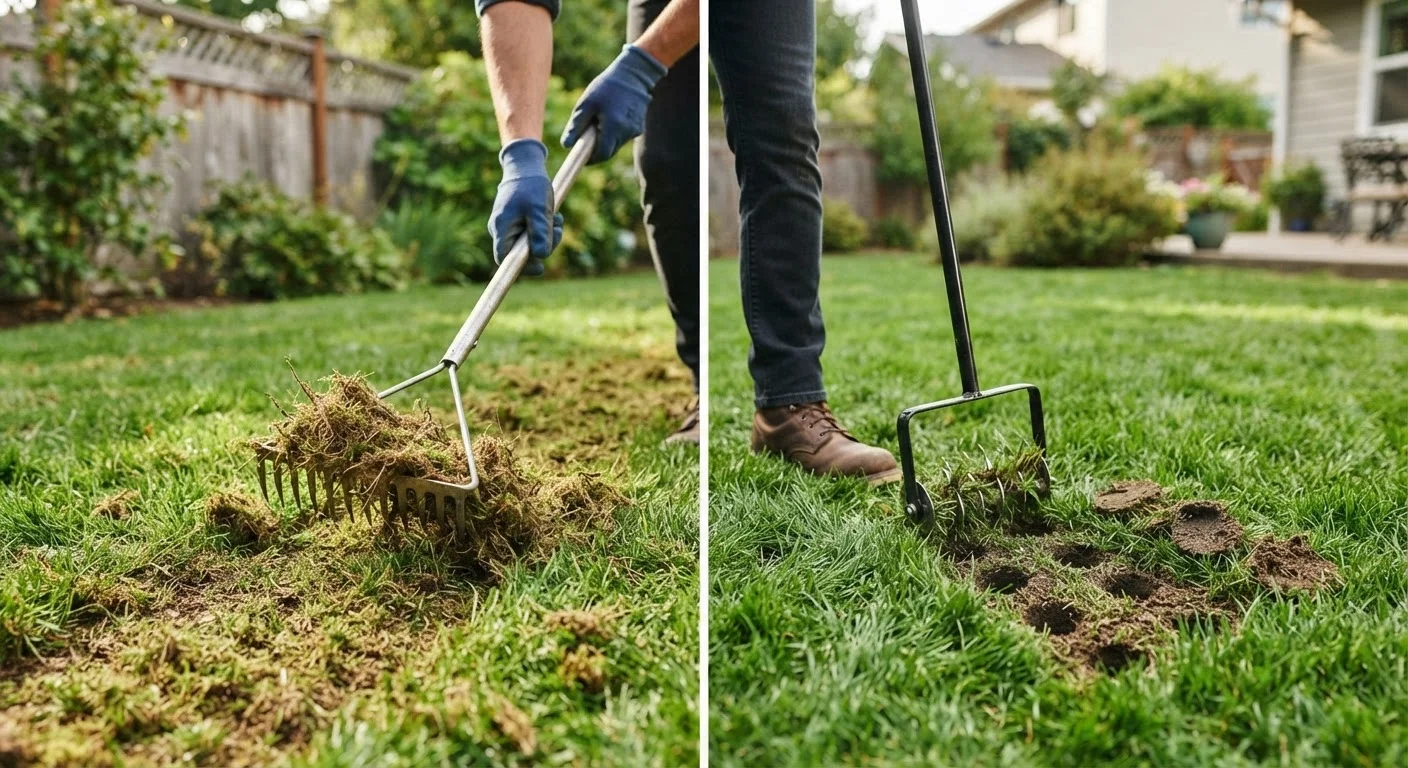
Scarifying (sometimes called dethatching) uses vertical blades or tines to slice through and physically remove the layer of dead organic matter - thatch - that accumulates between the grass blades and soil surface. Thatch is a tightly woven mix of dead roots, stems, and debris. A thin layer (under ½ inch) is harmless, but anything thicker blocks water, air, and fertilizer from reaching the roots.
Aerating creates small channels in the soil itself - either by pushing solid spikes in (spike aeration) or by extracting small cores of soil (core aeration). These channels relieve compaction, improve water infiltration, and give grass roots room to grow downward. For a deeper look at how spike and core methods compare, see our aeration explainer.
The key distinction: scarifying works on the surface layer, aerating works on the soil structure beneath it.
Diagnosing What Your Lawn Needs
Before reaching for any equipment, take a few minutes to read your lawn. Pull back a small patch of grass and look at the layer between the blades and the soil. If it's more than ½ inch thick and spongy, thatch is the issue - scarifying is indicated. If you see extensive moss, that also points to scarifying, though moss usually signals an underlying drainage or compaction problem worth addressing too.
For compaction, push a screwdriver or pencil into the soil. If it resists with moderate pressure, the soil is compacted and aerating will help. Waterlogging after rain, thin or bare patches in heavily used areas, and grass that looks tired despite feeding are all signs of compaction.
Many lawns have both problems. If that's the case, aerate first to open the soil, then scarify - removing thatch after the soil has been opened tends to produce better recovery. A lawn troubleshooting guide can help you map specific symptoms to specific causes before you act.
| Scarifying | Aerating | |
|---|---|---|
| Primary problem solved | Thatch and moss buildup | Soil compaction |
| Where it works | Surface layer (top ½-1 inch) | Soil profile (2-4 inches deep) |
| Best timing | Late summer or early fall | Fall (cool-season) or late spring (warm-season) |
| Recommended frequency | Every 1-3 years | Once per year |
| Lawn disruption level | High - looks rough for 1-2 weeks | Moderate - recovers in 1-2 weeks |
| Best used when | Thatch exceeds ½ inch; moss present | Poor drainage; heavy foot traffic; hard soil |
Timing and Frequency
Both treatments stress the lawn temporarily, so timing is critical. Grass needs active growth ahead of it - not a cold winter or a summer drought - to recover well.
- Scarifying: Late summer to early fall is ideal in most US regions. The grass is still growing, soil is warm, and cooler temperatures reduce stress. Spring is the secondary option but avoid scarifying heavily compacted lawns in spring if you also plan to aerate - do one at a time.
- Aerating: Fall is best for cool-season grasses (Kentucky bluegrass, fescue, ryegrass). Late spring works for warm-season grasses (Bermuda, zoysia, St. Augustine). Core aeration in particular should follow the lawn's primary growing season.
In terms of frequency, most lawns benefit from aerating once a year. Scarifying is more disruptive - every one to three years is typically enough unless thatch buildup is aggressive. Consult the seasonal lawn care calendar to fit these tasks into your year-round routine.
After Treatment: Recovery and Next Steps
Both scarifying and aerating leave the lawn looking rough for a week or two - this is normal. After scarifying, rake up all extracted thatch and dispose of it; leaving it in place defeats the purpose. After core aeration, leave the pulled cores on the surface - they'll break down and return nutrients to the soil within a couple of weeks.
Post-treatment is an ideal moment to overseed thin areas, top-dress with a light layer of compost, or apply a balanced starter fertilizer. The open soil channels from aeration make seed-to-soil contact much better than usual. If your lawn's recovery seems slow despite proper treatment, soil pH may be limiting grass growth - worth testing before you fertilize.
Water regularly but avoid saturating the soil in the days following either treatment, and hold off mowing for at least a week to give the grass time to settle.
The content on this site is for informational purposes only and is not a substitute for professional advice. Always consult a qualified professional for guidance specific to your situation.