

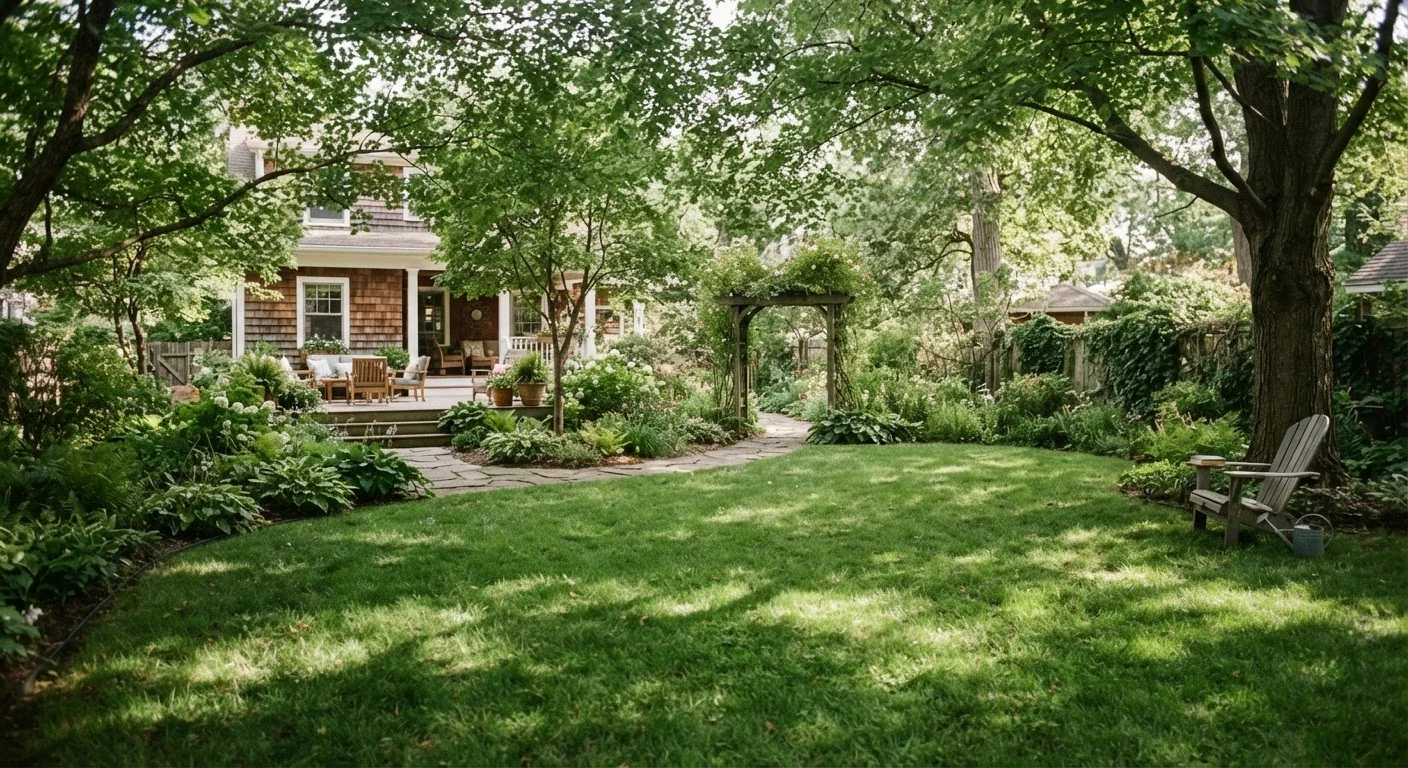
Why Shade Is a Genuine Challenge for Grass
Grass is a sun-hungry plant. Photosynthesis - the process by which grass converts light into the sugars it needs to grow - slows dramatically when light levels drop below a functional threshold. In deeply shaded areas, a lawn isn't just growing slowly; it may be slowly starving.
Shade also changes the microclimate around turf. Reduced airflow under tree canopies keeps soil damp longer, increasing fungal disease pressure. Root competition from trees draws moisture and nutrients away from grass at the same time. The result is often thin, pale, struggling turf - even when homeowners are doing everything else right. If you're seeing yellowing patches, our guide to yellow grass can help you separate light stress from other causes.
| Minimum light for most grasses | 4-6 hours of direct or filtered sunlight daily (General horticultural consensus) |
| Most shade-tolerant cool-season grass | Fine Fescue (Creeping Red, Chewings, Hard Fescue) (University extension programs, US) |
| Most shade-tolerant warm-season grass | St. Augustine Grass (University of Florida IFAS Extension) |
| Recommended mowing height in shade | Raise 0.5-1 inch above standard setting (General turfgrass management guidance) |
| Key disease risk in shade | Fungal diseases (e.g., dollar spot, brown patch) (General horticultural consensus) |
| Best watering time for shaded turf | Early morning, to allow blades to dry by evening (General turfgrass management guidance) |
Shade-Tolerant Grass Varieties Worth Knowing
No grass thrives in deep shade, but several species tolerate reduced light better than others. Selecting the right type for your climate is the most important decision you'll make.
Cool-Season Grasses (Northern US)
- Fine Fescues (Creeping Red, Chewings, Hard Fescue): The most shade-tolerant group in cool climates. Their narrow leaf blades require less light to photosynthesize efficiently. They also perform well in dry, low-fertility soils - making them doubly useful under trees.
- Tall Fescue: Offers moderate shade tolerance with excellent heat and drought resilience. Better suited to transition zones where summers are warm.
- Rough Bluegrass (Poa trivialis): Tolerates shade and wet conditions, but goes dormant in summer heat. Best in cool, moist northern climates.
Warm-Season Grasses (Southern US)
- St. Augustine Grass (Stenotaphrum secundatum): The most shade-tolerant warm-season grass, commonly used in the Southeast and Gulf Coast. Requires at least 4-6 hours of filtered or indirect light daily.
- Zoysia Grass: Slower growing and more drought-tolerant than St. Augustine, with fair shade performance. Works well in the transition zone.
- Centipede Grass: Low-maintenance and moderately shade-tolerant, though it struggles in heavy shade.
If you're starting fresh in a shaded area, it's worth reviewing the seed versus turf decision before you buy - shade-tolerant varieties aren't always available as ready-laid rolls.
Photosynthesis
The biological process by which plants use sunlight, water, and carbon dioxide to produce sugars for energy and growth. In low light, this process slows, reducing the grass plant's ability to sustain itself.
Fine Fescue
A group of cool-season grasses with narrow leaf blades known for their above-average tolerance of shade, drought, and low-fertility soils. Includes creeping red, chewings, and hard fescue types.
Transition Zone
A broad band across the central United States where summers are too hot for cool-season grasses and winters too cold for warm-season grasses. Selecting suitable varieties in this zone requires particular care.
Canopy Lifting
The practice of pruning the lower limbs of trees to raise the base of the tree's canopy, allowing more light and airflow to reach the ground below. Should be performed by a qualified arborist.
Nitrogen
A primary nutrient in lawn fertilizers that drives leafy green growth. Shaded turf needs less nitrogen than sun-exposed grass, as excess can produce weak, disease-prone growth in low-light conditions.
Practical Strategies for Shaded Turf
Choosing the right variety is step one. Keeping it healthy takes a few targeted adjustments to your normal lawn care routine.
Mow Higher
Raise your mowing height by half an inch to one inch above your normal setting. Taller blades have more leaf surface area to capture limited light. Never remove more than one-third of the blade height in a single cut.
Reduce Nitrogen Fertilizer
Shade-grown grass grows more slowly and needs less nitrogen than sun-exposed turf. Over-fertilizing in shade encourages lush, soft growth that's far more vulnerable to disease. A soil test will tell you what's actually needed - the connection between soil pH and grass health is often overlooked in shaded areas where leaf litter builds up and acidifies the soil.
Water Thoughtfully
Shaded soil stays moist longer. Overwatering adds fungal disease risk. Water deeply but infrequently, and always in the morning so grass blades can dry before nightfall.
Thin the Canopy
Where possible, have a certified arborist selectively prune lower limbs to lift the canopy and allow more diffused light to reach the lawn below. Even a modest increase in light can meaningfully improve turf density.
Accept Limits - and Alternatives
Some areas simply receive too little light to support grass long-term. In those spots, a groundcover like pachysandra or a mulched bed may be more practical. Struggling turf in dense shade often leads to moss and bare patches - both addressed in our lawn troubleshooting guide.
The content on this site is for informational purposes only and is not a substitute for professional advice. Always consult a qualified professional for guidance specific to your situation.