

Our Verdict
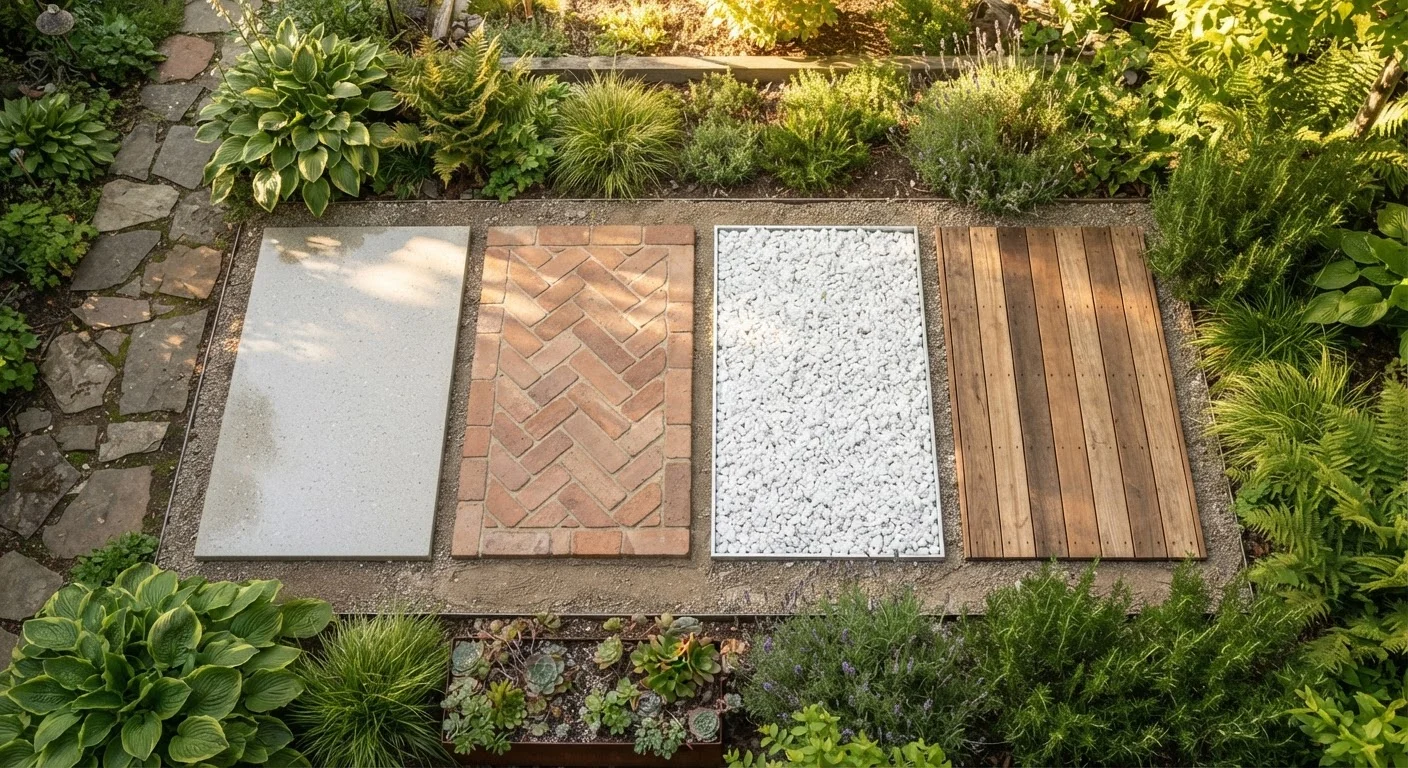
No single patio material suits every situation. Concrete wins on upfront economy and longevity for flat, stable ground. Pavers offer the best balance of aesthetics, repairability, and durability. Gravel suits low-traffic or accent areas where drainage matters most. Decking is ideal where comfort and warmth underfoot are priorities, or where a raised level surface is needed.
| Best for | Recommended |
|---|---|
| Homeowners prioritizing durability and low upfront cost | Concrete |
| Those wanting design flexibility and easy long-term repairs | Pavers |
| Budget-conscious installs or permeable drainage areas | Gravel |
| Elevated spaces or anyone wanting a warmer, softer surface | Decking |
Concrete: Workhorse of the Patio World
Poured concrete is one of the most widely used patio surfaces in the US, and for good reason. When properly installed on a compacted, well-prepared sub-base, it delivers a flat, stable surface that can last several decades with minimal intervention. It handles heavy furniture, foot traffic, and outdoor appliances without complaint.
The trade-off is flexibility. Concrete expands and contracts with temperature swings, which means control joints (planned seams that guide where cracking occurs) are essential - not optional. Even well-installed slabs can develop hairline cracks over years of freeze-thaw cycles, particularly in northern climates. Repairs are functional but rarely invisible.
Aesthetically, plain gray concrete has a utilitarian reputation, though stamped, stained, or exposed-aggregate finishes can dramatically change its appearance. These decorative options add cost but bring concrete much closer to the look of stone or tile. For drainage guidance around your finished slab, see our article on patio drainage myths - poor slope is one of the most frequent installation errors.
Pavers: Flexibility Meets Longevity
Concrete, brick, or natural stone pavers are laid individually on a compacted gravel and sand base rather than poured as a single mass. This modular approach is their defining advantage: if one paver shifts, cracks, or stains, you lift and replace it without disturbing the surrounding surface.
Pavers also handle soil movement better than monolithic slabs. Individual units flex slightly as the ground shifts seasonally, reducing the risk of large-scale cracking. That said, proper installation - including adequate base depth and compaction - is critical. Skimping on the sub-base is the leading cause of paver settlement and uneven surfaces.
Natural stone pavers (such as flagstone or bluestone) sit at the higher end of the cost range and vary more in thickness, which requires more careful bedding. Concrete pavers are more uniform and generally less expensive. For a deeper look at how masonry materials differ, this guide to brick, block, and stone covers structural and aesthetic considerations in detail.
| Concrete | Pavers | Gravel | Decking | |
|---|---|---|---|---|
| Typical installed cost | Moderate | Moderate-High | Low | Moderate-High |
| Durability | High (cracks over time) | Very high | Low-Moderate | Moderate-High |
| Repairability | Difficult invisibly | Excellent (replace units) | Easy (top up material) | Moderate (board replacement) |
| Drainage | Requires sloping | Good (jointed surface) | Excellent (permeable) | Excellent (open frame) |
| Maintenance level | Low | Low-Moderate | Moderate (raking, edging) | Moderate-High |
| DIY friendliness | Moderate | Moderate | High | Moderate (framing skills needed) |
| Comfort underfoot | Hard | Hard | Soft but loose | Warm, comfortable |
Gravel: The Permeable, Low-Cost Option
Crushed gravel or decomposed granite is the most affordable patio surface to install and one of the most permeable - water drains straight through rather than pooling on top. That makes it a practical choice in areas with heavy rainfall or where local codes encourage or require permeable surfaces.
The practical downsides are real. Gravel migrates underfoot, especially on slopes, and needs periodic raking to stay level and contained. A sturdy edging system (metal, composite, or concrete borders) is essential to prevent spread. Weeds can establish through gravel without a quality landscape fabric beneath, and loose stone isn't comfortable for barefoot use or furniture without stabilizing pads.
Gravel works best as a low-traffic accent area, around planting beds, or in a larger garden design rather than as a primary entertaining surface. Our dedicated article on gravel gardens explores how to use gravel effectively as a landscape surface.
Decking: Warmth and Versatility Above Grade
Wood and composite decking differ from masonry and gravel in one fundamental way: they're built above grade on a frame rather than laid on the ground. This makes decking the go-to solution for sloped yards, elevated transitions between indoor and outdoor spaces, or anywhere a ground-level slab simply isn't practical.
Pressure-treated lumber is the traditional choice - widely available and relatively affordable - but it requires regular sealing or staining to resist moisture and UV damage. Composite decking (a blend of wood fiber and plastic) demands less maintenance and resists rot and splintering, but costs more upfront. For a thorough comparison of those two options, see our article on composite vs pressure-treated decking.
One practical consideration: decking frames require periodic inspection for pest damage and rot, particularly where structural members contact the ground or sit close to soil. Any decking attached to a home's structure may also require a building permit - always check with your local building department before construction begins.
Once your surface is in place, container gardening on patios is one of the most effective ways to add life and personality to any surface type.
The content on this site is for informational purposes only and is not a substitute for professional advice. Always consult a qualified professional for guidance specific to your situation.