

Why Small Outdoor Spaces Demand a Different Design Lens
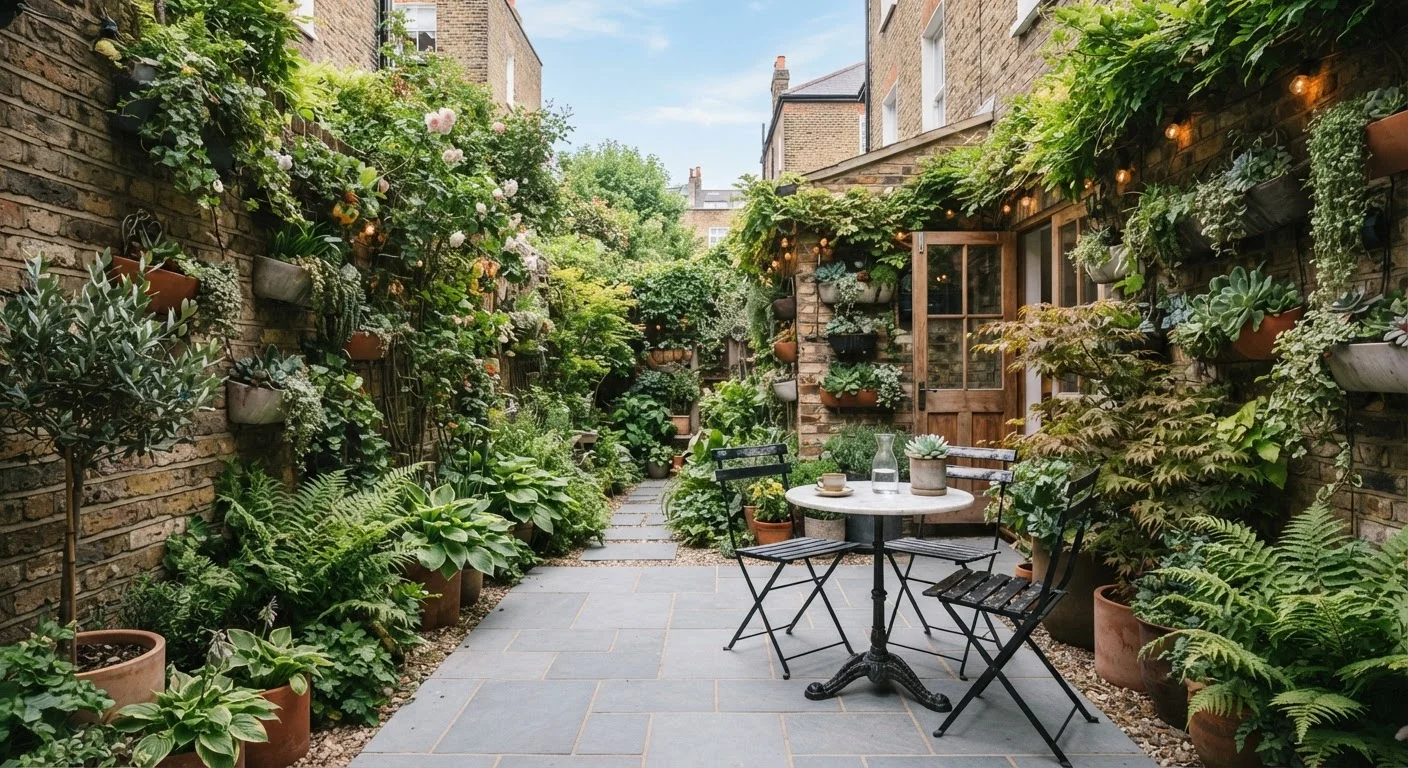
A compact yard, balcony, or courtyard doesn't benefit from simply downsizing whatever works in a larger garden. The spatial logic is genuinely different. In a small space, every element is always in view simultaneously, which means clutter reads instantly and proportion errors are obvious. The design principles that expand perceived space - sightlines, scale, layering, and material restraint - need to lead every decision, rather than function as afterthoughts.
This isn't about making a space look bigger through optical tricks alone. It's about organizing outdoor areas so they feel intentional, comfortable, and appropriately furnished. The same thinking that helps expand a compact interior translates well to outdoor settings, with some important adaptations for weather, plants, and sightlines to neighboring spaces.
Design Principles That Actually Make a Difference
Apply these practices in sequence - starting with structure, then surface, then planting and furniture - to build a coherent result rather than accumulating disconnected fixes.
Establish a single clear focal point before adding any other elements.
Without a visual anchor, a small space feels scattered. A strong focal point - a wall-mounted planter, a small water feature, or a well-placed pot - gives the eye somewhere to land and organizes everything else around it. It also creates the illusion of depth by pulling attention toward a defined spot.
Use vertical surfaces as actively as horizontal ones.
Floor space in a compact yard is finite. Walls, fences, and trellises offer planting and storage area that doesn't consume any ground footprint. Vertical layering also adds height variation, which makes a flat, featureless space feel more dynamic and three-dimensional.
Choose furniture scaled to the space, not to general 'outdoor' proportions.
Standard-sized outdoor dining sets often overwhelm a small patio. Oversized furniture makes movement awkward and visually compresses the space. Right-sized furniture leaves enough negative space - empty area - which is what actually makes a compact zone feel breathable and usable.
Limit your material and color palette to two or three consistent choices.
Visual noise shrinks perceived space faster than physical clutter. When surfaces, pots, and furniture share a coherent palette - natural stone, matte black, and white, for instance - the eye moves smoothly rather than stopping repeatedly. Consistency signals intent and reads as more spacious.
Lay paving at a diagonal to the longest boundary wall.
Diagonal lines widen a space optically. When the grid of a paver or decking board runs at 45 degrees to the longest wall, the eye tracks across the full width rather than along the length, counteracting the tunnel effect common in narrow gardens.
Define zones with level changes or material transitions rather than walls or fencing.
Physical barriers in a small space create a closed-in feeling. A change in surface material or a single step up to a seating area signals separate zones to the brain without interrupting sightlines or blocking light. This is particularly effective on balconies and urban terraces.
Start With What You Can Do This Weekend
Not every improvement requires a redesign. Several high-impact changes can be made immediately with minimal cost or disruption.
For spaces that need to serve multiple purposes - dining, lounging, container growing - consider how simple zoning techniques can carve distinct areas from a single small footprint without construction.
Plants, Containers, and Surfaces in Small Spaces
Plant selection has a significant effect on perceived scale. Large-leafed specimen plants used as single focal points read as deliberate and architectural; a scattering of small plants in mismatched pots reads as busy. For confined spaces, a single well-chosen container planting - correctly sized for drainage and root depth - often achieves more than a cluster of smaller pots. The fundamentals of container gardening on patios cover pot sizing and soil selection in detail.
Ground surfaces are equally important. A continuous material - gravel, pavers, or decking in a single consistent tone - reads as a larger plane than a patchwork of different finishes. Gravel gardens are worth understanding here: they're low-maintenance, permeable, and visually calm. Laying pavers at a diagonal to the longest wall is a well-established technique for making narrow spaces feel wider. Privacy planting and screening, when handled well, also defines a small space without making it feel enclosed - see privacy screening options compared for a breakdown of approaches. Once your space is well-structured, planning for outdoor entertaining in it becomes much more straightforward.
The content on this site is for informational purposes only and is not a substitute for professional advice. Always consult a qualified professional for guidance specific to your situation.