

Our Verdict
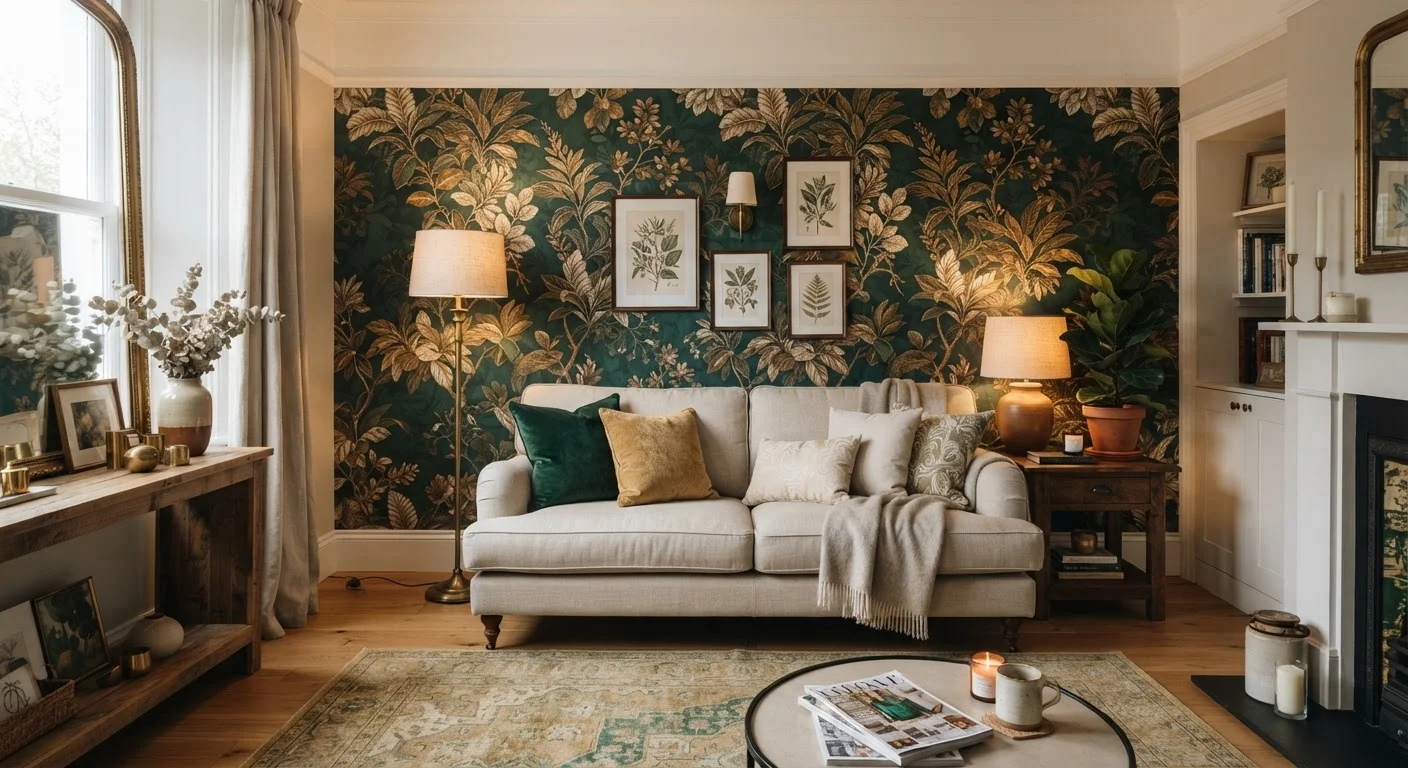
Bold wallpaper is one of the most powerful decorating tools available - capable of transforming a plain room into a genuinely memorable space. The trade-offs around cost, installation effort, and eventual removal are real, but they're manageable with thoughtful planning. Choosing the right wall, the right pattern scale, and the right wallpaper type for your situation makes all the difference.
Best suited to homeowners or long-term renters who want a high-impact design statement and are willing to invest time or budget into proper installation and eventual removal.
Why Bold Wallpaper Is Having a Moment
Statement wallpaper has cycled in and out of interior design trends for decades, but its current resurgence feels different - more intentional, more curated. Today's bold prints range from oversized botanicals and geometric abstracts to maximalist murals that turn a single wall into a focal point worthy of a gallery. If you've been eyeing a dramatic pattern for your living room or bedroom, you're in good company.
The appeal is straightforward: wallpaper delivers texture, pattern, and color in a single application, doing the work of multiple decorating layers at once. When paired thoughtfully with complementary soft furnishings, a bold pattern can anchor an entire room's identity. But before you commit, it's worth examining both the genuine strengths and the honest drawbacks.
The Case For Bold Wallpaper
Few decorating moves match wallpaper for sheer visual impact. A single papered wall can add architectural interest, make ceilings feel taller, or create the illusion of a more intimate, cozy space - depending on the pattern and scale you choose. Color theory and repeat scale work together in ways that flat paint simply can't replicate.
Instant, high-impact visual transformation
A bold pattern does in one application what multiple paint layers, art pieces, and accessories might attempt to achieve together. The effect is immediate and room-defining.
Adds texture and depth paint cannot replicate
Embossed, grasscloth, or printed wallpapers introduce tactile and visual depth that flat wall paint simply cannot mimic, elevating the perceived quality of a space.
Peel-and-stick options reduce commitment
Removable wallpaper formats allow renters and cautious decorators to experiment with bold patterns without permanent adhesive or surface risk.
Can correct or camouflage architectural flaws
A well-chosen pattern can draw the eye away from awkward proportions, dated trim work, or minor surface imperfections that would otherwise require costly repairs.
Wide range of price points available
From budget-friendly peel-and-stick sheets to designer rolls, the wallpaper market spans a broad cost range, giving decorators flexibility to match their budget.
Beyond aesthetics, today's market includes peel-and-stick and unpasted options that significantly lower the barriers to entry. These formats are especially useful for those exploring accent wall approaches without full commitment. Modern wallpapers also often include durable, washable surfaces - a meaningful upgrade over older vinyl options.
The Case Against Bold Wallpaper
The risks are real, and they're worth naming clearly. Traditional wallpaper installation requires careful wall preparation, precise pattern matching, and - depending on the product - paste application that leaves little room for error. Mistakes mid-hang can be costly. Beyond installation, the day will come when tastes change or you need to sell the property, and removal is rarely as painless as the project felt going up.
Traditional installation is skill-intensive
Pasted wallpaper requires careful wall prep, precise cutting, and pattern alignment - errors are difficult to correct mid-project and can result in wasted material.
Removal can be time-consuming and damaging
Stripping traditional wallpaper - especially from drywall rather than plaster - can pull away surface paper and require patching, priming, and repainting before any new treatment can be applied.
Bold patterns can cause visual fatigue over time
High-contrast or maximalist prints that feel exciting initially may become overstimulating in everyday living environments, particularly in rooms used for relaxation or focus.
Pattern repeat increases material waste and cost
Large-repeat patterns require purchasing extra rolls to ensure proper alignment, which can significantly increase material costs compared to a solid-color paint job.
May complicate resale appeal
Highly personal pattern choices don't always translate well to prospective buyers, potentially requiring removal or repainting before listing a property.
Pattern fatigue is also a genuine phenomenon. A maximalist print that thrills in year one can feel exhausting by year three, especially in high-traffic rooms where visual stimulation accumulates. It's worth comparing the long-term commitment of traditional wallpaper against alternatives - our breakdown of stencilling versus wallpaper explores the trade-offs in detail.
30-40%
Extra material needed for large pattern repeats
Interior design professionals commonly advise ordering 30-40% more wallpaper than the measured wall area when working with large-repeat patterns to account for alignment and trimming waste.
1 wall
Recommended scope for first bold wallpaper project
Design educators consistently suggest limiting bold wallpaper to a single accent wall for first-time decorators to manage both cost and visual impact effectively.
Choosing Strategically: How to Get the Most From a Bold Pattern
The smartest approach to bold wallpaper is containment paired with confidence. Limit the pattern to one wall - typically the one behind a bed, sofa, or fireplace - and keep the remaining walls neutral. This frames the pattern as a design decision rather than an accident of excess. For room-sizing concerns, vertical stripes and small-repeat patterns tend to read more flexibly across different room dimensions than large-scale motifs.
Wall condition matters enormously. Uneven plaster, old adhesive residue, or previous wallpaper layers all affect how a new application performs. Skipping proper surface prep is the most common cause of bubbling, peeling, and misaligned seams. If you're weighing wallpaper against a fresh coat of paint for an accent wall, a side-by-side comparison of the two approaches can help you decide based on your room, budget, and skill level.
A Note on Wall Preparation
No wallpaper - traditional or peel-and-stick - performs well on poorly prepared surfaces. Walls should be clean, dry, smooth, and primed before application. Skipping this step is the leading cause of bubbling, peeling seams, and adhesion failure. If your walls have existing wallpaper layers, consult a professional before adding more on top, as multiple layers can stress drywall and plaster over time.
For a broader room transformation context, the Room Makeovers hub and Room Styling Tips hub offer practical guidance on coordinating wallpaper with furniture, lighting, and layout.
The content on this site is for informational purposes only and is not a substitute for professional advice. Always consult a qualified professional for guidance specific to your situation.