

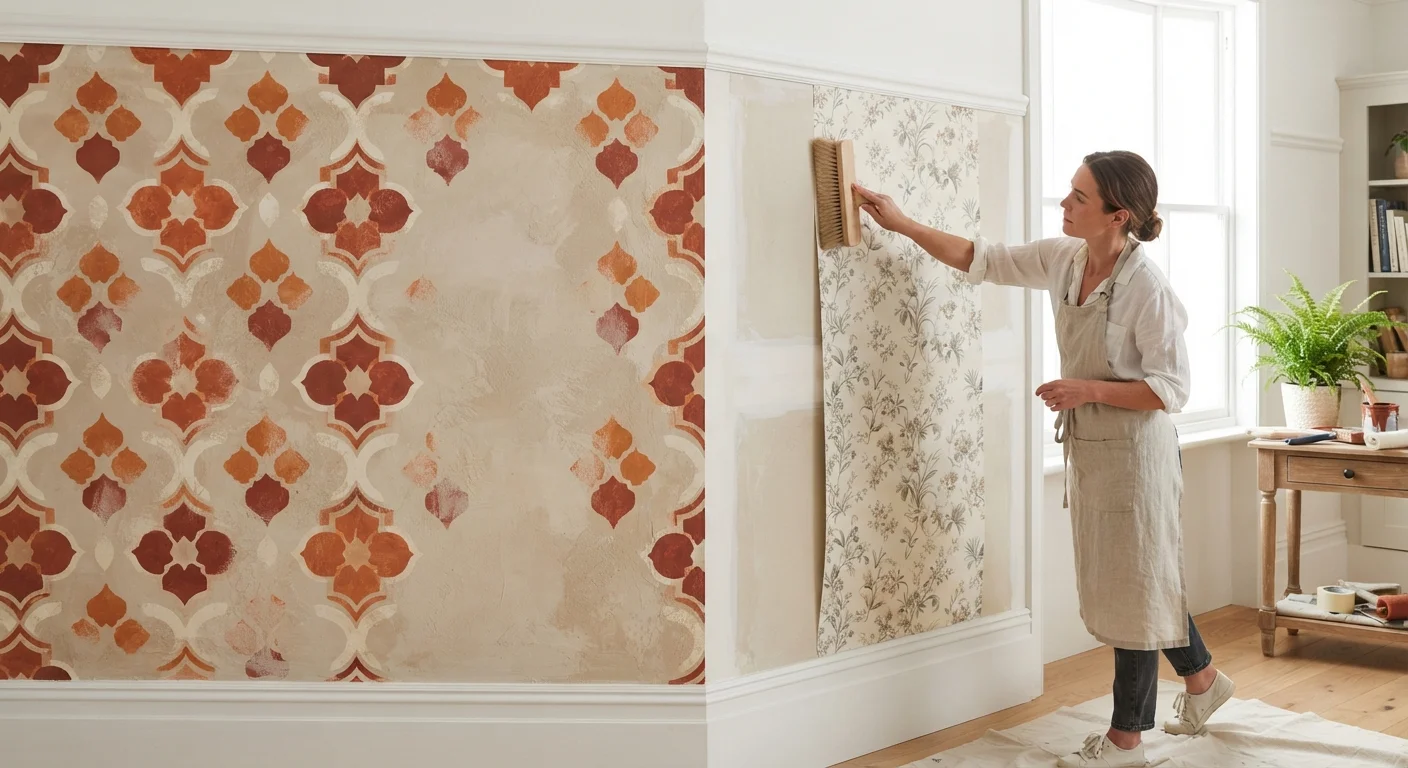
Our Verdict
Stencilling wins on cost and flexibility, making it the stronger choice for renters, budget-conscious decorators, and those who enjoy hands-on craft. Wallpaper - whether traditional or peel-and-stick - delivers faster, more uniform results and suits homeowners ready to commit to a look. Neither method is universally superior; the right pick depends on your timeline, budget, and how long you plan to live with the result.
| Best for | Recommended |
|---|---|
| Budget-focused decorators and renters | Stencilling |
| Those who want fast, polished pattern coverage | Wallpaper |
| DIYers wanting a reversible, low-commitment option | Stencilling or peel-and-stick wallpaper |
| Long-term homeowners making a statement room | Traditional paste-up wallpaper |
The Case for Stencilling
Stencilling transforms a plain painted wall into something custom using little more than a reusable stencil, a foam roller or brush, and a second paint color. The upfront investment is modest - stencils are widely available at craft stores, and you're typically working with paint you may already own. That keeps total costs well below most wallpaper options.
The real trade-off is time. Stencilling a single accent wall can take a full weekend, especially if you're working with an allover repeat pattern or intricate motif. Alignment matters enormously: a slightly crooked stencil is forgiving over one repeat but visually obvious across twenty. Tape registration marks onto your wall as you go, and reload paint sparingly to prevent bleeding under the stencil's edges.
The payoff? A one-of-a-kind result you control completely. You choose the pattern scale, the color combination, and even the opacity - a light, dry-brushed application reads as a subtle texture, while full coverage delivers bold graphic impact. For renters or those who like to refresh their spaces seasonally, stencilling over an existing design is entirely possible once the base coat dries. See our guide to accent wall techniques for more quick-change ideas that complement a stencil-first approach.
Stencil Success Starts With Dry Paint
Always let your base coat cure fully - at least 24 hours, ideally 48 - before applying stencil paint over it. Fresh paint is more vulnerable to peeling when you pull the stencil away. Use a low-tack painter's tape to secure the stencil edges and press firmly along the design border before rolling on color.
The Case for Wallpaper
Wallpaper's biggest advantage is consistency. Every repeat aligns the same way, the pattern scale is precisely reproduced, and the finished wall looks professionally done even when self-installed. Traditional paste-up wallpaper requires more preparation - walls must be primed, panels cut and trimmed to ceiling height, and seams carefully butted - but the process moves faster than stencilling once you're in a rhythm.
Peel-and-stick wallpaper lowers the barrier further, eliminating wet paste and making repositioning possible during install. It's an especially practical choice for renters or anyone hesitant to commit permanently. That said, peel-and-stick products can lift at the seams over time in humid rooms like bathrooms or kitchens, so surface prep and humidity levels matter. For a deeper look at how paint and peel-and-stick wallpaper stack up on the same wall, this comparison covers the key trade-offs.
Cost varies widely by material and pattern complexity, but even mid-range wallpaper will generally exceed the cost of a stencil-and-paint project for the same area. Traditional wallpaper also has a well-earned reputation for being labor-intensive to remove - steam, scoring tools, and patience are all involved. If you're weighing the full design picture, this honest assessment of bold wallpaper is worth reading before committing.
Head-to-Head: Key Criteria Compared
Both approaches create patterned walls - but their strengths point in different directions depending on what you prioritize. Here's how they compare across the factors that matter most to a DIY decorator:
| Stencilling | Wallpaper (Paste-Up) | Wallpaper (Peel-and-Stick) | |
|---|---|---|---|
| Typical cost per accent wall | Low - stencil + paint | Moderate to high | Moderate |
| Time to complete one wall | Full weekend or more | Half to full day | A few hours |
| Skill level required | Beginner-friendly with patience | Intermediate | Beginner-friendly |
| Reversibility | Easy - paint over it | Difficult - steaming required | Moderate - peel off carefully |
| Pattern customization | High - mix colors freely | Fixed to product design | Fixed to product design |
| Finish consistency | Handmade, slight variation | Highly consistent | Consistent with care |
| Best room suitability | Most rooms, low humidity ideal | Dry rooms, permanent spaces | Dry rooms, rentals |
Wall condition matters for both methods. Rough or heavily textured walls make stencil edges harder to seal cleanly and can cause wallpaper to lift or show imperfections. If your walls have existing texture to work around, matching and repairing textured finishes first will improve results for either technique.
Making the Final Call
Think about three practical questions before deciding: How long will you live with the result? If the answer is less than two years, stencilling or peel-and-stick wallpaper preserves your flexibility. How much of the wall are you covering? A full-room stencil job across four walls is a significant time commitment; wallpaper panels cover the same area faster. What finish quality are you comfortable with? Small imperfections read as handmade charm in stencil work; wallpaper holds to a tighter standard where seams and plumb lines are clearly visible.
Neither approach requires professional installation for an accent wall, and both are genuinely achievable for a confident beginner. The honest difference is that stencilling rewards patience and accepts imperfection gracefully, while wallpaper rewards precision and preparation. Know which describes you best - and you'll know which wall treatment to reach for.
If you're already exploring other pattern-driven updates for your space, comparing peel-and-stick tile to traditional tile follows the same effort-vs-result logic for floors and backsplashes.
The content on this site is for informational purposes only and is not a substitute for professional advice. Always consult a qualified professional for guidance specific to your situation.