

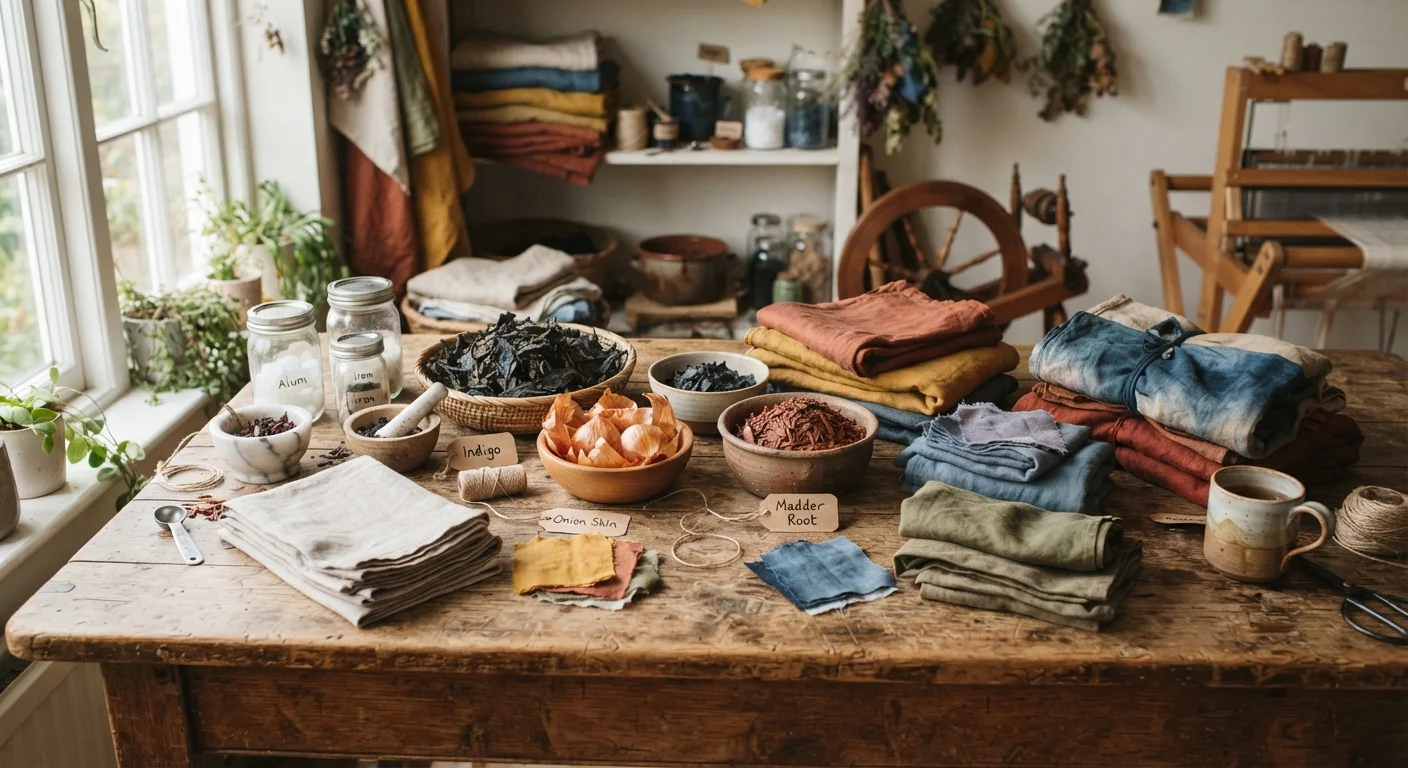
Why Fibre Type Changes Everything
Natural dyes don't behave the same way across all textiles - and understanding why is the foundation of any successful project. Fibres fall into two broad families: protein fibres (wool, silk, alpaca) and cellulose fibres (cotton, linen, hemp). Protein fibres are chemically similar to the dye compounds found in many plants, which is why they grab colour so readily. Cellulose fibres are structurally different and require more preparation to achieve comparable saturation.
This doesn't mean cotton or linen can't be beautifully dyed - it means they need a little extra help. A process called scouring (thoroughly cleaning the fibre to remove oils, starches, and finishes) and a tannin pre-bath are often recommended before mordanting cellulose fibres. Tannin-rich materials like oak gall, black tea, or sumac create a chemical bridge that helps mordants - and later, dyes - bond more effectively to plant-based fibres.
If you're just getting started with natural dyeing, wool is the most forgiving choice. Its natural scales grip dye evenly, and it responds brilliantly to a wide range of plant sources. For a deeper look at how colour and texture interact in finished rooms, see how texture functions as a design tool.
Mordanting: The Step You Cannot Skip
A mordant (from the Latin mordere, to bite) is a metallic salt that bonds simultaneously to the fibre and to the dye molecule, locking colour in place. Without a mordant, most plant dyes will fade noticeably within a few washes. Alum (potassium aluminium sulfate) is by far the most widely used mordant for home dyers - it's relatively safe when handled carefully, widely available through craft and natural dye suppliers, and produces clear, bright tones.
Other mordants like iron (ferrous sulfate) shift colours cooler and darker, a technique called saddening. Copper mordants can bring out greens and blue-greens from certain plant sources. It's important to handle all mordant chemicals with gloves and to use dedicated pots that are never returned to food use. Keep mordanting equipment clearly labelled and stored safely away from children.
Mordant ratios vary by fibre weight and dye material, but a common starting point for alum on wool is around 10-15% of the dry weight of the fibre. Dissolve the alum in hot water before adding pre-wetted fibre, heat gently, and allow the fibre to mordant for 45-60 minutes without boiling, which can felt wool fibres. Always research the specific mordant requirements for the fibre and dye plant you're working with.
Building a Dye Bath: Source Plants and Realistic Colour Expectations
One of the great joys of natural dyeing is that colour comes from everyday sources: onion skins yield rich golds and oranges, black-eyed Susan flowers produce soft yellows, avocado pits and skins create dusty pinks on protein fibres, and weld (a historic European dye plant) is prized for a particularly lightfast yellow. Indigo is a category unto itself - it requires a fermentation or chemical reduction vat rather than a standard simmering dye bath and is worth researching as a separate process.
Set your expectations clearly: natural dyes produce nuanced, often muted tones rather than the saturated brights of synthetic fibre-reactive dyes. That subtlety is part of their appeal, especially for home textiles that need to complement a room's existing palette rather than compete with it. For ideas on how earthy, handcrafted tones can anchor a space, explore colour theory fundamentals for decorators and room-by-room colour guidance.
Water chemistry also matters. Alkaline water can shift yellows toward green; acidic water often brightens warm tones. If you notice unexpected colour shifts, testing your tap water's pH with an inexpensive strip is a practical troubleshooting step.
Caring for Naturally Dyed Textiles
Colour fastness - how well a dye resists fading from light, washing, and rubbing - is the most common concern with plant-based dyes, and rightly so. Some natural dyes, particularly certain reds and purples, are inherently less lightfast than yellows or tannin-derived browns. Choosing a well-mordanted, historically documented dye plant (weld, madder, indigo) gives you a stronger foundation than experimenting with untested plant material.
Once your textile is dyed and rinsed, long-term care makes a significant difference. Wash in cool water with a pH-neutral soap rather than alkaline detergents, which can strip colour. Avoid prolonged direct sunlight on display - rotate cushion covers and table runners periodically, or line-dry in shade. Store dyed textiles folded away from light when not in use.
Natural dyeing integrates beautifully with the broader goal of adding handcrafted warmth to a home. Dyed linen napkins, cushion covers, and curtain panels all translate well - for more on scaling textiles as a decorating strategy, see how textiles anchor a room. And if you're building out your craft toolkit, the DIY decor toolkit covers materials and terms every home crafter should know.
Natural dyeing involves working with heat and chemical mordants. Always research safe handling practices for any mordant you use, work in a ventilated space, and keep dedicated equipment out of your kitchen. Results vary by fibre, water source, and dye plant - always sample before committing an entire piece.
The content on this site is for informational purposes only and is not a substitute for professional advice. Always consult a qualified professional for guidance specific to your situation.