

Our Verdict
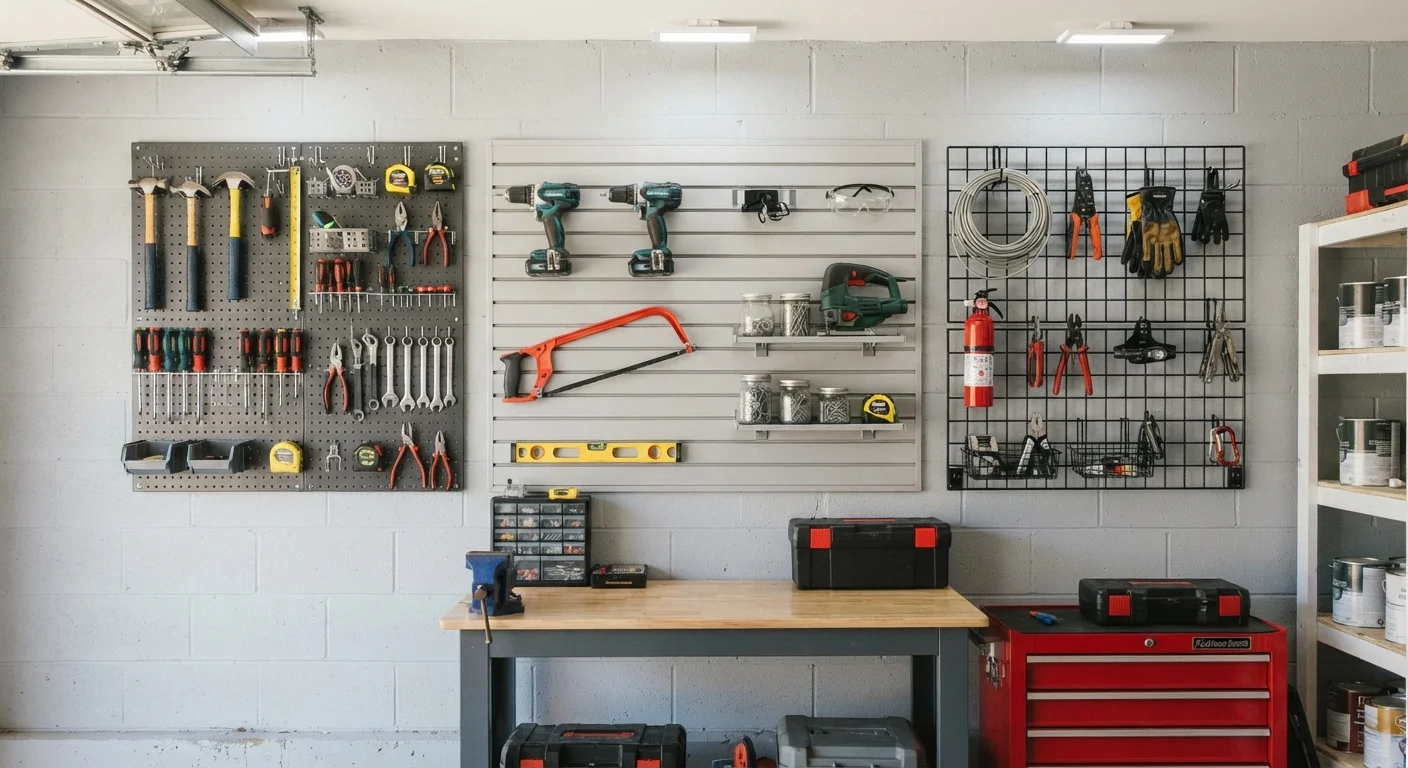
Pegboard wins on affordability and ease of installation, making it the go-to for most DIYers tackling craft rooms, laundry areas, or light workshop walls. Slatwall earns its place where heavier gear and a polished look are priorities, such as garages storing power tools or hobby equipment. Grid panels split the difference - more visually open than pegboard, more budget-friendly than slatwall, and well-suited to kitchens, offices, and entryways.
| Best for | Recommended |
|---|---|
| Budget-conscious DIYers organizing lightweight items | Pegboard |
| Garage or workshop walls holding heavier tools and equipment | Slatwall |
| Home offices, kitchens, or entryways needing style and flexibility | Grid Panel |
| Large walls requiring multiple storage zones with different functions | Combination of all three |
Understanding the Three Systems
Before comparing specifics, it helps to know what each system actually is. Pegboard is a sheet of hardboard or thin plywood punched with a regular grid of holes, typically spaced 1 inch apart. Metal or plastic hooks and holders insert into those holes to support items. Slatwall (also called slotwall) is a panel - usually MDF or PVC - machined with horizontal channels, or slats, that accept a wide range of compatible brackets and bins. Grid panels, sometimes called wire grid or gridwall, are welded wire panels with a mesh pattern, typically sold in standard sheet sizes, that accept S-hooks, baskets, and clip-on accessories.
Each system has its own accessory ecosystem, and accessories between systems are generally not interchangeable. That compatibility lock-in is worth understanding before you buy. See our pre-build planning checklist for guidance on measuring and prepping your wall before committing to any system.
Cost, Installation, and Wall Requirements
Pegboard is the clear cost leader. Standard hardboard pegboard is widely available in 4×8-foot sheets, and installation typically involves mounting furring strips to wall studs first - this creates an air gap behind the panel so hooks can seat fully. The furring-strip method keeps the project accessible for most DIYers with basic tools. One important note: hardboard pegboard is susceptible to moisture and should not be used in damp environments without a sealed or tempered variant.
Slatwall panels run significantly higher in material cost, particularly MDF versions with aluminum channel inserts, which add both strength and a cleaner finish. Because slatwall is dense and heavy, proper anchoring into wall studs is essential - lag screws rather than drywall anchors are typically required. PVC slatwall is lighter and more moisture-resistant, making it a reasonable option for garages and laundry rooms. Our garage wall storage guide covers load limits and anchoring in practical detail.
Grid panels typically fall between pegboard and slatwall in price. They mount directly to studs with screws or through a wall-mounted frame. Wire grid is inherently open, so it doesn't trap moisture - a practical advantage in kitchens and utility spaces.
| Pegboard | Slatwall | Grid Panel | |
|---|---|---|---|
| Typical material cost (per sq ft) | Low ($0.50-$1.50) | Higher ($3-$6+) | Mid ($1.50-$3) |
| DIY installation difficulty | Beginner-friendly | Intermediate | Beginner to intermediate |
| Typical load capacity | Light to moderate | Moderate to heavy | Light to moderate |
| Moisture resistance | Poor (standard hardboard) | Good (PVC variant) | Excellent (wire) |
| Accessory availability | Wide, very affordable | Widest, higher cost | Good, often interchangeable |
| Best aesthetic fit | Workshop, utility | Garage, retail-style | Kitchen, office, modern |
Load Capacity and Accessory Flexibility
Pegboard hooks are designed for lightweight to moderate loads - think hand tools, craft supplies, small bins, and cords. Overloading individual hooks or inserting them into damaged holes causes failure quickly. Slatwall channels distribute load across a wider horizontal surface, allowing heavier brackets to support items like power tools, helmets, or bulky sports equipment when the panel itself is properly anchored. Grid panels sit closer to pegboard in raw load terms, though heavier-gauge wire grids can support more substantial accessories.
Accessory variety is broadest for slatwall, which has a retail heritage and an extensive catalog of compatible fittings. Pegboard accessories are widely available and inexpensive. Grid panel accessories - S-hooks, wire baskets, shelf brackets - are easy to find and often interchangeable across manufacturers due to the standardized wire spacing.
If your wall needs to serve multiple storage purposes, mixing systems by zone is a practical strategy. For a broader look at how wall storage compares to shelving alternatives, see open shelving vs. closed storage.
Which System Fits Which Room?
Room context and use case should guide your final choice more than aesthetics alone. Here's how each system typically performs by location:
- Garage and workshop: Slatwall handles the heaviest tool loads; pegboard works well for lighter hand-tool walls when properly backed.
- Craft room or hobby space: Pegboard's fine hook grid accommodates the variety of small items typical in these spaces without overspending.
- Kitchen or pantry: Grid panels look intentional in modern kitchens and accept pot hooks, spice racks, and utensil holders cleanly.
- Home office: Grid panels and pegboard both suit vertical desk storage; grid panels project a more polished, intentional look.
- Entryway: A small grid panel or painted pegboard section can hold bags, keys, and accessories without major installation effort.
For a room-by-room walkthrough of organizer ideas and material choices, the DIY organizers start-to-finish guide offers detailed context. And if you're selecting sheet materials to back or frame any of these systems, comparing plywood and OSB covers the key trade-offs.
The content on this site is for informational purposes only and is not a substitute for professional advice. Always consult a qualified professional for guidance specific to your situation.