

Why Under-Bed Storage Deserves a Strategy
The space beneath your bed is one of the largest untapped storage zones in a typical bedroom - often measuring 30 to 70 square feet of floor area, depending on bed size and frame height. But treating it as a catch-all creates problems: items get forgotten, dust accumulates, and retrieval becomes a chore. A deliberate approach makes the difference between genuinely useful storage and a hidden pile that adds stress rather than relieving it.
Before deciding what to store there, it helps to assess the space itself. Measure the clearance height from the floor to the bottom of your frame. Most standard bed frames offer 7-13 inches of clearance. Platform beds may offer less; beds with built-in drawers set their own limits. Also consider your floor surface - rolling bins glide easily on hardwood but may snag on thick carpet. This context shapes every storage decision that follows. For a broader look at storage planning room by room, see our complete home organisation framework.
What Belongs Under the Bed
Under-bed storage excels for items that share a few traits: they're used seasonally or occasionally, they're relatively flat and lightweight, and they don't require climate control or ventilation. Here are the categories that store well in this space:
What Doesn't Belong Under the Bed
Just as important as knowing what to store is recognizing what to keep out. The area beneath a bed is dark, low-airflow, and difficult to monitor - conditions that damage certain items and attract specific problems.
- Food and snacks: Any edible item attracts insects and rodents. Even sealed packaging isn't a reliable barrier in the long term.
- Electronics: Dust accumulation in vents and ports degrades performance and can pose a fire risk over time. Store electronics in accessible, ventilated spaces.
- Items you use daily: Frequent retrieval defeats the purpose of under-bed storage and creates ongoing disruption.
- Valuables or sentimental items: Out-of-sight storage is also out-of-mind protection. Important documents, jewelry, or irreplaceable keepsakes need proper, secure, and readily inspectable storage.
- Anything prone to mildew: Wet swimwear, gym clothes, or items that haven't fully dried shouldn't go under the bed. Limited airflow makes mildew almost inevitable.
Humidity and Air Quality Matter
Bedrooms in basements, ground-floor units, or humid climates may experience elevated moisture levels near the floor. In these environments, under-bed storage carries a higher risk of mildew and musty odors - even for items that seem fine initially. Consider adding silica gel packets inside containers, or reassess whether under-bed storage is appropriate for that room at all.
If your bedroom doubles as a kids' room or shared space, kids' room storage strategies offers tailored advice for managing the unique demands of those environments.
Getting the Most Out of the Space You Have
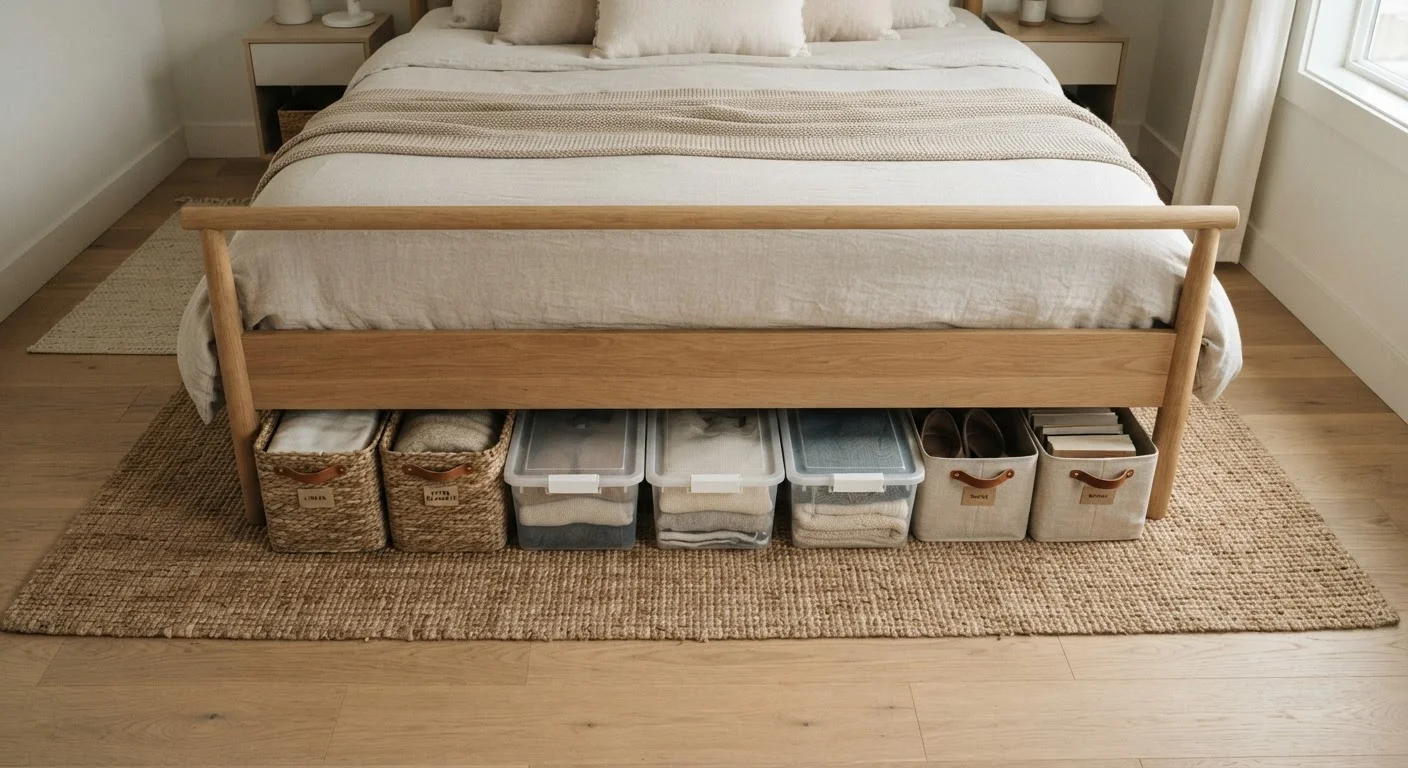
Choosing the right containers matters as much as choosing the right contents. Flat, rigid bins with lids are the workhorses of under-bed storage - they protect against dust, keep contents organized, and stack efficiently. Fabric zippered bags work well for lighter seasonal items like blankets or clothing when sealed against dust. Clear sides or labels help you find things without full excavation.
For bedrooms that lack other major storage options, under-bed space can be one piece of a larger solution. bedroom storage without a walk-in wardrobe covers complementary strategies for clothing and linens that don't fit under the bed. And if you're weighing open versus closed storage in adjacent living spaces, open shelving vs. closed storage is worth a read.
The content on this site is for informational purposes only and is not a substitute for professional advice. Always consult a qualified professional for guidance specific to your situation.