

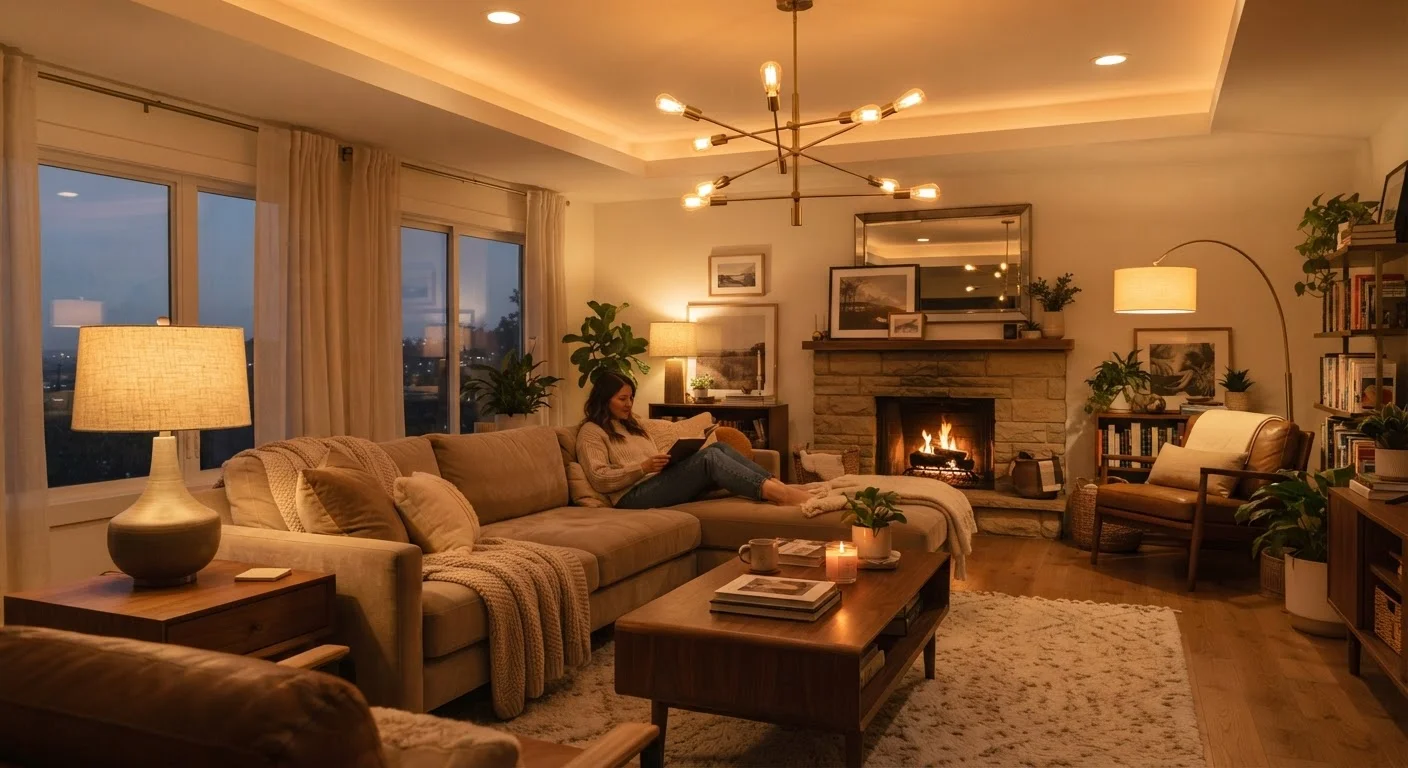
Why LED Bulb Specs Matter Room by Room
Swapping every bulb in your home to LED is one of the highest-return efficiency upgrades available - but grabbing whatever is on the shelf can leave rooms feeling harshly lit or frustratingly dim. Two numbers on the packaging do most of the heavy lifting: colour temperature (measured in Kelvin, or K) and lumens (a measure of light output). Get those right for each room's function, and your lighting will work with the space rather than against it.
Understanding the energy numbers behind LEDs helps set the stage - this guide picks up from there and applies those principles room by room.
| Warm White Range | 2700K-3000K (Industry standard for residential lighting) |
| Neutral White Range | 3500K-4000K (Common for kitchens and bathrooms) |
| Daylight Range | 5000K-6500K (Suited to task and utility spaces) |
| Equivalent Lumens for 60W Incandescent | ~800 lumens (U.S. Department of Energy reference) |
| Recommended CRI for Home Use | 80 or higher (Lighting industry guideline) |
| Standard Household Base Type | E26 (medium) (North American standard) |
Colour Temperature: The Warm-to-Cool Spectrum
Colour temperature describes the visual warmth or coolness of white light. Lower Kelvin values (2700K-3000K) produce a warm, amber-toned glow similar to traditional incandescent bulbs - ideal for spaces where relaxation is the goal. Mid-range values (3500K-4000K) deliver a neutral, crisp white suited to task-heavy areas. Higher values (5000K-6500K) mimic daylight and promote alertness, making them appropriate for workshops or utility spaces.
- Living rooms and bedrooms: 2700K-3000K for a comfortable, welcoming atmosphere
- Kitchens and bathrooms: 3000K-4000K to support visibility without harshness
- Home offices and garages: 4000K-5000K to reduce eye fatigue during focused tasks
- Utility rooms and workshops: 5000K-6500K for maximum visual clarity
Paint colours and finishes interact directly with colour temperature. Warm-toned walls amplify a 2700K bulb's amber quality, while cool greys and whites read differently under 4000K versus 3000K. See the complete guide to choosing paint colors room by room for how light and finish interact across spaces.
Lumens: How Much Light Each Room Actually Needs
Watts measure energy consumption - lumens measure how much visible light a bulb actually produces. A common reference point: a traditional 60-watt incandescent bulb produced roughly 800 lumens. Use lumens, not watts, when shopping for LEDs.
A general rule of thumb for room brightness is to multiply the square footage by a target lumen-per-square-foot figure:
- Hallways and closets: 5-10 lumens per sq ft
- Living rooms: 10-20 lumens per sq ft
- Kitchens: 30-40 lumens per sq ft (higher for task zones like countertops)
- Bathrooms: 70-80 lumens per sq ft around vanity mirrors
- Home offices: 30-50 lumens per sq ft
These are starting points, not hard rules. Ceiling height, surface reflectivity, and the number of fixtures all affect perceived brightness. Layering ambient, task, and accent lighting lets you fine-tune brightness without relying on a single overhead source.
Fixture Compatibility and Placement Considerations
Not every LED bulb works in every fixture. Before purchasing, check three things:
- Base type: Standard A19 bulbs use an E26 (medium) base. Candelabra fixtures take E12 bases. Recessed cans often require BR30 or PAR38 reflector bulbs.
- Dimmer compatibility: Many older dimmer switches are incompatible with LED drivers and can cause flickering or humming. Look for bulbs explicitly rated as dimmable and verify your dimmer switch supports LED loads. Lighting controls including dimmers and occupancy sensors covers what to check before installation.
- Enclosed fixture rating: Standard LEDs can overheat inside fully enclosed fixtures. Look for bulbs rated for enclosed fixtures if your lampshade or ceiling fixture traps heat.
Placement also matters: a single ceiling fixture in the center of a room creates shadows at the edges. Combining overhead LEDs with table lamps or under-cabinet strips distributes light more evenly and allows you to adjust mood independently. How natural and artificial light sources shape styling decisions is worth reading if you're balancing windows with artificial sources.
Electrical work beyond bulb swaps - such as adding new circuits, moving fixtures, or rewiring dimmers - should be carried out by a licensed electrician. Verify local permit requirements before undertaking any wiring changes.
The content on this site is for informational purposes only and is not a substitute for professional advice. Always consult a qualified professional for guidance specific to your situation.