

Our Verdict
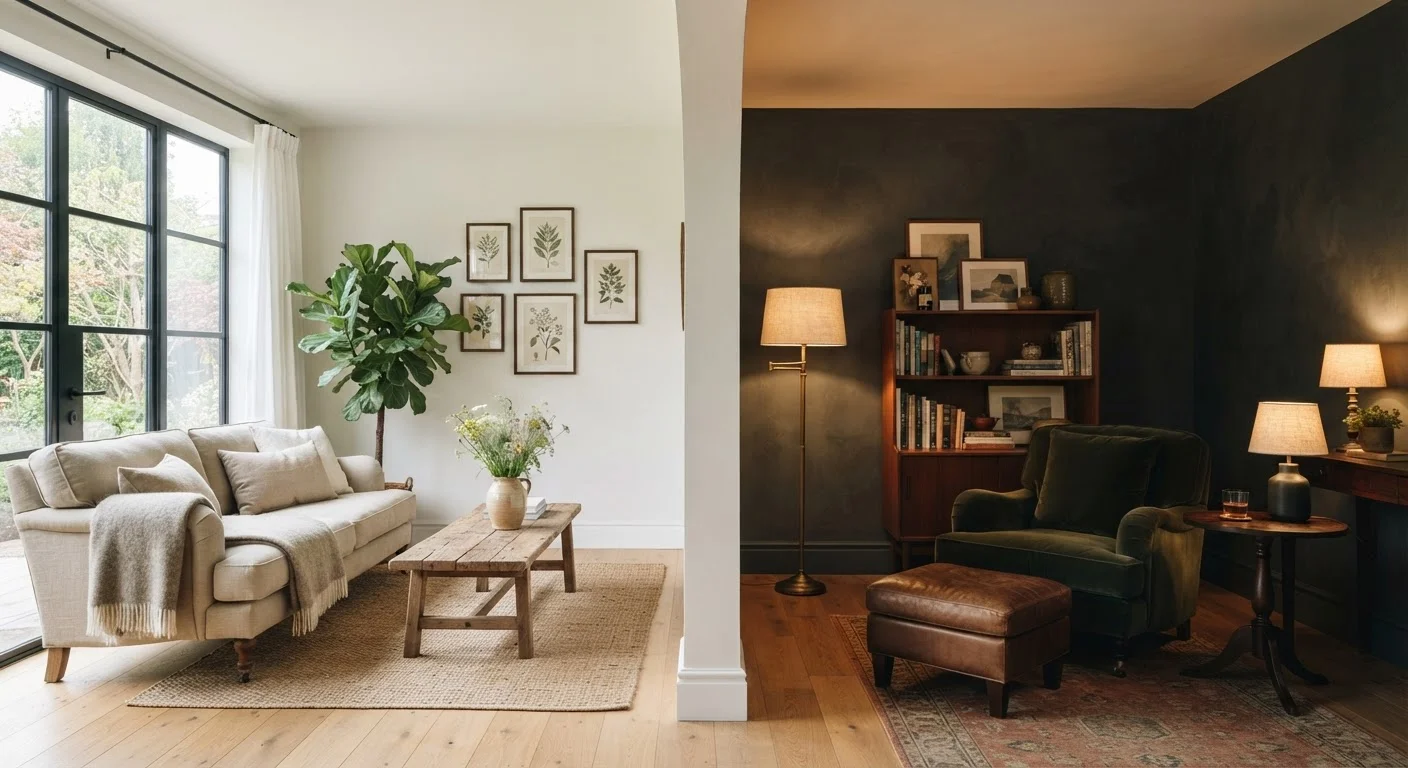
Neither natural nor artificial light is universally superior for styling - each demands a different design strategy. Natural light rewards flexible, layered color choices, while artificial light rewards intentional bulb selection and placement. The most polished rooms account for both, treating them as partners rather than competitors.
| Best for | Recommended |
|---|---|
| Rooms with abundant windows and varying sun exposure | Natural light-led styling with warm neutrals and flexible textiles |
| Basements, north-facing rooms, or spaces with minimal windows | Artificial light-led styling with layered fixtures and warm-toned bulbs |
| Open-plan spaces used morning through evening | Hybrid approach combining dimmable artificial light with light-reflecting surfaces |
Why Light Source Is a Styling Variable, Not an Afterthought
Most decorating mistakes aren't about color, furniture scale, or pattern - they're about light. A paint swatch that looks creamy and warm in the store can turn grayish-green on a north-facing wall. A sofa that seemed rich and moody in a showroom might look dull and flat under a cool overhead bulb. Light is the invisible editor of every design decision you make.
Understanding whether your room is primarily lit by natural or artificial sources - and how those sources behave - transforms how you approach color, texture, reflectivity, and furniture placement. It's one of the most impactful (and budget-friendly) frameworks any DIY decorator can apply. For a deeper look at how color and pattern respond to light, explore the Color & Pattern Play hub.
How Natural Light Behaves - and What It Means for Your Styling
Natural light is dynamic. It shifts in intensity, angle, and color temperature from sunrise to sunset, and it varies dramatically by window orientation.
- North-facing rooms receive indirect, cool, and consistent light all day - great for art studios, but challenging for warm paint tones, which can look flat or dull.
- South-facing rooms get the most light and the warmest afternoon tones, making almost any palette workable, though bright colors can feel overwhelming at peak hours.
- East-facing rooms are flooded with warm morning light that turns neutral by afternoon - ideal for breakfast nooks but tricky for rooms you want to feel cozy at night.
- West-facing rooms get the strongest, warmest late-day sun, which can make reds and oranges feel intense and cool blues look surprisingly inviting.
Because natural light moves, your styling needs to account for how colors and materials will look at multiple points in the day. How natural light shifts paint color throughout the day is worth reading before you commit to any wall color in a sun-active room.
| Natural Light | Artificial Light | |
|---|---|---|
| Consistency | Shifts throughout the day | Fixed and predictable |
| Color Temperature Control | Depends on orientation and season | Fully controllable via bulb choice |
| Effect on Warm Paint Tones | Varies; north rooms cool them down | Warm bulbs (2700K) enhance them |
| Effect on Cool Paint Tones | West/south light can warm them up | Cool bulbs (4000K+) intensify them |
| Best for Texture Display | Raking directional light reveals texture well | Accent fixtures needed to highlight texture |
| Styling Flexibility | High, but requires adaptable palette | High, with intentional layering |
| Cost to Adjust | Window treatments; low to moderate | Bulb swaps; very low cost |
How Artificial Light Behaves - and the Control It Gives You
Unlike natural light, artificial light has a fixed color temperature measured in Kelvins (K). Lower numbers (2700K-3000K) produce warm, amber-toned light similar to candlelight. Higher numbers (4000K-5000K) produce cooler, bluish-white light closer to daylight.
This matters enormously for styling because artificial light consistently amplifies certain undertones in your paint, upholstery, and flooring - all day and all night. A warm-white bulb (around 2700K) will enrich golden and cream tones but can make cool grays look greenish. A daylight-range bulb (5000K) will make blues and whites pop but can drain warmth from terracotta or blush tones.
The upside: you can choose your bulbs intentionally to reinforce your palette. You can also layer multiple fixture types - ambient overhead, task lamps, and accent lighting - to add visual depth and flexibility. For guidance on doing this affordably, see lighting layers every room makeover should address. If you want more granular control, LED lighting from room to room covers color temperature and placement in detail.
Styling Decisions That Change Based on Your Light Source
Once you know your room's dominant light source, several styling choices become clearer:
Paint Color
In naturally lit rooms, test swatches at multiple times of day - morning, midday, and evening. In artificially lit rooms, evaluate swatches under the actual bulbs you plan to use. Warm vs. cool neutrals behave very differently depending on light source. For a full framework, Colour Confidence's room-by-room guide is an excellent companion.
Reflective Surfaces and Finishes
Rooms with limited natural light benefit from higher-sheen paint finishes, mirrors, and metallic accents to bounce available light. Naturally bright rooms can handle flat or matte finishes without feeling dark.
Textile Choices
Natural fabrics like linen and cotton tend to absorb and diffuse light softly - ideal for sun-drenched rooms. In lower-light spaces, velvet and silk-effect textiles catch artificial light beautifully, adding visual warmth and richness.
Furniture Placement
In rooms with strong directional natural light, avoid placing key seating pieces where occupants will face glare. In artificially lit rooms, position task lighting (reading lamps, under-cabinet lights) to eliminate shadows in functional zones.
Test Before You Commit
Before painting an entire room, apply large swatches (at least 12" × 12") of your top two or three color candidates directly on the wall. Observe them at dawn, midday, and evening under whatever artificial lights you'll actually use. This simple step catches undertone surprises before they become expensive mistakes.
The content on this site is for informational purposes only and is not a substitute for professional advice. Always consult a qualified professional for guidance specific to your situation.