

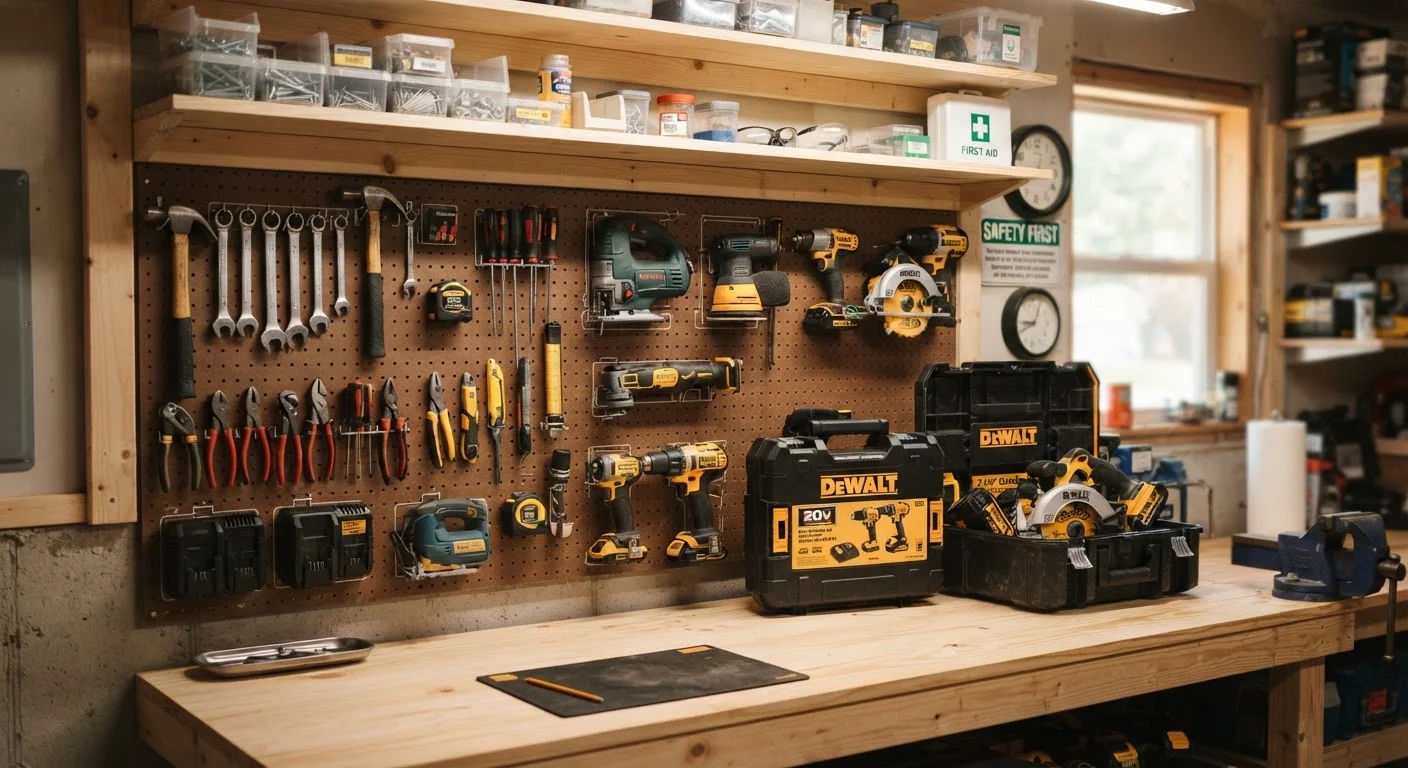
Why Storage Conditions Matter More Than Most DIYers Realize
Most power tool failures aren't dramatic - they're slow and preventable. A drill that won't hold a charge, a sander that runs rough, a saw that cuts less cleanly than it used to: these are nearly always the result of neglected storage and skipped maintenance, not manufacturing defects.
Moisture is the primary culprit. Garages and basements experience significant humidity swings, and metal components - bearings, chucks, blades, and internal contacts - corrode quietly between uses. If your storage area has ever shown condensation on windows or a musty smell, your tools are at risk. See our guide to setting up a safe home workshop for practical workspace advice that protects both you and your equipment.
Store power tools in a dry, temperature-stable environment away from direct floor contact.
Humidity causes internal metal components to corrode, switches to seize, and motor windings to degrade. Floors - especially in garages and basements - concentrate moisture and invite pest damage to cords and cases.
Return each tool to its case or a fitted mount after every use.
Random piling of tools in a drawer or bin causes blade nicks, cracked guards, and bent chuck keys. Structured storage prevents impact damage and keeps accessories with the right tool.
Clean blades, bits, and collets after each project session.
Resin, pitch, and dust accumulate on cutting edges and reduce efficiency, forcing motors to work harder and overheat. A few minutes of cleaning after each session prevents stubborn buildup that requires aggressive solvents later.
Blow out air vents and motor housings with compressed air regularly.
Sawdust and fine debris pack into motor vents and restrict airflow, causing overheating that shortens motor life. Tools used frequently near wood or drywall accumulate debris faster than most users expect.
Store lithium-ion batteries at roughly 40-60% charge in a cool, dry location.
Lithium-ion chemistry degrades faster when stored fully charged or completely depleted over extended periods. Heat accelerates this degradation significantly, so garages in summer can be particularly damaging to stored battery packs.
Inspect cords, triggers, and guards before and after each use.
Frayed cords and malfunctioning guards are among the most common causes of power tool injuries. Catching damage early - a cracked cord sheath, a sticky trigger - allows for simple repairs before they become hazards.
Battery Care: The Detail Most People Get Wrong
Cordless tool batteries are often the most expensive component to replace, yet they receive the least care. Lithium-ion packs - the standard in modern cordless tools - are sensitive to both temperature extremes and charge state during storage.
The core rule: don't store a battery fully charged or fully drained for weeks at a time. Both states accelerate chemical degradation inside the cells. A partial charge - somewhere around half - puts the least stress on the pack during long idle periods. Similarly, storing batteries in a hot car or an uninsulated summer garage dramatically reduces their usable lifespan.
If you're new to cordless tools, our power tools explainer covers how cordless systems work and what to look for when choosing tools that share battery platforms - which simplifies storage considerably.
Cleaning Routines That Protect Cutting Performance
Blades, bits, and router collets accumulate gummy residue from wood pitch, adhesives, and composite materials. This buildup makes cutting harder, forces motors to work at higher loads, and leads to premature wear on both the accessory and the tool itself.
A practical cleaning habit is simple: wipe or brush down cutting accessories after each session, before putting them away. For light residue, a dry cloth works. For sticky pitch buildup, a rag with mineral spirits or a purpose-made resin cleaner dissolves the residue without damaging most carbide or steel edges.
When to Call a Professional
If a power tool produces sparks, emits a burning smell, or shows exposed wiring, stop using it immediately. Electrical repairs to power tools should be handled by a qualified technician or the tool should be replaced. Attempting internal electrical repairs without proper training is hazardous and may void any remaining warranty.
Don't overlook the tool body itself. Blowing dust out of air vents after dusty work - drywall, MDF, or exterior lumber - keeps airflow clear through the motor. A can of compressed air is an inexpensive addition to any workshop. For a broader look at condition checks that should happen before every session, our pre-use safety checklist walks through each step in detail.
Building Habits That Stick
The best maintenance plan is one simple enough to actually follow. A five-minute end-of-session routine - wipe down, inspect the cord, return each tool to its place - compounds into years of extended tool life. Think of it the same way you'd think about maintaining hand tools: the effort is small, the payoff is large.
Consider putting together a dedicated storage checklist on a card near your workbench: clean cutting accessories, blow out vents, check cord condition, confirm battery charge level, and return guards to their positions. These micro-habits are what separate a tool collection that lasts a decade from one that degrades in three years. For guidance that extends beyond tools themselves, the same logic applies to storing building materials - consistent, low-effort habits prevent expensive damage before a project even begins.
The content on this site is for informational purposes only and is not a substitute for professional advice. Always consult a qualified professional for guidance specific to your situation.